
Introduction: The Critical Role of Star Discharge Valves in Grain Processing
In the high-stakes world of bulk material handling, the efficiency of your pneumatic conveying system often hinges on a single, unassuming component: the star discharge valve. For facilities handling grains, star discharge valves—also known as rotary airlocks or rotary feeders—are not merely a mechanical convenience; they are the front line of defense against system inefficiency, product contamination, and unsafe operating conditions. This comprehensive engineering guide from Doebritz delves into the metallurgy, precision clearances, and sizing calculations that define world-class performance in grain handling. Whether you are processing wheat, corn, rice, or any granular material, understanding the engineering nuance behind your star discharge valve is pivotal to achieving optimal plant productivity.
Doebritz brings over a century of German engineering precision to this critical component. Our star discharge valves are meticulously crafted to handle the specific demands of the grain industry, from sticky flours to abrasive seed hulls. This guide is designed for mechanical engineers, plant managers, and procurement specialists who demand authoritative, data-driven insights. We will explore the pain points of pneumatic conveying, dissect the superior engineering of Doebritz valves, and provide the technical specifications necessary for informed decision-making.
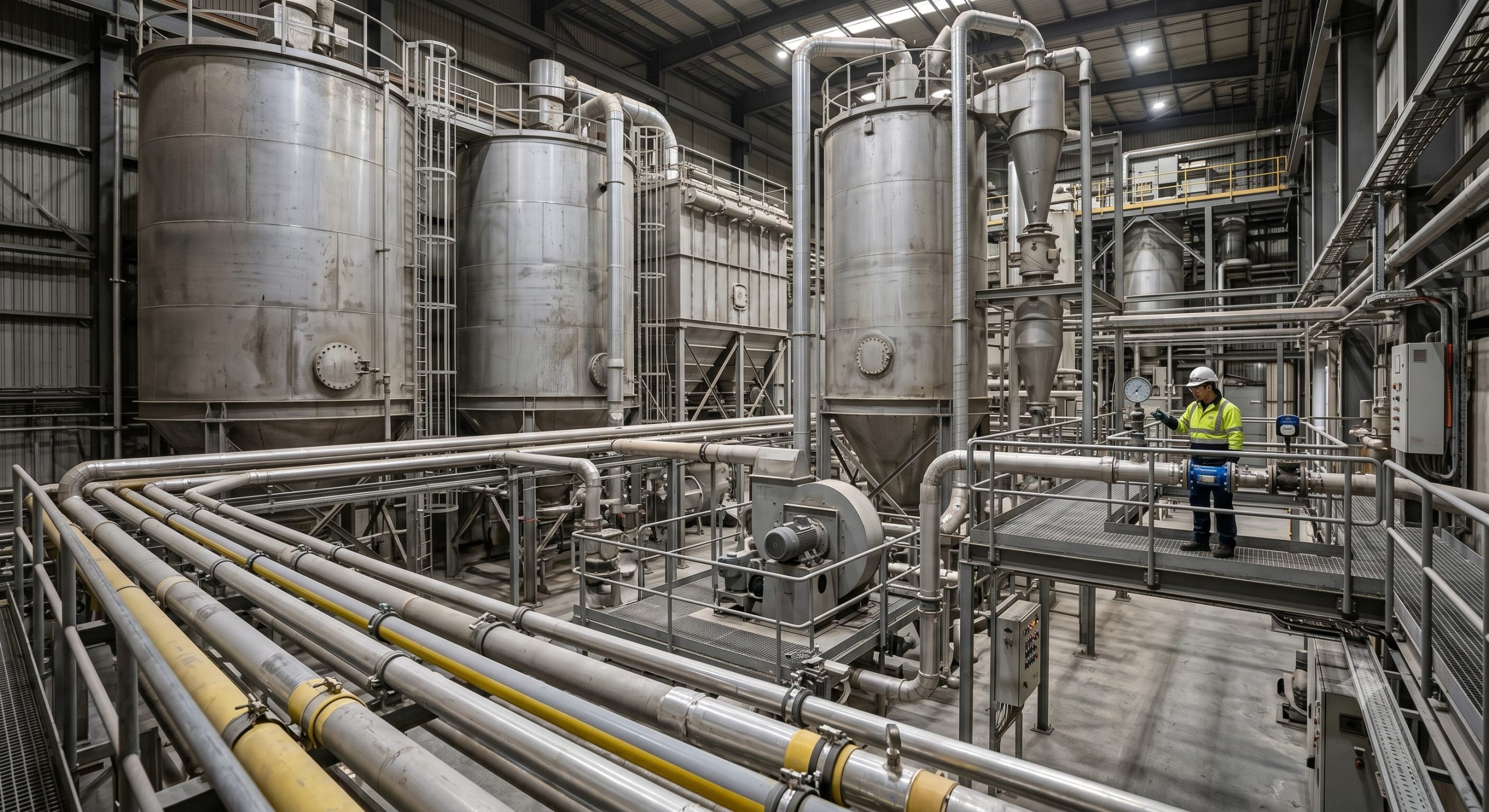
Housing & Rotor Engineering: The Foundation of Superior Airlock Performance
The performance of a star discharge valve begins with its fundamental design: the housing and the rotor. These two components dictate the valve’s durability, efficiency, and suitability for specific applications. Doebritz engineers approach this with a philosophy of continuous improvement, leveraging advanced metallurgy and manufacturing precision to set industry standards.
Metallurgical Selection for Grain Applications
Unlike the abrasive mining or corrosive chemical sectors, grain handling presents unique challenges. The primary enemy is often wear from the inherent abrasiveness of grit and dust, coupled with the potential for corrosion from residual moisture. For standard grain applications, Doebritz offers housing and rotor bodies in robust SUS304 stainless steel, providing an excellent balance of corrosion resistance and strength. For facilities requiring the highest hygiene standards and increased corrosion protection against acidic products, SUS316L is the recommended choice. These materials are not merely specified; they are precisely cast and machined to ensure absolute integrity, preventing any potential contamination of food-grade materials.
Our expertise extends to wear-resistant solutions for the most abrasive materials. For exceptionally hard grains or applications with high silica content, Doebritz offers advanced surface treatment options. This includes the application of tungsten carbide coatings and specialized ceramic coatings on the rotor and internal housing. These treatments significantly extend the Mean Time Between Failures (MTBF) and reduce maintenance-related downtime, offering a substantial total cost of ownership (TCO) advantage.
CNC Precision and Rotor Clearances: The Quantum of Locking Efficiency
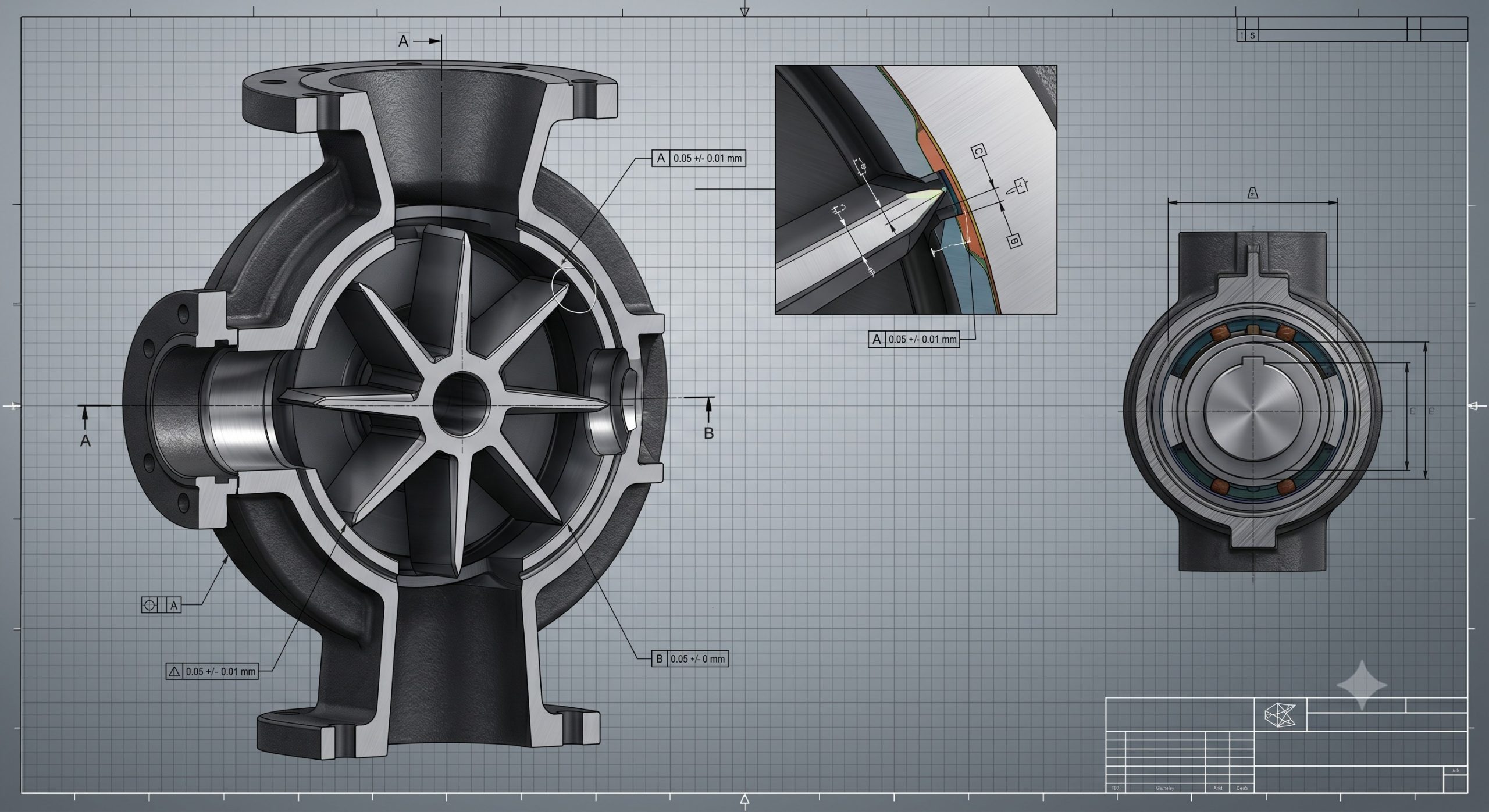
The defining metric of a star discharge valve’s efficiency is its ability to lock air. Air leakage is the nemesis of pneumatic conveying; it reduces conveying capacity, wastes energy, and can destabilize the entire system. Doebritz achieves industry-leading airlock performance through its commitment to CNC machining precision. The critical factor here is the clearances between the rotor blades and the valve housing.
A standard tolerance in commercial valves is 0.2mm to 0.5mm. This might appear negligible, but the air leakage is proportional to the cube of the clearance. A slight 0.1mm increase can double the leakage rate. Therefore, Doebritz sets a much higher standard, machining our rotors and housing to a precise gap of 0.1mm to 0.2mm. This tight tolerance drastically reduces air slippage and blowback, ensuring stable differential pressure and maximized conveying efficiency.
The rotor itself is a feat of precision engineering. Doebritz employs state-of-the-art 5-axis CNC machining centers to create rotors with an exceptional surface finish. This process ensures perfect concentricity and minimizes runout, which is essential for maintaining those tight radial clearances. A high-quality surface finish also reduces friction and prevents material from packing into the clearances, a common issue with poorly manufactured rotors.
Advanced Rotor Vane Designs for Grain Feeding
Doebritz offers a range of rotor configurations tailored to specific material characteristics and process requirements. The most common for grain applications is the closed rotor design. This type features rotor vanes separated from the hub, creating multiple isolated pockets. It provides superior airlock efficiency and is ideal for pressure and vacuum systems. For materials that are less free-flowing or prone to degradation, an open rotor design might be recommended to prevent product shearing and packing.
Depending on the user’s need for structural strength and temperature resistance, Doebritz utilizes a two-piece construction for some rotor types. This allows for different metallurgies on the rotor body and the vanes, optimizing the component for both cost and performance. For example, a standard stainless steel hub might be paired with abrasion-resistant alloy vanes for applications with mildly abrasive grains. The engineering logic is to put the strength exactly where it is needed: at the point of contact.
Technical Specifications of Doebritz Grains Star Discharge Valve
To effectively engineer a system or specify a replacement valve, comprehensive data is indispensable. Below is a representative technical specification sheet for a standard Doebritz star discharge valve designed for grain conveying systems. Please note that these parameters are customizable based on your specific requirements.
Doebritz standard design leverages HG20592 flange connections, ensuring compatibility with a broad range of international piping standards. Our valves are designed for an ambient temperature range of -15℃ to 60℃ and a material temperature range of 0℃ to 120℃, covering almost all standard grain processing scenarios. For applications requiring thermal management, a water-cooled jacket is available as an option to handle higher temperature materials or conditions.
| Key Parameter | Technical Specification |
|---|---|
| Max Differential Pressure | ≤ 1.0 Bar (0.1 MPa) |
| Operating Temperature (Ambient) | -15°C to +60°C |
| Operating Temperature (Material) | 0°C to +120°C |
| Rotor-to-Housing Clearance | 0.1 – 0.2 mm |
| Explosion Pressure Rating | 16 Bar |
| Surface Finish (Internal) | Ra ≤ 0.8μm (Standard), Ra ≤ 0.4μm (Sanitary) |
| Flange Standard | HG20592 |
| Shaft Seal | Lip Seal Air-Tight Seal |
| Available Rotor Types | Closed Rotor, Open Rotor |
| Capacity | Variable (Sized on L/rev & RPM) |
Safety Engineering: ATEX and Explosion Prevention
The grain processing industry is acutely aware of the risk of dust explosions. Grain dust, when suspended in air at a specific concentration, creates a highly explosive atmosphere. This is a major safety concern. Doebritz addresses this through a multi-faceted engineering approach focused on compliance and robust design. Our star discharge valves are engineered and certified to meet the stringent requirements of ATEX directive for use in potentially explosive atmospheres.
Doebritz offers variants compliant with the most severe dust explosion zones: ZONE 20, ZONE 21, and ZONE 22. Our explosion-proof star discharge valves are engineered with exceptional structural integrity. The housing is robustly constructed and pressure-rated to 16 bar to contain a potential explosion without rupturing. Furthermore, the precision-managed rotor-to-housing clearance of 0.1-0.2mm acts as a flame barrier, preventing the propagation of flames from the upstream or downstream process into the conveying line.
The design also incorporates an explosion-proof motor and a sophisticated shaft sealing system to ensure that the ignition source is isolated from the dust-laden atmosphere. This proactive approach to safety not only protects personnel and equipment but also ensures the plant complies with global safety standards, including NFPA 69 and NFPA 654 in the United States.
Sanitary Design: Ensuring Food-Grade Compliance
In an era of stringent food safety regulations, the sanitary design of process equipment is non-negotiable. The FDA sets strict guidelines, and equipment must be designed to prevent bacterial growth, contamination, and cross-contamination. Doebritz sanitary star discharge valves are designed with these principles as a core tenet. A key feature is the demountable / quick-release design for swift access to the internal components without the need for specialized tools.
This quick-clean capability allows for rapid manual cleaning, inline CIP (Clean-in-Place), or WIP (Wash-in-Place) protocols. The elimination of dead zones and sharp corners prevents product accumulation, ensuring high hygiene standards and simplified validation. For the most demanding food and pharmaceutical-grade applications, Doebritz offers valves with an exceptional internal surface finish. We can achieve a mirror-like Ra ≤ 0.4μm finish, which is a fundamental requirement for high-purity and hygienic production environments. This level of finish prevents bacterial adhesion and makes the valve easy to sterilize. For less critical food applications, a finish of Ra ≤ 1.6μm might suffice, but Doebritz provides the full range of finish options to meet all operational requirements.
Sealing and Shaft Technology: Combating Wear and Leakage
The primary point of wear and potential leakage in any rotary valve is the shaft seal. Doebritz employs advanced shaft sealing technologies to ensure reliable performance over extended periods. Our standard configuration utilizes a lip seal air-tight sealing system. This provides a robust seal that is effective at preventing product leakage and maintaining airlock integrity.
For the most challenging applications, a lantern ring packing gland can be integrated. This design allows for a purge of air or inert gas to be injected, creating a positive pressure barrier that prevents dust from migrating along the shaft and entering the bearing assembly. This technology is essential for applications with fine, powdery materials, ensuring the longevity of the bearings and preventing costly, unplanned downtime.
Sizing and Application Scenarios
Accurate sizing is essential to maximize efficiency and minimize wear. The capacity of a star discharge valve is measured in liters per revolution (L/rev). The Doebritz selection process involves analyzing the rotor speed (RPM), the specific density of the material, and the volumetric efficiency of the chosen rotor design. A theoretical capacity is calculated, which is then corrected for efficiency, typically between 60% and 90% depending on the product’s flow characteristics. The drive motor is then sized to handle the torque requirements of the system, factoring in the pressure differential and material characteristics.
In the industry, Doebritz star discharge valves are recognized as a critical component for diverse applications, from high-capacity pneumatic conveying systems to precise loss-in-weight feeding systems. Their versatility stems from the modular design philosophy, allowing seamless integration regardless of the material or system pressure.
Conclusion
The performance of your grain processing or conveying system is inextricably linked to the quality and engineering of the star discharge valve at its heart. This guide has highlighted the engineering principles that define superior performance: tight CNC-machined clearances, advanced metallurgy, certified safety features, and robust shaft sealing. Doebritz stands as a leader in this domain, offering valves that are not just components, but engineered solutions designed to maximize efficiency, ensure safety, and minimize long-term operational costs. Our commitment to precision, innovation, and quality is embedded in every valve we manufacture.
This in-depth exploration of the metallurgy, clearances, and sizing of star discharge valves is intended to act as a decision-making tool for engineers and plant managers. By selecting a Doebritz star discharge valve, you are investing in guaranteed reliability, lower energy consumption, and a safer, more hygienic processing environment. These are the hallmarks of a truly elite industrial solution. The data-driven nature of our design process ensures that every system we support runs at its optimal performance, delivering tangible returns on investment and operational peace of mind for our clients.