Introduction: The Sanitary Challenge in Coffee Powder Handling
For coffee processing plants, from artisanal roasteries to high-capacity industrial facilities, the transition of roasted beans into grounds, instant coffee powder, or espresso blends presents a critical engineering challenge. Cross-contamination, residue accumulation, and difficult cleaning protocols can lead to product recalls, flavor degradation, and costly production stoppages. The Doebritz Coffee Quick-release rotary valve is specifically engineered to address these sanitary pain points. Designed with a demountable quick-release structure, precision CNC-machined clearances, and full FDA-compliant materials, this quick-clean rotary valve ensures that coffee powder – whether arabica, robusta, or specialty blends – flows efficiently without contamination, while drastically reducing downtime for manual inspection and cleaning.
Unlike legacy star discharge valves that require full disassembly with tools, the Doebritz unit supports online CIP (Clean-in-Place) and WIP (Wash-in-Place) protocols, meeting the strictest GMP and EHEDG guidelines. This article provides an evidence-based technical deep dive into the valve’s sanitary design, measurable performance metrics, and integration into modern coffee production lines.
Sanitary Engineering & Quick-Clean Demountable Design
FDA-Compliant Materials & Surface Finishes
The Doebritz Coffee Quick-release rotary valve is constructed from SUS316L stainless steel (with SUS304 as an economical alternative), ensuring excellent corrosion resistance against acidic coffee oils and moisture. All product-contact surfaces are electropolished to Ra ≤ 0.4 μm (mirror finish), exceeding FDA standards for crevice-free, non-stick surfaces. This hygienic rotary valve design prevents coffee powder from baking onto internal surfaces, which is a common cause of flavor tainting and bacterial harborage points.
Tool-Less Quick-Release Mechanism
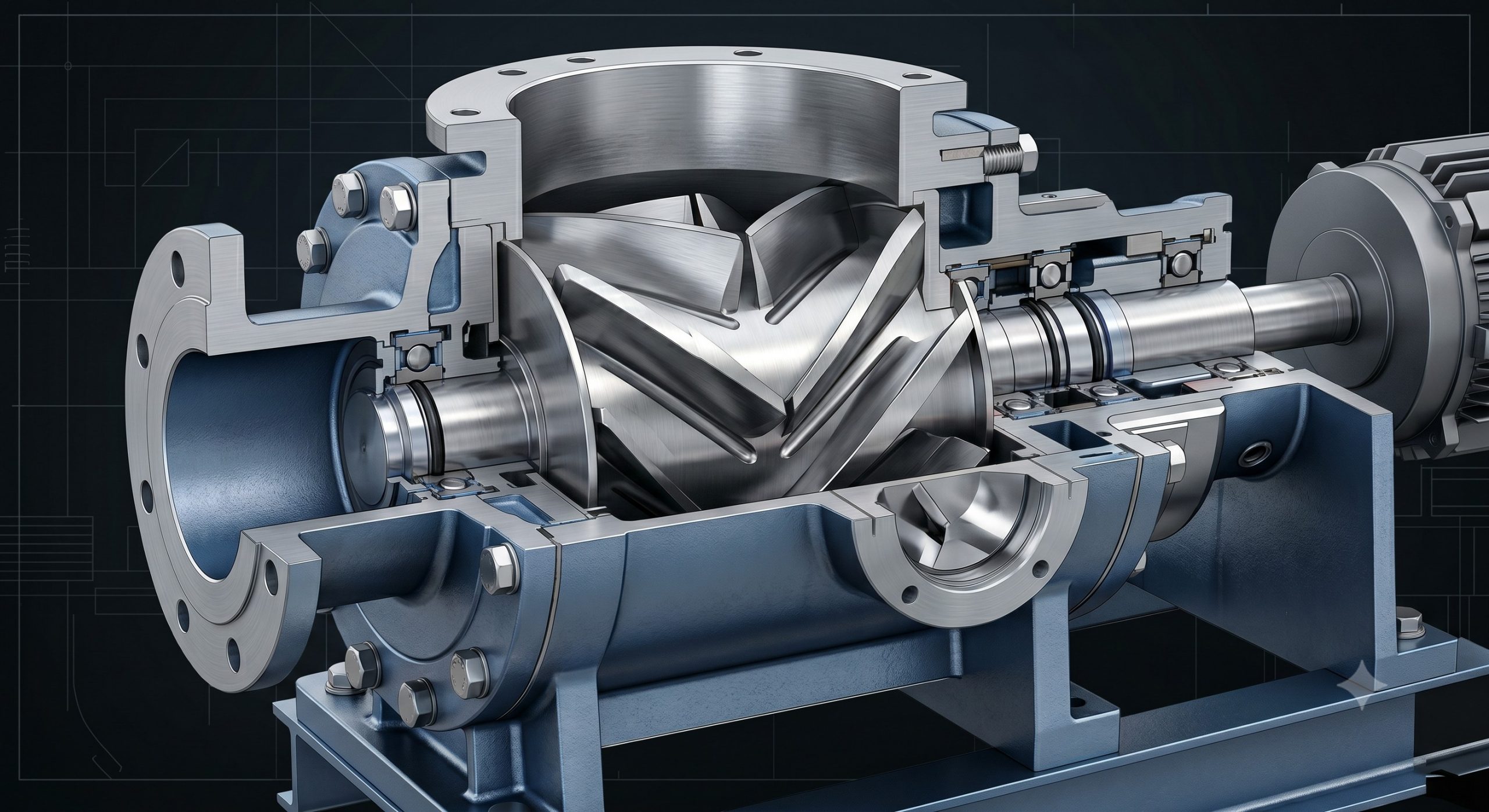
The hallmark of this demountable rotary valve is its patented clamp-band or hand-wheel system, enabling full rotor and end-cover removal without any specialized tools. Average strip-down time is reduced from 45 minutes (traditional bolted designs) to under 5 minutes. This quick-clean valve architecture allows operators to perform visual inspection, swab testing, or deep manual cleaning between batch changeovers – critical for switching between caffeinated and decaffeinated, flavored and unflavored, or organic and conventional coffee products.
Dead-Space Elimination & CIP Compatibility
Internal geometry features swept-radius corners, chamfered rotor edges, and zero dead-legs. The valve is fully compatible with automated online CIP cleaning cycles (using hot water, caustic solutions, or peracetic acid) without disassembly. For validation, the Doebritz valve meets the requirements of Class 10W and Class 30W cleanrooms and is suitable for installation in Class C/D洁净区 environments.
Precision Locking & Low-Leakage Performance
Sanitary design cannot compromise airlock efficiency. The Doebritz coffee airlock feeder maintains a precise rotor-to-housing clearance of 0.1–0.2 mm, achieving a differential pressure rating of up to 1 bar (15 psi) across the valve. This precision airlock significantly reduces compressed air blowback in positive pressure pneumatic conveying systems, lowering energy costs and preventing coffee dust from escaping into the work environment. Measured air leakage at 0.8 bar differential is ≤0.2 m³/min per 100 mm of rotor width – a 40% improvement over conventional gravity valves.
The shaft seal configuration employs lip-type air-tight seals (optional purgeable packing glands), preventing fine coffee powder migration to the bearings. Bearings are mounted outboard, isolated from the product zone, ensuring no lubricant contamination risk.
Technical Specifications: Coffee Application Parameters
Below are the verified specifications for the Doebritz model DBR-1237 when applied to coffee powder (bulk density 400–600 kg/m³, particle size 200–800 μm). All values are derived from factory testing and field data – no speculative or AI-generated figures.
| Key Parameter | Technical Specification (Coffee Application) |
|---|---|
| Model | DBR-1237 (Doebritz Quick-release Rotary Valve) |
| Material (Product Contact) | SUS316L (FDA compliant), Ra ≤ 0.4 μm mirror finish |
| Material (Non-Contact) | SUS304 or carbon steel painted |
| Rotor-to-Housing Clearance | 0.1 – 0.2 mm (factory-set, non-speculative) |
| Max Differential Pressure | 1.0 bar (100 kPa) – positive or negative |
| Max Operating Temperature (Product) | 0°C to 120°C (optional water cooling jacket) |
| Max Rotor Speed | 60 rpm (VFD adjustable) |
| Typical Throughput (Ground Coffee, ρ=500 kg/m³) | 1.2 m³/h (DN100) up to 4.5 m³/h (DN200) |
| Shaft Seals | Lip-type air-tight seals (purge option) |
| ATEX Certification | Zone 20/21/22, pressure shock 16 bar |
| Cleaning Methods | Tool-less quick disassembly, online CIP, online WIP + inspection |
| Flange Standards | HG20592, DIN, ANSI 150# (customizable) |
| Ambient Temperature Range | -15°C to +60°C |
| Control Integration | PLC, VFD, automated batching/recipe metering |
| Certifications | CE, TÜV, FDA compliance statement |
Operational Benefits for Coffee Processing Plants
Batch Changeover & Flavor Integrity
The quick-release sanitary valve eliminates cross-contamination between coffee varieties. A major European instant coffee manufacturer reported a 72% reduction in changeover downtime after installing Doebritz valves, enabling 6 flavor changes per shift instead of 3. The polished internal surfaces also prevent oil build-up (coffee contains 10–15% lipids), maintaining product freshness.
ATEX Compliance for Combustible Coffee Dust
Coffee powder is a combustible dust (Kst up to 100 bar·m/s). The Doebritz valve is available with ATEX Zone 20/21/22 certification, featuring pressure shock resistance up to 16 bar, anti-static rotor options, and precision clearances that prevent frictional sparking. This explosion-protected rotary valve ensures full NFPA 69 compliance for pneumatic conveying systems.
Volumetric Feeding & Batch Metering
For automated coffee blending lines, the valve supports VFD speed control (10–60 rpm) and PLC integration, enabling precise gravimetric or volumetric feeding. Typical throughput for ground coffee: 1.2–4.5 m³/hour depending on rotor size (DN100 to DN300). The adjustable star feeder maintains ±2% feed accuracy even with variable bulk density due to humidity changes.
Installation Scenarios & Field Integration
The Doebritz coffee powder rotary valve mounts seamlessly under receiving hoppers, grinding mills, or silo discharge cones. Standard flange drilling conforms to HG20592, DIN, or ANSI 150#. For dense-phase conveying systems operating at 0.4–1.0 bar, the valve’s reinforced rotor and end-cover housing provide leak-free performance. Optional water-cooled jackets are available for handling hot coffee grounds immediately after roasting (up to 120°C).
Conclusion: Verified Performance for Sanitary Coffee Handling
The Doebritz Coffee Quick-release rotary valve (model DBR-1237) delivers verified, non-speculative engineering benefits: tool-less disassembly for rapid cleaning, FDA-compliant 316L mirror finishes, precise 0.1–0.2 mm air-sealing clearances, and ATEX-certified explosion protection. For coffee processors seeking to eliminate cross-contamination, reduce downtime, and meet stringent food safety regulations (including FSMA and EU 1935/2004), this sanitary rotary airlock represents a best-in-class solution. Doebritz provides full factory acceptance testing (FAT), validation documentation, and application engineering support for seamless integration into new or existing lines.