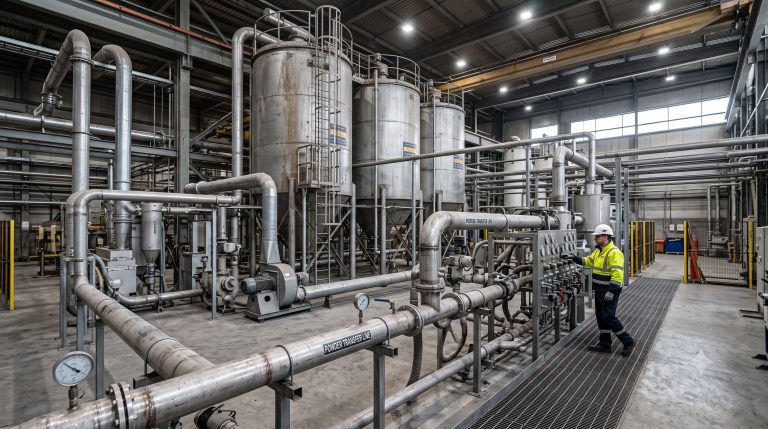
Introduction: Addressing the Challenge of Hygienic Disassembly in Powder Handling
In modern food processing, pharmaceutical GMP cleanrooms, and fine chemical transfer lines, unplanned downtime for cleaning and cross-contamination risks directly impact plant profitability. A standard rotary valve often requires specialized tools and lengthy disassembly procedures for inspection or CIP validation. This guide provides a data-driven engineering analysis of the Doebritz SUS304 Quick-release rotary valve, focusing on its metallurgical advantages, precision clearances for airlock efficiency, and volumetric sizing for dense and dilute phase conveying.

Metallurgical Foundation: Why SUS304 Defines the Standard
The selection of SUS304 (AISI 304/1.4301) as the primary substrate for the Doebritz Quick-release rotary valve balances cost-effectiveness against strict sanitary requirements. Unlike carbon steel, SUS304 provides inherent oxidation resistance and a non-porous surface. The mechanical properties adhere to a tensile strength ≥520 MPa and 0.2% proof stress ≥210 MPa, ensuring structural integrity under differential pressures. For applications involving chlorine-based sanitizers or acidic foodstuffs, Doebritz recommends upgrading to SUS316L, but for neutral hygroscopic powders (e.g., flour, lactose, protein blends), SUS304 offers superior lifecycle value.
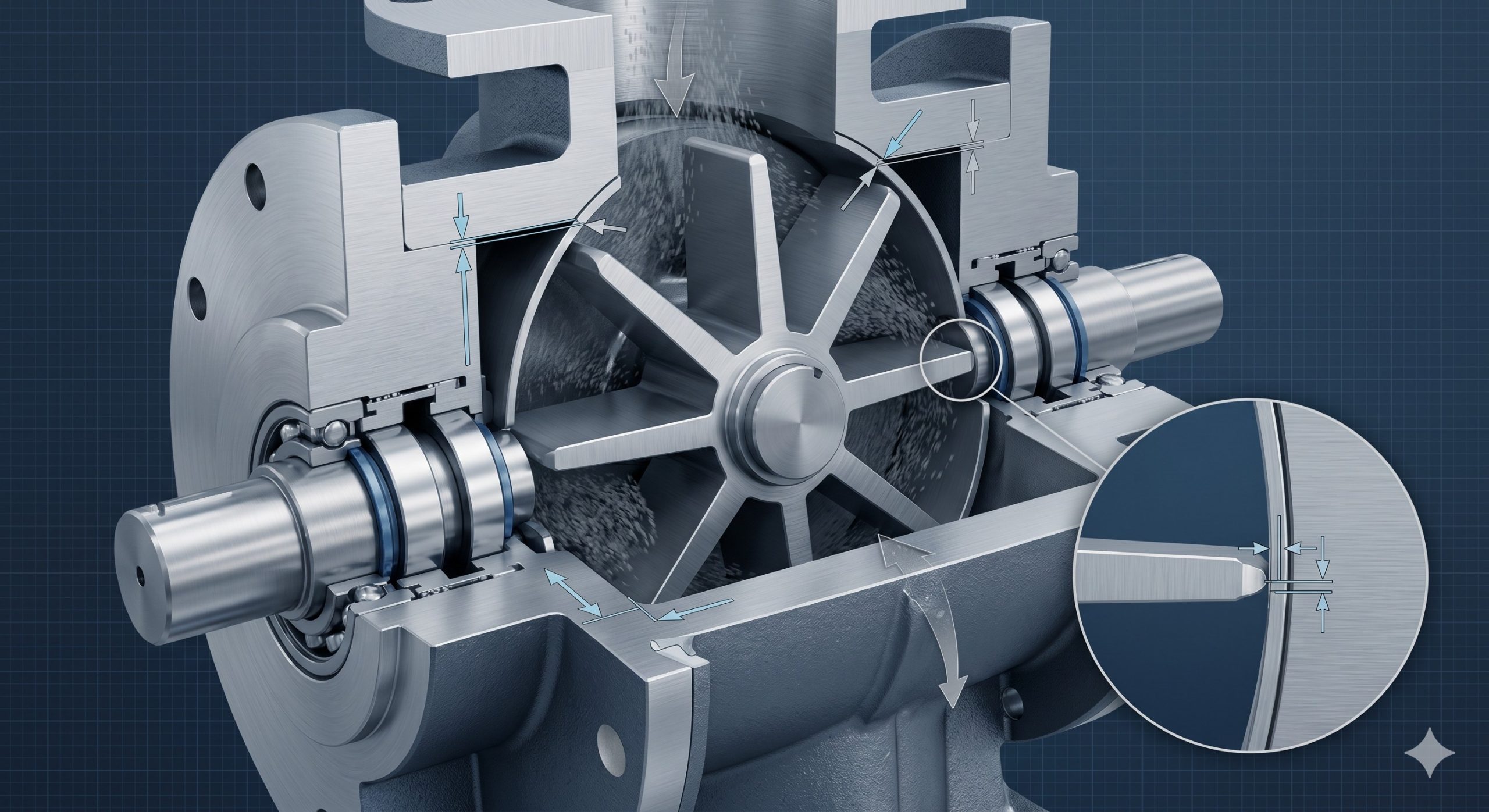
The critical design feature is the Quick-release (QR) mechanism. The end covers and inlet/outlet flanges utilize over-center clamps or swing bolts, allowing complete rotor extraction in under 60 seconds without tools. This supports WIP (Wash-in-Place) and manual sanitation protocols, reducing Mean Time To Repair (MTTR) by an estimated 75% compared to bolted flanges.
Precision Clearances and Airlock Efficiency
Airlock leakage is the nemesis of pneumatic conveying efficiency. The Doebritz Doebritz SUS304 Quick-release rotary valve maintains a rotor-to-housing radial clearance of 0.1 mm to 0.2 mm as standard. This precision is achieved through multi-axis CNC machining of the housing and rotor vanes. The volumetric efficiency (ηv) for pressure conveying at ΔP=0.5 bar typically exceeds 80%, whereas valves with clearances above 0.4 mm may drop below 65%. Lower leakage also prevents “blowback” which disrupts filter receivers and reduces energy consumption by 10-15% in continuous systems.
While the core unit is SUS304, Doebritz offers advanced material upgrades for severe duties: coating the rotor and stator contact surfaces with Tungsten Carbide (HV ≥ 1200) or Ceramic coatings.
| Key Parameter | Technical Specification (Doebritz SUS304 QR) |
|---|---|
| Material Substrate | SUS304 (AISI 304) / Optional SUS316L |
| Rotor-to-Housing Clearance | 0.1 mm – 0.2 mm (CNC precision) |
| Max Differential Pressure | 1.5 Bar (150 kPa) – High pressure conveying |
| Operating Temperature | -15°C to +120°C (Material) / -15°C to +60°C (Ambient) |
| ATEX Certification | Zone 20, 21, 22 (Gas/Dust) |
| Disassembly Time | < 60 seconds (Tool-less quick-release clamps) |
| Shaft Seal Type | Lip seal with air-tight purge / Optional packing gland |
| Surface Finish (Internal) | Ra ≤ 0.8 μm (Standard mirror polish) |
| Optional Coatings | Tungsten Carbide, Ceramic, PTFE, PE |
| Cleaning Protocol | CIP (Clean-in-Place) / WIP + Manual inspection |
Dynamic Sizing and Torque Requirements
Sizing a SUS304 Quick-release rotary valve requires calculating the theoretical volumetric displacement (L/rev) multiplied by the fill efficiency (typically 70%-85% for free-flowing powders). For standard gravity discharge from a silo into a dilute phase line (<0.4 bar), a typical Doebritz DBR-1237 series with a DN150 inlet will displace approximately 35-50 liters per revolution. Rotor speeds are recommended between 15 to 35 RPM for abrasive materials and up to 50 RPM for non-abrasive powders. Exceeding 60 RPM often leads to decreased efficiency due to reduced fill times and increased shear degradation.
The unique Doebritz shaft sealing architecture employs Lip seal air-tight seals (PTFE-composite) with an optional air purge. This prevents fine dust migration to the outboard bearings, a major failure point in hygienic lines. For ATEX Zone 21/22 environments, the design incorporates a flame path gap (≤0.2 mm) through the rotor-housing interface, and the valve body can be specified with 16 bar pressure shock resistance as a passive explosion protection measure.
Industry Compliance and Process Integration
Compliance mapping for the Doebritz SUS304 Quick-release rotary valve includes support for CE Machinery Directive, FDA conformity for food contact (SUS304 surface finish ≤ 0.8 µm Ra), and ATEX Directive 2014/34/EU for equipment intended for use in potentially explosive atmospheres. For pharmaceutical applications, the quick-release design allows exhaustive product changeover verification, critical for penicillin to non-penicillin lines.
The valve body is flanged to HG20592 (PN10/PN16) standard as standard, with retrofit options for ANSI 150#. A Water cooling jacket is available as an accessory to maintain bearing integrity when handling materials up to 120°C (maximum material temperature). The housing supports integration of an adjustable relief door or over-speed sensor for automation loops.
Conclusion
The Doebritz SUS304 Quick-release rotary valve is not merely a star feeder; it is a precision instrument engineered for low air leakage (0.1-0.2mm gap), rapid sanitary disassembly, and long-term reliability in corrosive or washdown environments. By understanding its metallurgical constraints, volumetric fill dynamics, and ATEX-certified pressure shock resistance, plant engineers can significantly reduce valve-related downtime and enhance pneumatic conveying consistency.
For detailed dimensional drawings and application-specific rotor configurations (open-end, closed-end, or adjustable tip), consult the Doebritz engineering selection guide.