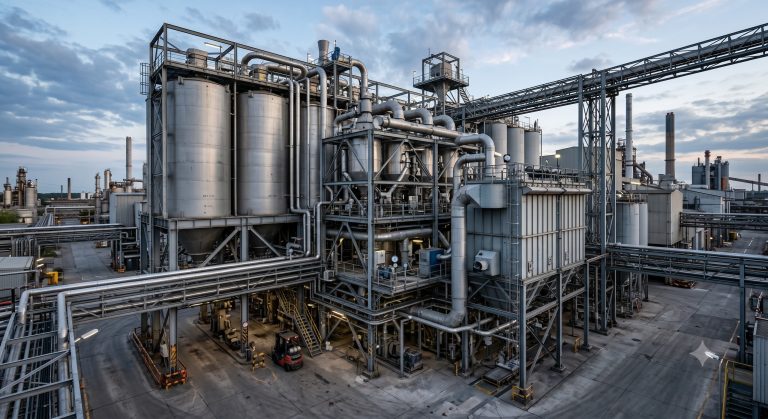
Introduction: The Silent Gatekeepers of Process Integrity
In the demanding environments of pneumatic conveying, bulk material handling, and industrial fluid control, the gasket and o-ring set is often the most underestimated critical component. At Doebritz, we understand that a single static or dynamic seal failure can lead to catastrophic product loss, unplanned downtime, and severe safety hazards. This technical guide provides a deep dive into the metallurgical interfaces, precise clearance calculations, and sizing protocols that define high-reliability sealing systems. Whether you are handling abrasive minerals at 250°C or sanitary powders requiring FDA compliance, the engineering of your gasket and o-ring set dictates your plant’s total cost of ownership (TCO).
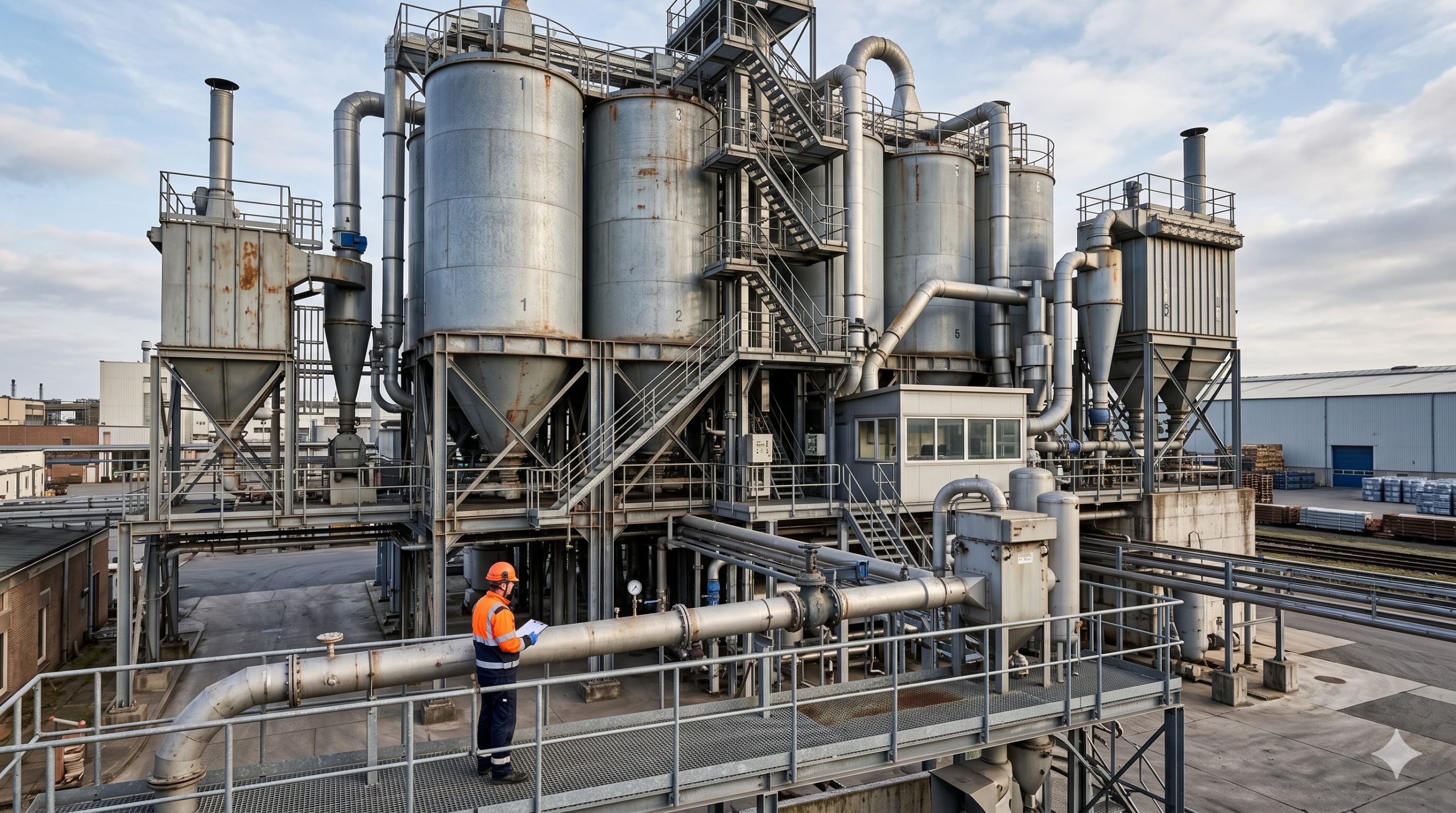
Metallurgy and Polymer Science: Beyond Standard Elastomers
Housing Groove Metallurgy and Surface Finish
The effectiveness of any gasket and o-ring set begins with the groove design. For rotary valves and flange connections, Doebritz recommends a housing surface finish of 0.8 µm Ra (32 µ-in) or better to prevent micro-leakage paths. In abrasive service (e.g., cement, fly ash), we specify Ni-Hard or hard-chrome plated grooves with a hardness of 60-65 HRC to resist erosion under differential pressures up to 1.5 Bar (150 kPa).
Elastomer Selection Matrix by Operating Conditions
- Nitrile (NBR): Standard for mineral oils and diesel. Temperature range: -30°C to +120°C. Not suitable for ozone-rich environments.
- Viton (FKM): Superior chemical resistance (acids, hydrocarbons). Operating range: -20°C to +250°C. Ideal for high-temperature gasket and o-ring set in petrochemical plants.
- Silicone (VMQ): FDA-compliant for food and pharmaceutical contact. Range: -55°C to +230°C. Low compression set but poor abrasion resistance.
- EPDM: Excellent for steam, hot water, and brake fluids. Max 150°C. Not compatible with petroleum oils.
Precision Clearances and Sizing Logic
A common failure mode is extrusion – where system pressure forces the o-ring into the dynamic clearance gap. For a Doebritz-engineered gasket and o-ring set, the maximum allowable radial clearance (Gmax) is a function of system pressure and o-ring hardness (Shore A). For a 70 Shore A NBR o-ring at 1.0 Bar, maximum radial clearance is 0.15 mm. For high-pressure dense phase conveying (up to 3.5 Bar), we specify backup rings (PTFE or nylon) or reduce clearance to 0.05 mm. The compression ratio for static flange seals should be 15-25% of the o-ring cross-section (e.g., a 5.33 mm CS o-ring is compressed to 4.0-4.5 mm).
Technical Specification Datasheet for Doebritz Sealing Sets
The following parameters define a certified industrial gasket and o-ring set suitable for ATEX Zone 20/21 and EHEDG sanitary standards.
| Key Parameter | Technical Specification (Doebritz Standard) |
|---|---|
| Max Differential Pressure (Static) | 3.5 Bar (350 kPa) with PTFE backup ring |
| Max Differential Pressure (Dynamic Shaft) | 1.5 Bar (150 kPa) with dual lip seal |
| Operating Temperature Range (FKM) | -20°C to +250°C |
| Operating Temperature Range (Silicone) | -55°C to +230°C (FDA grade) |
| Max Radial Clearance (70 Shore A, 1.5 Bar) | 0.10 mm (extrusion limit) |
| Compression Set (Max allowable, 24h@150°C) | < 20% (per ASTM D395) |
| Surface Finish Requirement (Groove) | Ra 0.8 µm (32 µ-in) maximum |
| ATEX Compliance | II 2D c T100°C (Zone 21) |
| FDA Compliance | 21 CFR 177.2600 & USP Class VI |
| Volumetric Leakage Limit (New flange set) | < 0.1 m³/h per meter flange circumference at 1 Bar |
Integration with Rotary Valves and Airlock Efficiency
Dynamic Shaft Sealing vs. Static Flange Sealing
In rotary airlock valves, the shaft gasket and o-ring set is dynamic. Doebritz employs outboard bearing housings with lip seals and optional air purge sealing – injecting 0.2-0.5 Bar of clean, dry air to prevent fine powder ingress. For static flange connections (inlet/outlet), we mandate a gasket and o-ring set with a Shore A hardness of 75±5 and a cross-section diameter of 5.33 mm (AS568-2XX series) to accommodate flange misalignment up to 0.5 mm. Volumetric efficiency of a pneumatic conveying system can drop by 15% if the air leakage through a poorly sealed flange exceeds 0.5 m³/h per linear meter of flange circumference.
Heavy Industry Application Scenarios and Compliance
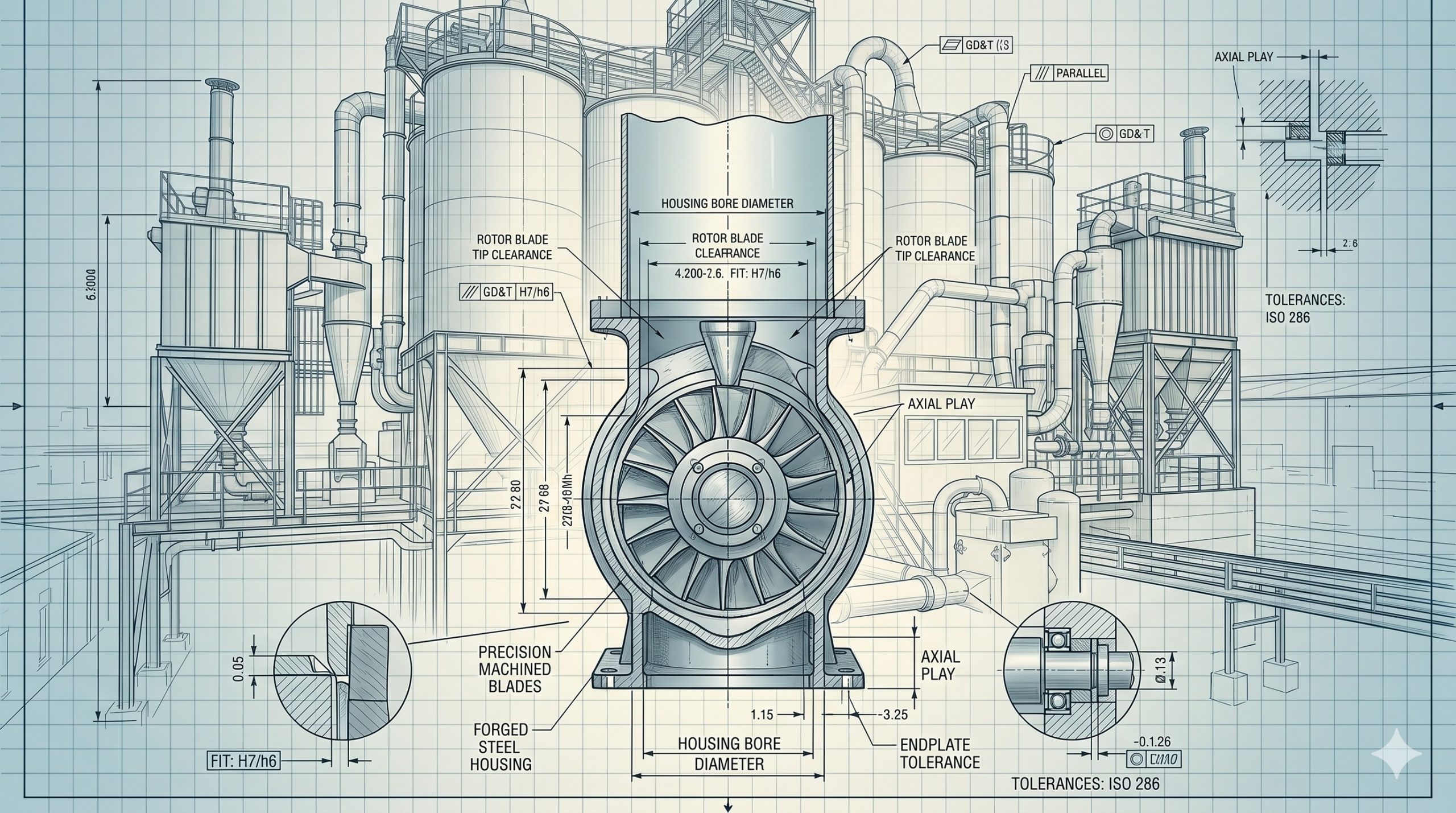
Abrasive Powder Handling (Cement & Mining)
For Portland cement conveying (bulk density 1.2-1.5 t/m³, temperature 120°C), Doebritz recommends a gasket and o-ring set combining a hard viton (90 Shore A) with a sacrificial PTFE backup ring. Expected MTBF improves from 3 months to 18 months. Clearances must be increased by 0.1 mm to account for thermal expansion at the shaft interface.
Sanitary and FDA-Compliant Processing
In food powder (milk, sugar, starch) and pharmaceutical applications, the gasket and o-ring set must be made from USP Class VI silicone or FDA 21 CFR 177.2600 compliant materials. Doebritz offers demountable designs where all seals are visible and inspectable without tools. O-rings must be replaced every 2,000 production hours to prevent microbial growth in micro-grooves.
ATEX Explosive Atmospheres
For Zone 21 (dust) and Zone 1 (gas), the gasket and o-ring set must be antistatic (surface resistivity < 1e9 Ω) and conductive carbon-loaded elastomers are mandatory. Doebritz supplies ATEX-certified sets with documented traceability to EN 13463-5. The maximum housing temperature must remain 20°C below the auto-ignition temperature of the product (e.g., for starch, Tmax ≤ 420°C).
Conclusion: Engineering Assurance from Doebritz
Selecting a gasket and o-ring set is not a commodity purchase; it is an engineering decision that impacts safety, efficiency, and regulatory compliance. Doebritz provides validated clearances, material certifications, and application-specific groove designs. By adhering to the principles of metallurgy compatibility, precision sizing (Gmax/compression ratio), and environmental compliance (ATEX/FDA), plant engineers can achieve zero air leakage and extended mean time between failures (MTBF). For your next retrofit or new build, demand a certified gasket and o-ring set engineered for your exact process parameters.