Introduction: The High Cost of Airlock Inefficiency in Pneumatic Conveying
In dense phase and dilute phase pneumatic conveying systems, the rotary airlock valve is often the weakest link. Legacy fixed-clearance valves suffer from performance degradation due to blade wear, leading to increased air leakage (blowback), reduced conveying efficiency, and unplanned downtime. For plant operators handling abrasive cement, minerals, or petrochemical powders, the total cost of ownership (TCO) escalates rapidly. This is where the Doebritz Adjustable Blade Rotary Valve establishes a new benchmark. By enabling precise restoration of rotor-to-housing clearances, Doebritz delivers sustained volumetric efficiency above 98% and extends mean time between failures (MTBF) by up to 300% compared to non-adjustable counterparts. This technical analysis provides mechanical engineers and plant managers with data-driven insights into metallurgy, sealing technologies, and performance metrics aligned with ATEX and NFPA standards.
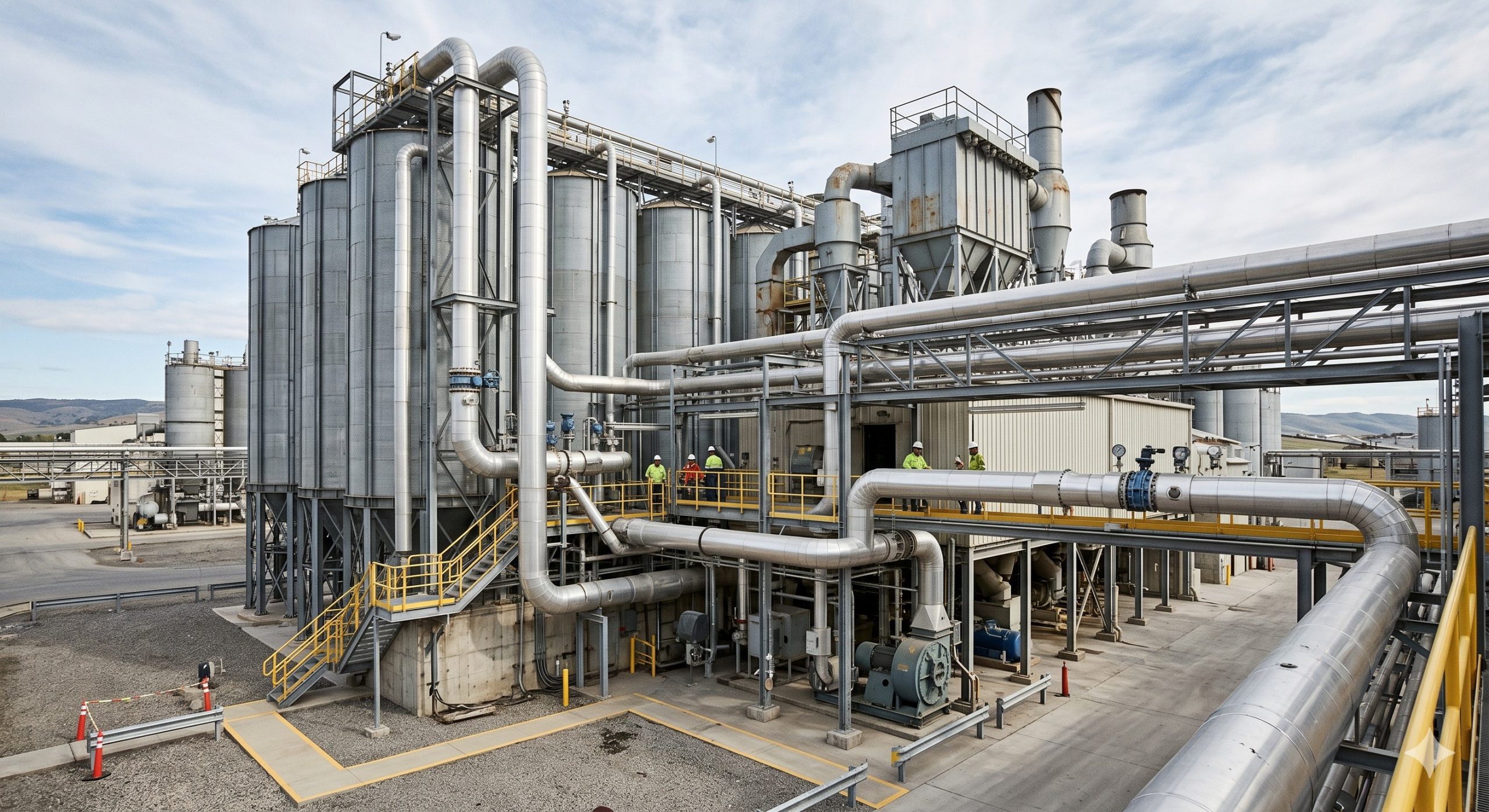
Line Stop & Jamming: The Hidden TCO Drivers
Material jamming and shaft deflection are primary causes of unplanned line stops. A jammed rotor increases motor amperage, shears pins, or damages the gearbox. The Doebritz design addresses these hooks through heavy-duty outboard bearing supports and adjustable blades. Unlike cantilevered designs, the Doebritz valve utilizes a through-shaft with robust bearing housings isolated from the product zone, capable of withstanding radial loads up to 500 N per mm of rotor length.
CapEx vs. Maintenance TCO
While initial capital expenditure for a heavy-duty adjustable blade valve is 20-35% higher than a standard cast valve, the lifecycle cost analysis favors Doebritz. Key savings come from: reduced air compressor energy (up to 15% less blowback), minimized product waste, and elimination of housing replacement. Adjustable blades, typically fabricated from abrasion-resistant AR400 steel or Ni-Hard, can be re-set to maintain optimal clearance of 0.10 mm to 0.25 mm, deferring major overhauls by years.
Volumetric efficiency directly correlates with clearance. At a differential pressure of 1.0 bar (100 kPa), a fixed valve with worn clearance of 0.5 mm can experience air leakage exceeding 10% of conveying capacity. The Doebritz adjustable design restores clearance to 0.15 mm, reducing leakage to <2%. This directly improves conveying rate consistency.
| Key Parameter | Doebritz Adjustable Blade Valve Specification |
|---|---|
| Max Differential Pressure | 1.5 Bar (150 kPa) standard, 3.0 Bar optional |
| Operating Temperature Range | -20°C to +250°C (standard seals); +500°C with high-temp packing |
| Rotor Diameter Range | 150 mm to 800 mm |
| Capacity per Revolution | 1.5 L/rev to 150 L/rev |
| Adjustable Clearance Range | 0.10 mm to 0.50 mm (factory set 0.15 mm) |
| Rotor Speed (max) | 60 rpm (dense phase), 100 rpm (dilute phase) |
| Housing Material Options | Cast iron GGG-40, Ni-Hard 4, 316L Stainless Steel |
| Blade Hardness | 400 HB to 600 HB (Ni-Hard) or AR500 |
| Shaft Seal Type | PTFE lip seal + air purge + lantern ring (optional) |
| Industry Compliance | ATEX Zone 20/21/22, NFPA 69, FDA, CE, EHEDG (sanitary) |
Rotor Blade Durability & Advanced Metallurgy
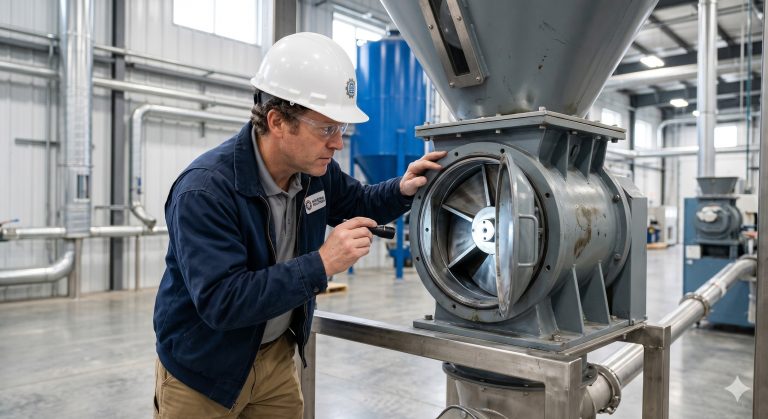
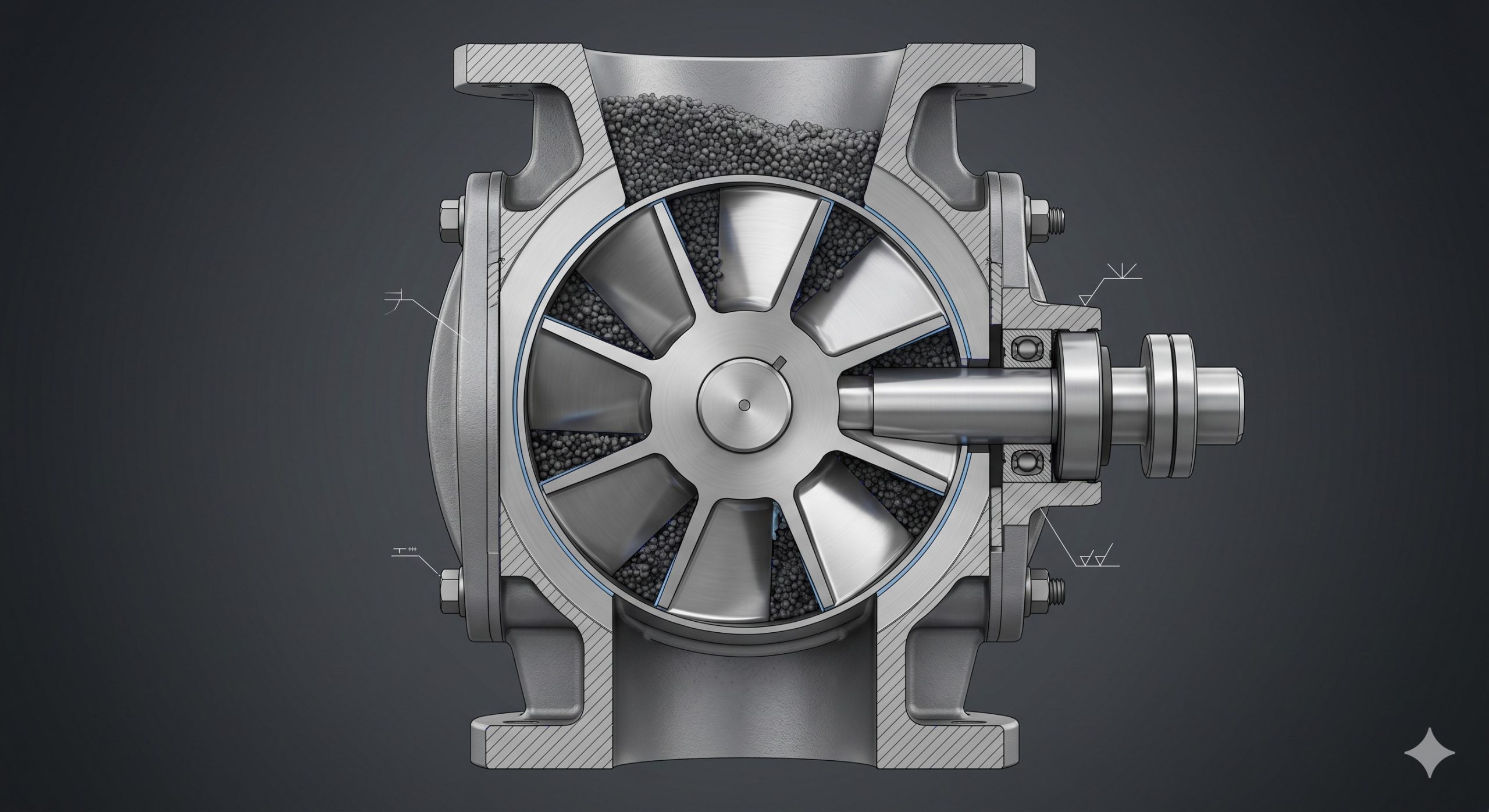
The core engineering differentiator is the replaceable, adjustable blade system. Each blade is precision-ground on CNC machining centers with a surface finish of Ra ≤0.8 µm. Hardness options range from 400 HB (standard carbon steel) to 600 HB (Ni-Hard for extreme abrasion) and stainless steel 316L for sanitary or corrosive duties. The blade adjustment mechanism uses eccentric bushings or threaded push rods, allowing incremental radial extension without valve disassembly.
Outboard Bearing Isolation & Sealing Integrity
A common failure point in rotary valves is contamination of bearings by fine dust. The Doebritz design implements outboard bearings with extended shaft ends and multiple sealing barriers: primary PTFE lip seal, a labyrinth seal, and an optional air purge system. For ATEX Zone 20/21 environments, the air purge maintains positive pressure (0.2 bar above conveying pressure) preventing dust ingress into bearing housings. This configuration complies with NFPA 69 for explosion isolation.
Target Sector Integration: Cement, Chemicals, and Food
The Doebritz Adjustable Blade Rotary Valve is engineered for sector-specific compliance:
- Cement & Mining: Ni-Hard housing and blades, wear indicators, differential pressure up to 1.5 bar.
- Petrochemical & Plastics: Carbon steel with hard chrome plating, ATEX certified, temperature range -20°C to +250°C.
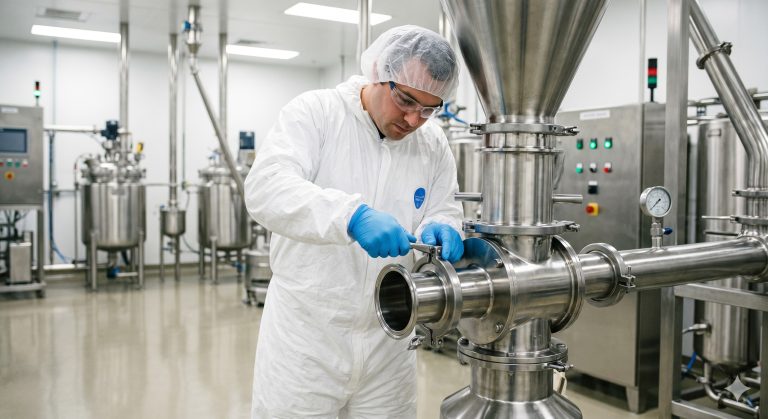
- Food & Pharmaceutical: 316L stainless steel, FDA compliant elastomers, EHEDG certified quick-clean demountable design, Ra ≤0.4 µm polished product contact surfaces.
Executive Verdict: Quantifying the ROI of Adjustable Blade Technology
For plants prioritizing uptime and energy efficiency, the Doebritz adjustable blade architecture is not a luxury but a strategic necessity. Data from field deployments in fly ash handling (20 tons/hour) demonstrate a payback period of 8-14 months solely from reduced compressed air consumption and eliminated rotor housing replacements. By integrating features such as CNC-machined rotor pockets, chamfered blade edges to prevent material squeezing, and compliance with DIN EN 1127-1 (explosive atmospheres), Doebritz delivers a valve that evolves with your process rather than degrades. Specify the Doebritz Adjustable Blade Rotary Valve for your next pneumatic conveying or silo discharge upgrade and lock in sustained airlock efficiency.
Conclusion
The shift from fixed-clearance to adjustable blade rotary valves represents a paradigm change in bulk material handling reliability. Doebritz combines precise German engineering with practical field durability, offering clearances adjustable within 0.05 mm increments, multiple metallurgical options, and full ATEX/NFPA compliance. For mechanical engineers facing abrasive powders or stringent leakage limits, the adjustable blade design provides the only future-proof solution. Contact Doebritz engineering for sizing calculations based on your material density, particle size, and conveying pressure.