Introduction: The Critical Role of the Gravity Diverter Valve in Bulk Solids Handling
In the heart of every pneumatic conveying and gravimetric metering system lies a component often overlooked until failure: the gravity diverter valve. For plant engineers and maintenance managers, the reliable operation of this valve is synonymous with production uptime, product quality, and workplace safety. At Doebritz, we understand that a gravity diverter valve is not merely a piece of hardware; it is the guardian of pressure integrity, the enforcer of hygiene, and the enabler of precise metrology in bulk material handling. This comprehensive engineering guide delves deep into the mechanical intricacies, material science, and application strategies of the Doebritz gravity diverter valve, providing you with the data-driven insights necessary to optimize your system’s performance and total cost of ownership (TCO).

Housing & Rotor Engineering: The Foundation of Durability and Precision
Metallurgy and Casting Integrity for Heavy-Duty Service
The service life of a rotary valve in abrasive or corrosive applications is directly dictated by its base material and casting process. The Doebritz gravity diverter valve series is engineered with a choice of high-integrity materials, including SUS304, SUS316L, and robust carbon steel variants, to withstand the most demanding industrial environments. Each housing casting undergoes rigorous stress-relieving protocols and precision CNC machining to guarantee dimensional stability under thermal stress. For applications involving highly abrasive materials like titanium dioxide or carbon black, we offer protective coatings such as tungsten carbide or ceramic layers, achieving surface hardness levels that significantly extend mean time between failures (MTBF). This metallurgical focus ensures that the valve housing maintains its structural integrity, even when subjected to the constant impact and abrasion inherent in powder handling systems.
Rotor Configurations and CNC Precision
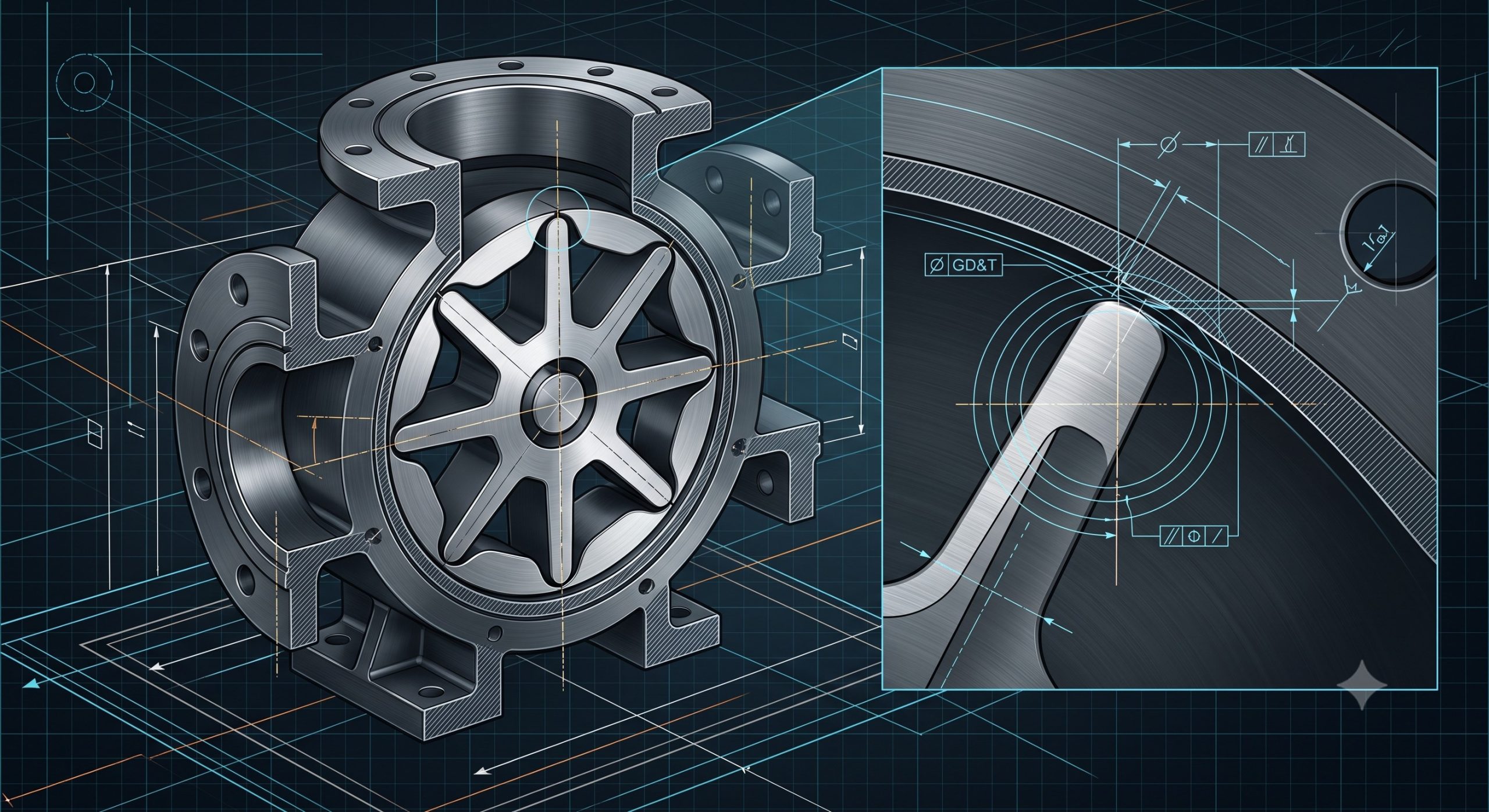
The rotor is the heart of the gravity diverter valve. Our rotors are machined from solid billet or precision-cast with a focus on balancing volumetric efficiency with robust sealing. The design incorporates open or closed rotor styles, each tailored for specific material characteristics—open rotors for free-flowing powders and closed rotors for aeratable or abrasive materials. The critical interface is the clearance between the rotor tip and the valve housing. In a Doebritz gravity diverter valve, this gap is meticulously controlled to between 0.1 mm and 0.2 mm. This precision is achieved through state-of-the-art 5-axis CNC machining, which ensures radial and axial run-out are minimized. This tight clearance is paramount for reducing air leakage and maintaining differential pressure, thereby preventing blowback and ensuring consistent conveying line velocity. Furthermore, rotor vanes can be engineered with chamfered edges or specialized profiles to reduce the risk of material jamming and shearing, which is particularly critical for friable products in the food and pharmaceutical sectors.
Technical Specifications: Quantifying Doebritz Gravity Diverter Valve Performance
To make an informed engineering decision, one must look beyond simple dimensions. The table below details the key performance indicators and technical parameters that define the Doebritz gravity diverter valve (DBR-1237 series), showcasing its capabilities across diverse operational envelopes.
| Key Parameter | Technical Specification (Doebritz DBR-1237) |
|---|---|
| Material Options | SUS304, SUS316L, Carbon Steel (Painted/Nickel-Plated) |
| Wear Protection Coatings | Tungsten Carbide, Ceramic, PE, PTFE, PA |
| Rotor-to-Housing Clearance | 0.1 mm – 0.2 mm |
| Max Differential Pressure | Up to 1.0 bar (Standard), 16 bar (Explosion Isolated) |
| Operating Temperature (Ambient) | -15°C to +60°C |
| Operating Temperature (Material) | 0°C to +120°C (Optional: Water Cooling Jacket) |
| Typical Flow Rate (Variable) | Depends on rotor size and VFD speed (e.g., DN150: up to 50 L/rev) |
| Explosion Protection | ATEX Zone 20/21/22 Compliant |
| Cleanability | Quick-Release Disassembly, CIP/WIP Compatible |
| Surface Finish (Internal) | Mirror Polish up to Ra ≤ 0.4 μm (Hygienic Design) |
Critical Dimensions and Interface Standards
The Doebritz gravity diverter valve is designed for seamless integration into new or existing systems. Standard inlet and outlet flanges conform to HG20592 (equivalent to DIN/EN), with options for ANSI or JIS standards available upon request. Common interface sizes include DN100, DN150, and DN200, though diameters from DN50 to DN350 can be accommodated. The flange design and the robust housing ensure the valve is rated for system pressures up to 16 bar for explosion-isolated versions, complying with ATEX Zone 20, 21, and 22 requirements. This comprehensive technical data sheet is the foundation of reliable system design, enabling engineers to precisely match the valve’s capabilities to the process demands.
Heavy-Duty Application Scenarios: Engineering Solutions for High-Stakes Environments
Case Study: Automated Metering and Batch Control
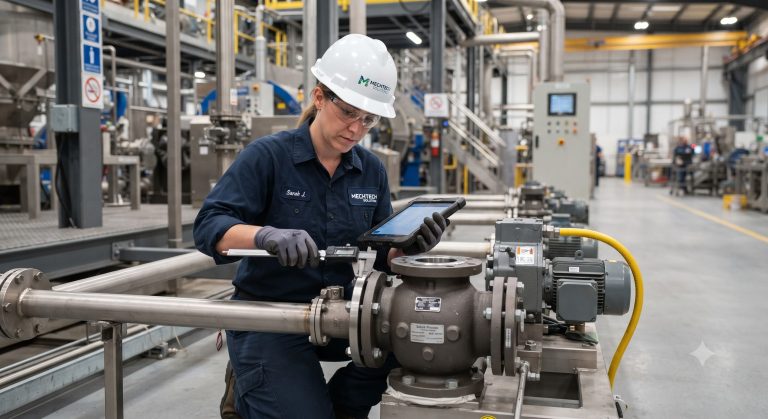
In modern processing plants, precision is paramount. The Doebritz gravity diverter valve excels in automated applications, featuring integration capabilities with PLC control and variable frequency drives (VFDs). By adjusting the rotor speed, the valve serves not only as an airlock but also as a precise metering device for batch metering and recipe metering. This dual functionality eliminates the need for separate feeding equipment, simplifying the system architecture and reducing capital expenditure.
High-Abrasion and Explosive Atmospheres
Industries such as chemical processing and mining regularly handle materials with high abrasiveness and combustible properties. Doebritz solutions for these sectors incorporate wear-resistant coatings (tungsten carbide, ceramic) and anti-wear profiles on internal surfaces. The valve’s ability to maintain precise clearances, even in erosive environments, ensures low leakage and prevents a phenomenon known as ‘dusting’ where fine particles escape through the clearances and create a hazardous dust cloud. When specified with an explosion-proof motor and pressure shock-resistant housing, the Doebritz valve is a certified safety component, providing peace of mind and compliance with stringent safety regulations like NFPA and ATEX.
Sanitary and Food-Grade Applications
For the food and pharmaceutical industries, hygiene is non-negotiable. The Doebritz gravity diverter valve can be supplied with a sanitary design, featuring quick-release disassembly for manual cleaning, as well as compatibility with online CIP (Clean-in-Place) and WIP (Wash-in-Place) systems. Internal surfaces are finished to a mirror-like Ra ≤ 0.4 μm to prevent bacterial growth and material adhesion. This design, combined with food-grade materials and FDA-compliant seals, ensures that the valve meets the most rigorous GMP standards for pharmaceutical powder and food ingredient handling.
Conclusion: The Doebritz Engineering Advantage for Future-Ready Plants
The selection of a gravity diverter valve should be a calculation of long-term value, factoring in energy efficiency, maintenance costs, and process reliability. By integrating precision clearances (0.1-0.2mm), robust metallurgy, and adaptable configurations, the Doebritz gravity diverter valve delivers superior airlock performance and operational flexibility. Whether you are handling abrasive lithium battery materials, heat-sensitive pharmaceutical powders, or high-volume food ingredients, this valve is engineered to be a resilient cornerstone of your material handling system. It minimizes blowback, reduces product degradation, and ensures the consistency your process demands, making it the premier choice for B2B engineers seeking a reliable, high-performance partner in bulk material management.