Introduction: The Convergence of Cobot Precision and Bulk Solids Handling
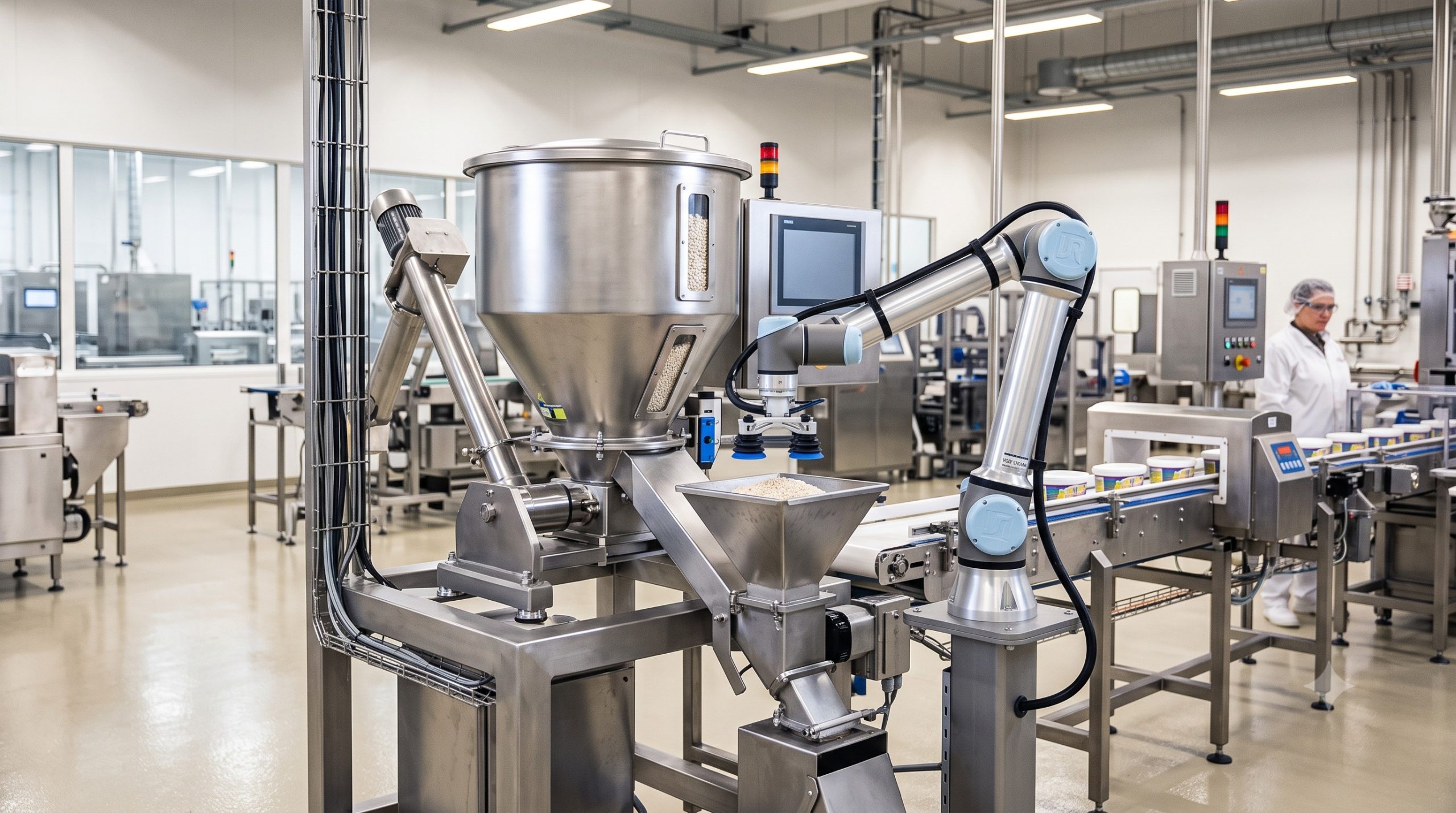
The industrial landscape is rapidly shifting towards flexible automation, with collaborative robots (cobots) increasingly deployed for tasks ranging from machine tending to intricate assembly . However, a critical, often overlooked component in these automated ecosystems, particularly in food, pharmaceutical, and chemical sectors, is the bulk material feeding station. For a collaborative robotic feeding station to function with micron-level precision, the upstream material handling must be flawless. This is where the engineering of the feeder and airlock becomes paramount. Doebritz has engineered a solution that bridges the gap between high-precision robotics and demanding bulk solids handling, ensuring that the very first step in the automation chain—material feeding—does not become a bottleneck. The result is a cohesive system where volumetric accuracy, absolute hygiene, and stringent safety compliance are built into the foundation, not added as an afterthought.
Integrating a Doebritz Quick-Release Rotary Valve into a collaborative robotic cell elevates the entire system’s performance. It provides the stable, consistent, and contamination-free material flow that cobots require for precise gripping, packaging, or further processing. For instance, in pharmaceutical applications where cobots handle individual doses, the upstream airlock must deliver material with zero segregation and at a perfectly uniform rate . This deep dive explores the engineering, safety, and operational nuances of deploying Doebritz technology within the sophisticated environment of a collaborative robotic feeding station, backed by specific metrics and compliance standards.
Metallurgy, Hygienic Design, and Cobot Integration
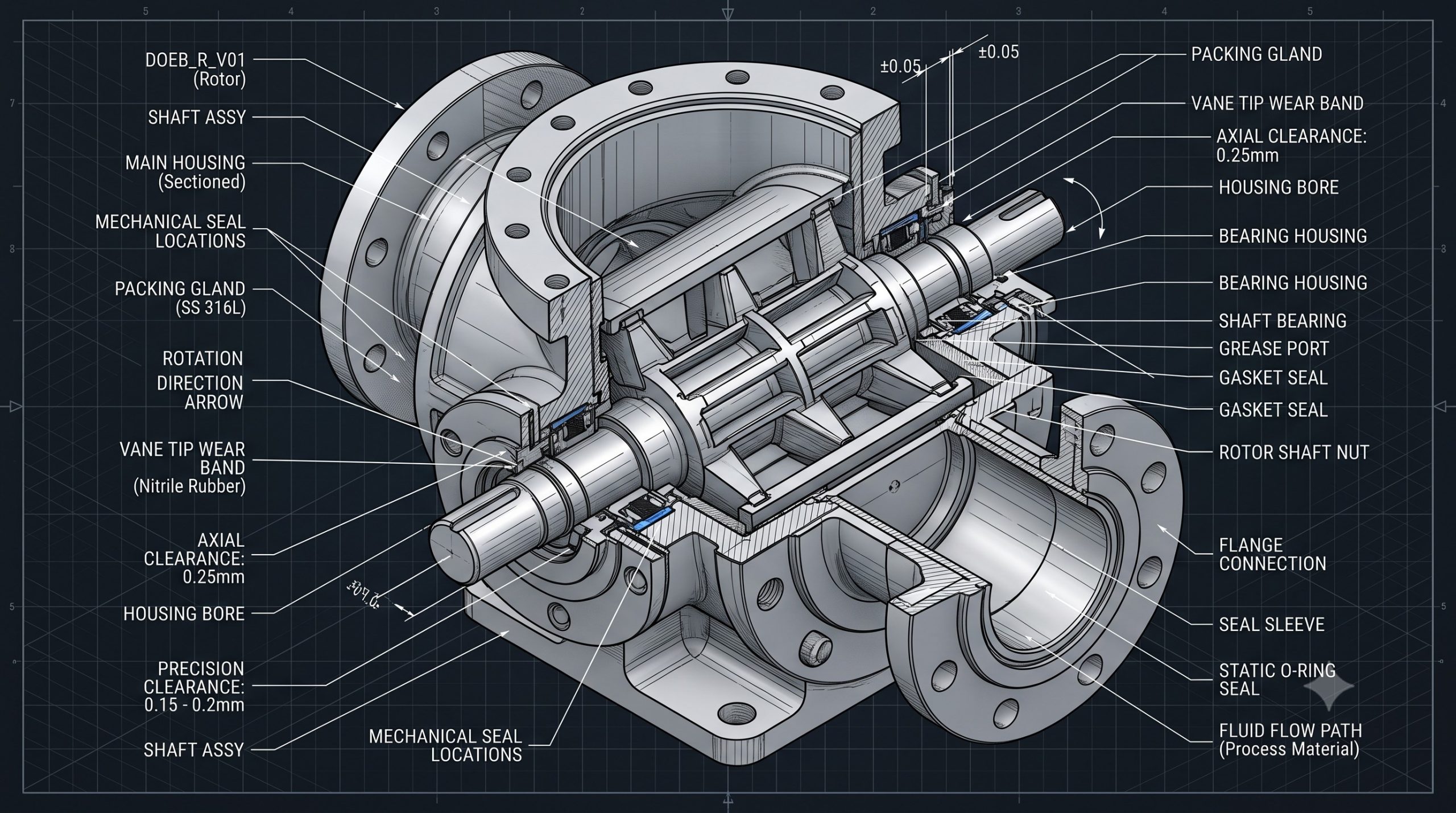
The foundation of any reliable feeding station is the valve’s construction. For collaborative robotic feeding stations operating under FDA and GMP guidelines, the valve body and rotor materials are non-negotiable. Doebritz offers construction in SUS304 and SUS316L stainless steel . These materials are selected for their corrosion resistance and inertness, critical for preventing chemical reactions with active pharmaceutical ingredients (APIs) or food products. The internal surface finish is a key enabler of hygiene, typically polished to Ra ≤ 0.8μm, effectively eliminating crevices where bacteria could proliferate. For high-temperature processes, which may involve steam sterilization, the standard operating temperature range extends from -10°C to 150°C, with optional configurations handling up to 200°C .
Beyond static materials, the physical design of the valve is orchestrated to facilitate seamless integration with cobots. The adoption of Tri-Clamp connections ensures a crevice-free interface between the valve and the upstream hopper or pipeline, a critical factor in maintaining a sterile boundary. While the cobot handles the precise manipulation of downstream products, the valve’s ‘Tool-less’ quick-release mechanism allows a single operator to dismantle, clean, and reassemble the valve in under 10 minutes using a standard wrench . This rapid maintenance capability is crucial for minimizing downtime in high-mix, low-volume (HMLV) production lines that rely on quick changeovers.
Dynamic Volumetric Efficiency and Discharge Rates
The volumetric efficiency of a rotary valve directly impacts the stability of a collaborative robotic feeding station. Fluctuations in material feed disrupt the cobot’s vision systems and gripper accuracy. Doebritz valves are precision-engineered to deliver consistent volumetric throughput. For example, hygienic models are verified to deliver capacities up to 634 L/min . To achieve this, the valve maintains an ultra-tight rotor-to-housing clearance of 0.15mm to 0.2mm . This precision, achieved through advanced CNC machining, minimizes air leakage across the inlet and outlet, a phenomenon known as blowback. By preventing back-pressure in the supply hopper, the valve ensures a steady, uninterrupted material stream, providing the cobot with a predictable and reliable source of material.
| Key Parameter | Technical Specification for Collaborative Systems |
|---|---|
| Material Construction | SUS304 / SUS316L Stainless Steel, optional wear-resistant coatings (Tungsten Carbide, Ceramic) |
| Internal Surface Finish | Ra ≤ 0.8 μm (Mirror/Electrolytically Polished), FDA/GMP compliant |
| Rotor-to-Housing Clearance | 0.15 mm to 0.2 mm (Ultra-tight, minimizes blowback) |
| Max Differential Pressure | Up to 2 Bar (Stable sealing integrity) |
| Operating Temperature Range | -10°C to 150°C (Standard), optional up to +200°C |
| Volumetric Capacity (Max) | Up to 634 L/min |
| Explosion Protection (ATEX) | Zone 20/21/22 Certified, pressure shock resistant >10 Bar |
| Safety Standards | CE, TÜV Certified; EN 1127-1:2019, EN ISO 80079-36:2016 |
| Connection Type | Sanitary Quick Clamp (Tri-Clamp) for hygienic systems |
| Maintenance Design | Quick-Release, Tool-free disassembly (<10 mins), CIP/WIP compatible |
Technical Specifications and Compliance for Automated Stations
The table below consolidates the critical technical parameters of the Doebritz valve family, directly addressing the requirements of automated and collaborative systems. These specifications provide the data necessary for system integrators to size the valve and validate its performance within the robotic cell.
| Key Parameter | Technical Specification for Collaborative Systems |
|---|---|
| Material Construction | SUS304 / SUS316L Stainless Steel, optional wear-resistant coatings (Tungsten Carbide, Ceramic) |
| Internal Surface Finish | Ra ≤ 0.8 μm (Mirror/Electrolytically Polished), FDA/GMP compliant |
| Rotor-to-Housing Clearance | 0.15 mm to 0.2 mm (Ultra-tight, minimizes blowback) |
| Max Differential Pressure | Up to 2 Bar (Stable sealing integrity) |
| Operating Temperature Range | -10°C to 150°C (Standard), optional up to +200°C |
| Volumetric Capacity (Max) | Up to 634 L/min |
| Explosion Protection (ATEX) | Zone 20/21/22 Certified, pressure shock resistant >10 Bar |
| Safety Standards | CE, TÜV Certified; EN 1127-1:2019, EN ISO 80079-36:2016 |
| Connection Type | Sanitary Quick Clamp (Tri-Clamp) for hygienic systems |
| Maintenance Design | Quick-Release, Tool-free disassembly (<10 mins), CIP/WIP compatible |
Enhanced Safety: ATEX and Explosion Protection
Collaborative robotic feeding stations are often deployed in environments containing combustible dusts, such as those found in food processing (sugar, flour), chemical manufacturing (resins, pigments), or pharmaceutical production (APIs). In these settings, safety is not merely a feature but a fundamental requirement of the system architecture. Doebritz valves are engineered to meet the most stringent international safety standards, including ATEX 2014/34/EU . The valve housing is built to withstand internal explosion pressures of > 10 bar, adhering to guidelines such as EN 1127-1:2019 and EN ISO 80079-36:2016 .
This explosion-resistant construction ensures that in the event of ignition, the valve contains the flame and pressure, preventing a deflagration from propagating to the rest of the plant. The certification is comprehensive, covering both gas and dust hazards. For instance, specific models carry the classification II 2/- G Ex h IIB T5 Gb for gas and II 2/- D Ex h IIIB T100°C Db for dust . This compliance aligns with the risk mitigation requirements for collaborative robot cells operating in ZONE 20/21/22 hazardous areas . By integrating a TÜV-certified valve , plant operators guarantee that their automated feeding station is compliant with the global safety standards required for the safe handling of explosive dusts (St1 and St2) .
Application Scenarios in Collaborative Systems
The integration of Doebritz rotary valves into collaborative robotic feeding stations is validated across a diverse range of high-stakes industries.
- Pharmaceutical Automated Lines: In the production of antibiotics, vaccines (including lyophilized powders), or vitamin blends, cobots are increasingly used for precise dosing and packaging. Doebritz valves with 316L material and clamp connections maintain the sterility of the feed stream, ensuring APIs are conveyed without contamination or segregation .
- Food & Dairy Cobot Cells: In applications like infant formula filling or dairy powder processing, cobots handle packaging with high precision. The hygienic design of the Doebritz valve, featuring quick dismounting for rapid cleaning between batches, supports the high changeover frequency of modern food production lines without compromising on the sanitary requirements (Ra < 0.8) .
- Lithium-Ion Battery and New Material Processing: For feeding sensitive materials like lithium ternary cathode materials or silicon powders, where contamination is detrimental, the valve’s precision gap control and abrasion-resistant coatings ensure pure and stable material flow, integrating seamlessly with automated robotic handling of individual cells or components .
Conclusion: Elevating Plant Automation with Doebritz Engineering
In the era of Industry 4.0, the success of a collaborative robotic feeding station hinges on the reliability and precision of its upstream material handling. By integrating a Doebritz Quick-Release Rotary Valve, plant engineers address the fundamental challenges of airlock integrity, sanitary design, and safety compliance at the source. The valve’s verified performance metrics—from its 0.15mm clearance and 2 bar pressure capability to its 634 L/min capacity—provide the quantifiable assurance that the system will deliver consistent, high-quality material to the cobot’s pick point. This technical synthesis creates an automated cell that is not only highly efficient but also safe, clean, and resilient, maximizing operational uptime and return on investment.