Overview
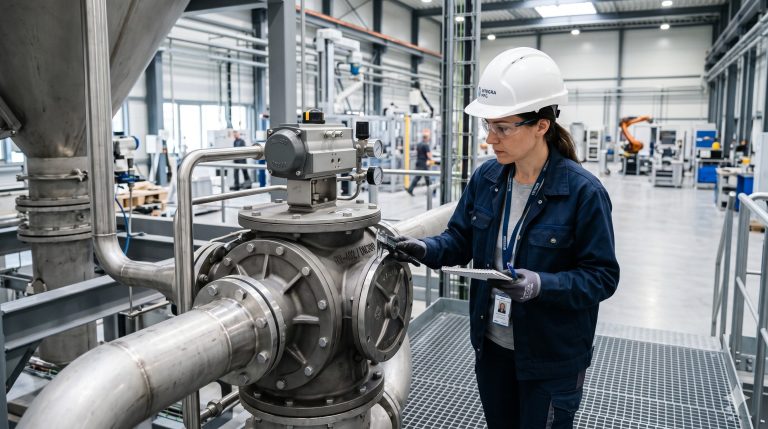
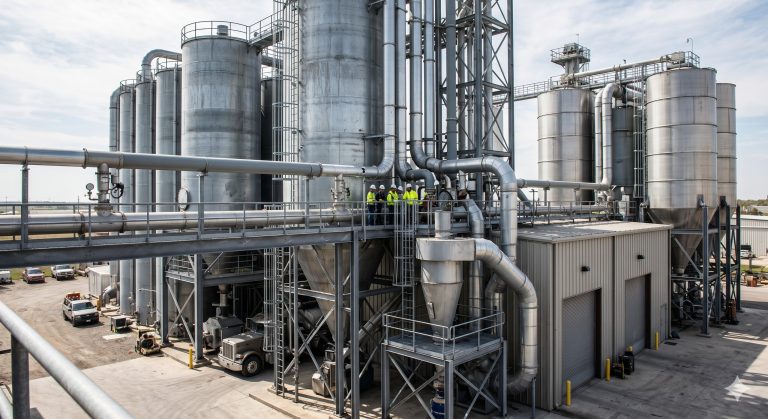
When sourcing rotary valves for potentially explosive powder handling environments, B2B procurement and plant maintenance managers prioritize certified ATEX documentation and robust safety features. The Doebritz DBR-1237 gravity quick-release rotary valve is engineered to meet these critical demands, offering comprehensive ATEX compliance, explosion isolation up to 16 bar, and full CE/TÜV certification. Below we address the most common high-intent technical questions regarding ATEX documentation, explosion-proof configurations, and maintenance protocols for this equipment.

Frequently Asked Questions
- Q1: Do you provide ATEX documentation for the Doebritz DBR-1237 valves, and what specific explosion protection levels are covered?
- Yes, Doebritz provides full ATEX documentation packages with every certified DBR-1237 valve. These valves are officially rated for explosion protection in Zone 20, Zone 21, and Zone 22 hazardous areas. The comprehensive documentation includes the ATEX Certificate of Conformity, a detailed Instruction Manual for safe installation and operation in explosive atmospheres, and specific declarations covering the equipment’s explosion isolation capability. This ensures seamless compliance for plant safety audits and regulatory inspections.
- Q2: How does the Doebritz DBR-1237 achieve the critical 16-bar explosion isolation rating stated in its specifications?
- The Doebritz DBR-1237 achieves its robust 16 bar explosion isolation rating through a combination of its heavy-duty construction and precision engineering. The valve features a rugged housing designed to contain an internal deflagration without rupturing, coupled with an exceptionally tight rotor-to-housing clearance of 0.1 to 0.2 mm. This narrow gap acts as a flame-arresting barrier, effectively quenching a flame front and preventing it from propagating from the upstream to the downstream side of the system. For high-risk applications, this explosion-proof configuration can be further specified with an ATEX-certified, 16 bar pressure-rated motor.
- Q3: Does the Doebritz DBR-1237 meet other international safety and quality standards besides ATEX?
- Absolutely. In addition to its ATEX certification, the Doebritz DBR-1237 quick-release rotary valve is backed by rigorous third-party certifications that demonstrate its global compliance and quality. The valve holds CE certification, confirming it meets the essential health, safety, and environmental protection requirements for products sold within the European Economic Area. Furthermore, it is TÜV certified, providing independent verification of its safety and performance. Doebritz also offers a Statement of Compliance upon request, which can be tailored to confirm adherence to specific customer or regional safety standards for a comprehensive compliance package.
- Q4: Are the ATEX-certified Doebritz DBR-1237 valves suitable for processing abrasive materials without compromising safety or seal integrity?
- Yes, the Doebritz DBR-1237 is specifically engineered to handle highly abrasive materials while maintaining its ATEX safety integrity and effective sealing. For these demanding applications, the valve internals can be specified with a range of hard-wearing coatings. Doebritz offers tungsten carbide (WC) coatings, ceramic coatings, and high-performance polymer linings (like PE, PTFE, and PA). These protective layers significantly extend the service life of the rotor and housing, preventing the metal-to-metal wear that could increase rotor clearances and compromise both the explosion-proof seal and the valve’s critical 0.1-0.2 mm clearance needed for flame quenching.
- Q5: What are the flange and connection standards available for the Doebritz DBR-1237 to ensure proper ATEX-compliant installation?
- To facilitate seamless and ATEX-compliant integration into existing piping systems, the Doebritz DBR-1237 is manufactured with HG20592 standard flanges as the default. However, recognizing that plants operate globally with different standards, Doebritz offers full flexibility for custom flange matching, including DIN and ANSI configurations. This ensures a safe, leak-free connection, which is paramount in ATEX environments to prevent the release of potentially explosive dust into the surrounding area. This custom service ensures the valve can be mounted correctly without modifications that could void its ATEX certification.
- Q6: How does the Doebritz DBR-1237’s quick-release design facilitate safe maintenance and cleaning, especially in ATEX zones?
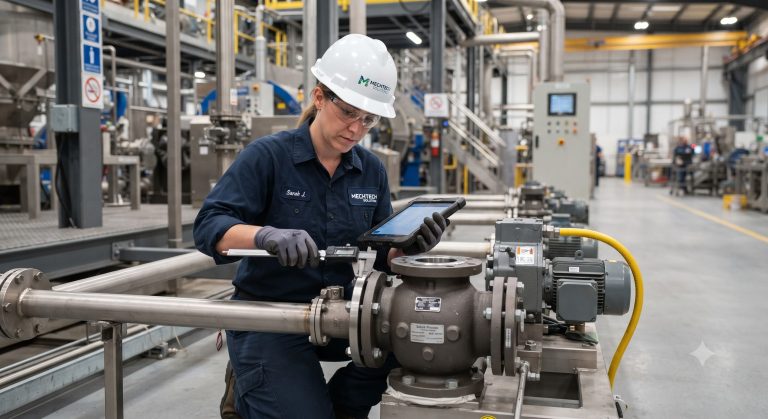
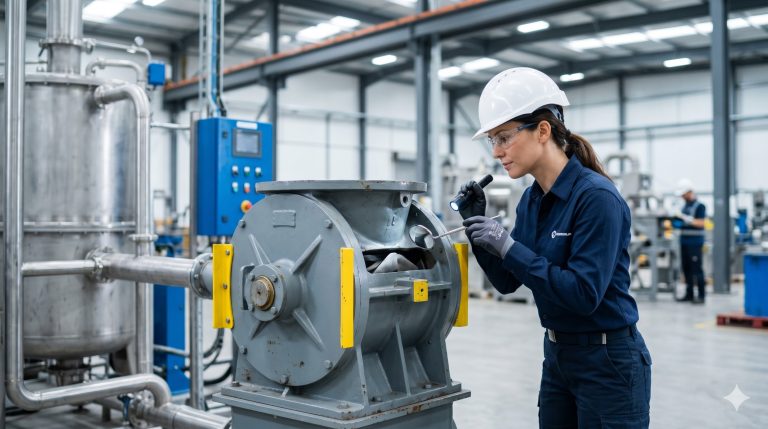
- The Doebritz DBR-1237’s proprietary quick-release mechanism is a key safety feature for maintenance in ATEX zones, as it dramatically reduces the time personnel need to spend in hazardous areas. The design allows for rapid, tool-free disassembly and reassembly of the valve internals. This feature not only streamlines routine service and inspection but also supports a range of cleaning protocols essential for product changeovers or hygiene. Post-ATEX maintenance, the valve can be easily manually cleaned after disassembly, or cleaned in place (CIP/WIP), minimizing the potential for dust accumulation and mitigating explosion risks inherent in powder processing facilities.
- Q7: What are the recommended spare parts to keep on hand for the Doebritz DBR-1237 to ensure minimal downtime and maintain ATEX compliance?
- To maintain the ATEX certification and ensure maximum operational uptime for the Doebritz DBR-1237, plant maintenance engineers should keep a designated set of genuine Doebritz spare parts in stock. The most critical spare parts are the shaft lip seals and, depending on the configuration, the gland packing. These sealing components are vital for preventing dust ingress into the bearing housing and maintaining the pressure-tight seal required for ATEX integrity. It is imperative to source only approved Doebritz parts for replacements, as they are manufactured to the exact tolerances and specifications required to maintain the valve’s safety rating, including the crucial 0.1-0.2 mm rotor clearance and the integrity of the 16-bar explosion-proof housing.