Overview
When plant managers evaluate rotary valves, the choice often comes down to performance, longevity, and total cost of ownership. Doebritz quick-release rotary valves (DBR-1237) are engineered to deliver superior uptime and lower maintenance costs, particularly in demanding pneumatic conveying and gravity discharge applications. This FAQ addresses the most critical technical and procurement questions from B2B buyers.
Frequently Asked Questions
- Q1: What specific anti-wear measures does the Doebritz DBR-1237 valve offer for handling highly abrasive bulk solids like carbon black, titanium dioxide, or battery materials?
- The Doebritz DBR-1237 handles abrasive materials using a multi-layered defense strategy: base material options of SUS304 or SUS316L stainless steel with advanced protective coatings including tungsten carbide, ceramic, or specialized polymer linings.
- For extreme applications, carbon steel with tungsten carbide coating is recommended, ensuring extended service life and predictable maintenance intervals.
- Q2: Does the Doebritz DBR-1237 conform to ATEX and explosion safety standards, and what is its maximum pressure rating for isolated zones?
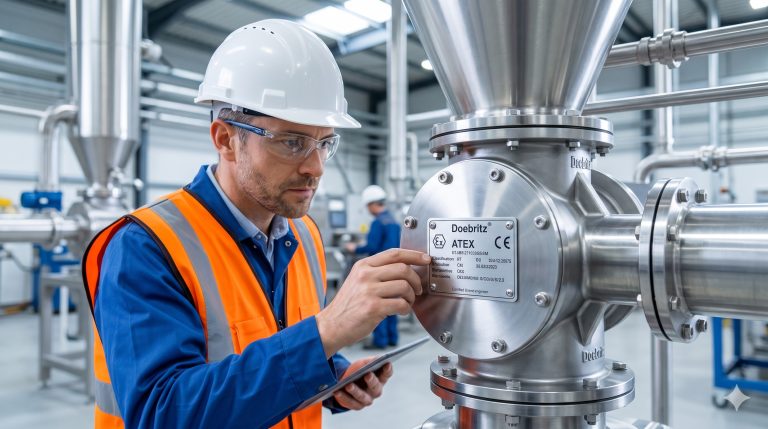
- Yes, the Doebritz DBR-1237 is fully certified for ATEX zones 20, 21, and 22, meeting strict European safety standards for explosive dust atmospheres.
- For explosion isolation duty, the valve is rated for a maximum pressure of 16 bar, with precise rotor-to-housing clearances of 0.1-0.2mm to prevent spark generation and minimize pressure shock transmission.
- Q3: How does Doebritz support custom flange configurations and dimensions, particularly for non-standard DIN or ANSI installations?
- Doebritz provides full customization for flanges, adhering to standard HG20592 specifications as a baseline while offering flexible adaptation to DIN and ANSI requirements.
- We support modification to non-standard heights and drive configurations (including IEC and NEMA motor flanges) to ensure seamless integration with existing plant infrastructure, reducing installation lead times and costs.
- Q4: What are the typical maintenance intervals, and how does the quick-release design minimize downtime?
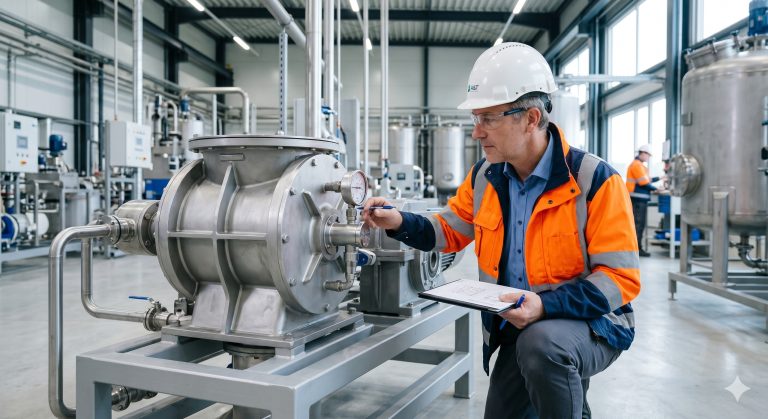
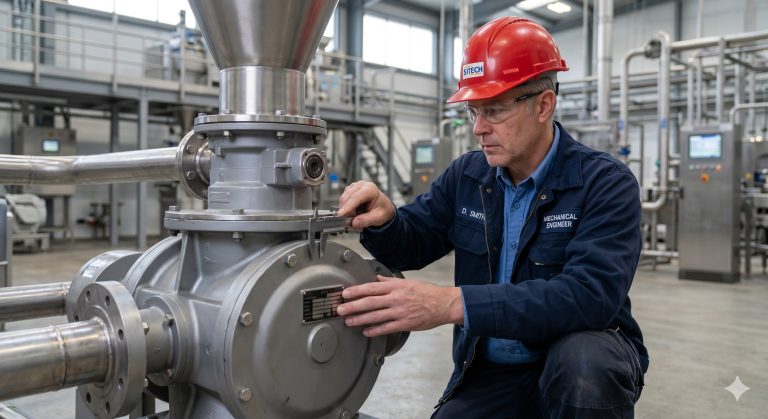
- The Doebritz quick-release design enables tool-free disassembly, allowing complete access to the rotor and valve body.
- For most applications, recommended maintenance is performed at scheduled plant shutdowns; however, the quick-release mechanism enables rapid inspection, cleaning, or vane replacement in under 30 minutes, compared to hours required for conventional bolted designs, significantly reducing unplanned downtime.
- Q5: What sealing technologies does Doebritz employ to prevent air leakage and powder escape, particularly for pharmaceutical and food applications?
- Doebritz utilizes advanced lip seal air-tight sealing in conjunction with precision-engineered clearances to ensure minimal air leakage and zero powder escape.
- For sanitary applications (food/pharma), the DBR-1237 features a hygienic quick-release structure, CIP/SIP capability, and internal surfaces polished to Ra ≤ 0.4μm. The valve supports cleanroom classifications from Class W to D, including 10W and 30W grades, meeting stringent FDA and GMP requirements.
- Q6: How does the Doebritz DBR-1237 perform in dense phase pneumatic conveying systems with high differential pressures?
- The Doebritz DBR-1237 is specifically designed to handle the high differential pressures of dense phase feeding, with rotor and housing clearances optimized to maintain volumetric efficiency and prevent blowback.
- For operations requiring pressure up to 1 bar (and higher with custom designs), our valve maintains a leakage rate below industry norms, ensuring consistent throughput and reduced energy consumption.
- Q7: What is the total cost of ownership (TCO) advantage compared to traditional European rotary valve suppliers?
- Doebritz offers a lower TCO through extended mean time between failures (MTBF), reduced maintenance frequency, and minimized energy loss due to superior sealing.
- Field data shows up to 30% reduction in maintenance costs over a 5-year period, driven by our direct drive options, outboard bearing housing, and use of premium wear-resistant coatings. Additionally, our global support network and rapid spare parts availability ensure minimal production interruption.