Introduction: The Critical Role of Quick-Release Rotary Valves in Bulk Solids Handling
In the demanding world of powder and bulk solids handling, a seemingly simple component often serves as the linchpin for operational efficiency, product quality, and plant safety. The rotary airlock valve, or rotary valve, is one such component. When designed for high performance, it ensures the consistent discharge of materials from storage silos and hoppers while simultaneously maintaining a critical pressure differential essential for pneumatic conveying systems. For facilities grappling with production bottlenecks, contamination risks, and maintenance downtime, the transition to a quick-release rotary valve design represents a significant engineering upgrade.
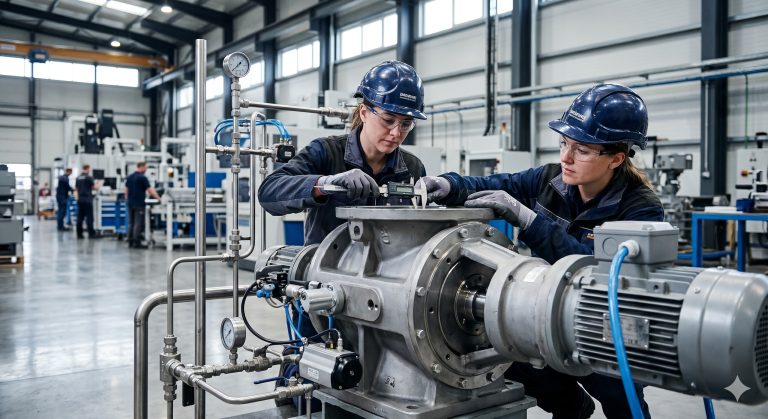
Rotary valves are key, but often underappreciated, components in many dry bulk solids applications. A malfunctioning rotary airlock valve can reduce a system’s operating efficiency or stop production entirely . This guide offers a deep technical dive into the engineering principles behind a premium quick-release rotary valve, focusing on critical aspects such as precision clearances, rotor geometry, material science for abrasion resistance, and ATEX-compliant safety.
Specifically, we will explore the design philosophy of the Doebritz Quick-Release Rotary Valve, which is engineered to solve some of the industry’s toughest challenges, including high air leakage, tedious cleaning processes, and safety compliance . Backed by German technical expertise, the Doebritz solution emphasizes unparalleled dynamic air tightness, maximum safety, and maximum uptime .

Housing & Rotor Engineering: The Foundation of Reliability
The core of a quick-release rotary valve lies in the intricate relationship between its housing and rotor. The engineering challenge is to create a mechanism that can handle the mechanical stress of conveying while maintaining an airlock seal.
Precision Clearances for Optimal Airlock Performance
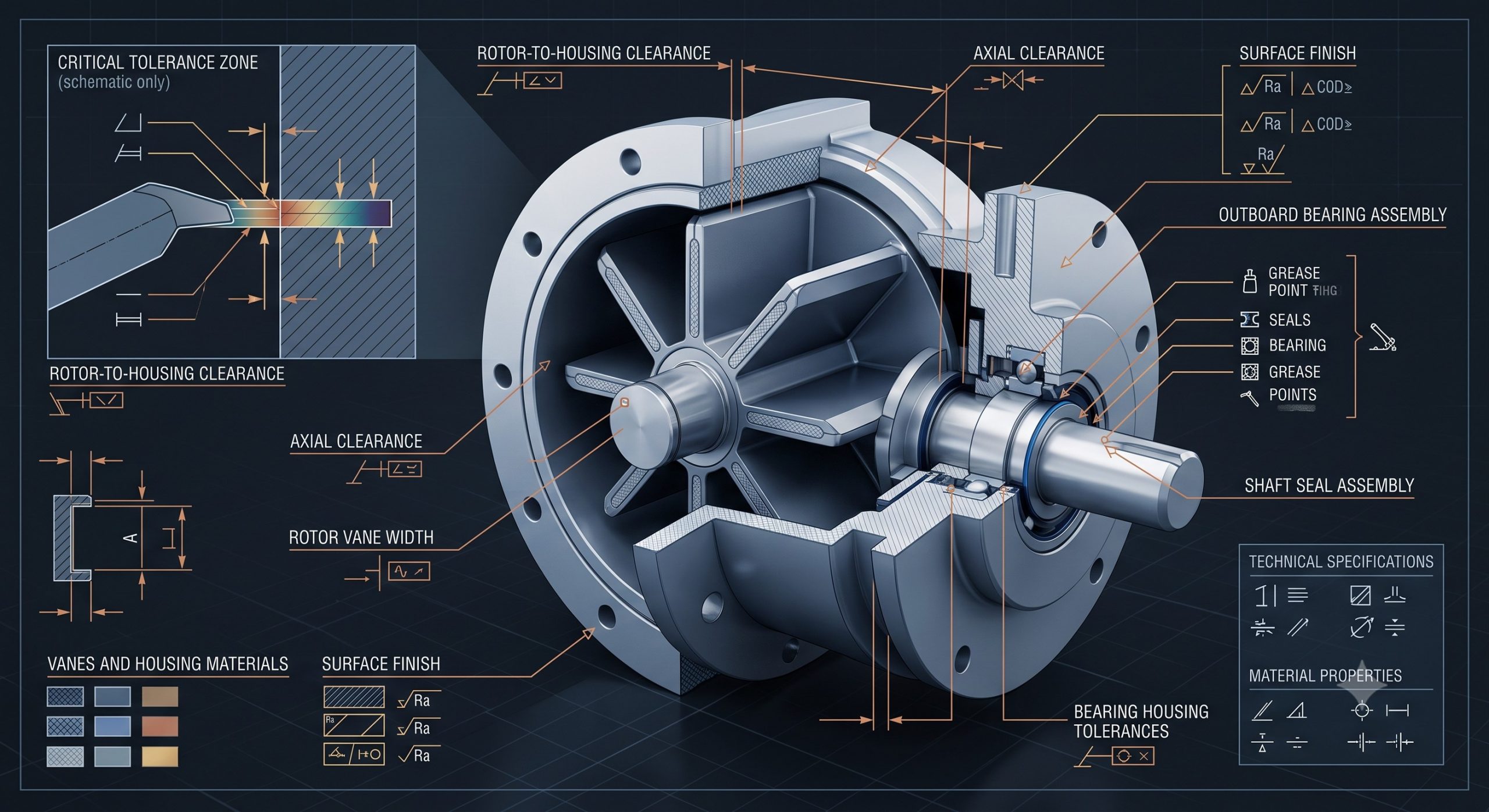
To perform effectively as an airlock, the gap between the rotating vanes and the stationary housing must be extremely tight, often less than 0.0079 inches (0.2 mm) for high-pressure applications . This tolerance is what supports throughput stability by limiting air leakage across the valve while still allowing for reliable rotation. In Doebritz designs, this precision is taken to the next level. Their TÜV-certified explosion-proof rotary valves feature a rotor-to-housing clearance of just 0.15mm – 0.2mm, setting a high standard in the powder handling industry .
This ultra-tight clearance is critical for maintaining dynamic air tightness. It effectively prevents powder from leaking at silo outlets, guaranteeing zero static leakage, and stops blowback air from reaching dumping stations during positive pressure conveying .
Metallurgy & Construction Materials
The choice of material is a primary factor in the valve’s lifespan and suitability for different industries. The base material must be robust enough to handle the mechanical loads and corrosive environments.
- SUS304/SUS316L Stainless Steel: These are the standard choices for high-corrosion-resistance and sanitary applications. The Doebritz Easy Clean Drop Through Rotary Valve features a body made from 304/316L stainless steel, with surfaces electrolytically polished to Ra≤0.8μm, compliant with FDA/GMP standards . This finish is vital for preventing material buildup and cross-contamination .
- Carbon Steel & Coatings: For abrasive or highly corrosive materials, base materials can be enhanced. Options include carbon steel with paint or nickel plating for basic corrosion resistance, or stainless steel with tungsten carbide, ceramic, or PTFE coatings. These coatings are essential for handling abrasive powders like carbon black or lithium battery materials.
Rotor Design and Vane Dynamics
The rotor is the heart of the quick-release rotary valve, and its design dictates the valve’s capacity and sealing efficiency. There are several critical rotor design choices:
- Open-End vs. Shrouded Rotors: An open-end rotor has vanes that extend the full width of the housing, providing more surface area for a better air seal . However, this exposes the end covers to abrasive wear. A shrouded (or closed-end) rotor has discs at the ends, keeping material away from the end covers. This is ideal for abrasive and high-temperature applications, though it offers a slightly less effective air seal .
- Vane Geometry: The standard V-shaped pocket works well for most materials, but for sticky or cohesive products, a scalloped or U-shaped pocket allows for better product release . Beveled edges on rotor vanes reduce drag and allow wedged particles to escape, preventing valve seizure .
Technical Specifications
For engineering professionals, a data-driven approach is essential. The following table provides a comprehensive overview of the key technical specifications and customizable options for a high-performance Doebritz quick-release rotary valve. These parameters are vital for ensuring system compatibility and optimal performance.
| Key Parameter | Technical Specification | Engineering Significance |
|---|---|---|
| Max Differential Pressure | Up to 2.5 MPa (25 Bar) | Indicates the valve’s ability to maintain an airlock under high pressure, crucial for dense phase conveying. |
| Operating Temperature | -15°C to +150°C (Standard) | Defines the ambient and material temperature range the valve can withstand, a critical factor in many processes. |
| Rotor-to-Housing Clearance | 0.15mm – 0.2mm | This ultra-tight clearance is the primary determinant of air leakage and sealing efficiency, directly impacting energy costs and system stability. |
| Housing & Rotor Material | SUS304, SUS316L, Carbon Steel with Coatings (Tungsten Carbide, Ceramic) | Material choice dictates corrosion resistance, abrasion resistance, and compliance with sanitary standards. |
| Surface Finish (Internal) | Ra ≤ 0.8µm (Electrolytically Polished) | A high-polish finish is essential for preventing material adhesion, enabling CIP cleaning, and meeting FDA/GMP requirements. |
| Explosion-Proof Certification | ATEX Zone 20/21/22, TÜV Certified | Confirms the valve is designed as a flame barrier to prevent the propagation of deflagrations, ensuring plant safety. |
| Quick-Release Mechanism | Clamp-type quick-connect / Drawer-type pull-out | Enables tool-free disassembly, reducing maintenance time and facilitating thorough cleaning without specialized tools. |
| Capacity | Up to 634 L/min | The volumetric throughput of the valve, essential for sizing the equipment to meet production demands. |
Heavy-Duty Application Scenarios
The true value of a robust quick-release rotary valve is demonstrated across a range of demanding industrial applications. Doebritz’s engineering caters to several key scenarios where performance, safety, and cleanliness are paramount.
Sanitary Food & Pharmaceutical Processing
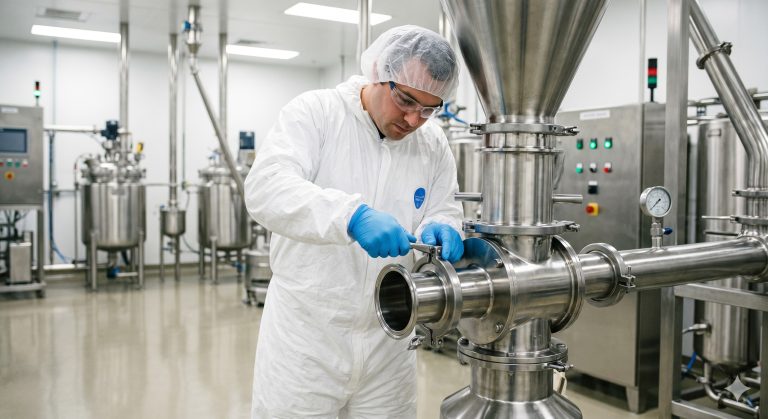
In food and pharmaceutical manufacturing, cross-contamination is a major risk. Traditional valves require hours of labor and specialized tools to disassemble for cleaning . The quick-release design of Doebritz valves addresses this head-on. The innovative drawer-type structure allows the rotor to be seamlessly pulled out on guide rails, enabling thorough cleaning without complex tools or dismantling the main pipeline .
With internal surfaces polished to Ra < 0.8, the valve prevents material buildup and cross-contamination . The seal materials, such as EPDM, food-grade silicone, or PTFE, are chosen to meet FDA and EHEDG standards, making the valve suitable for applications from milk powder and spices to pharmaceutical ingredients .
Explosion-Proof Safety: ATEX & NFPA Compliance
In many bulk handling systems, the rotary valve is more than just a feeder; it is a critical safety device . If a dust explosion occurs, the valve must act as a barrier to prevent the flame and pressure wave from propagating . The Doebritz TÜV-certified explosion-proof rotary valve is specifically engineered to meet these stringent requirements. It is certified for hazardous zones, including Gas II 2/- G Ex h IIB T5 Gb and Dust II 2/- D Ex h IIIB T100°C Db, in compliance with EN 1127-1:2019, EN ISO 80079-36:2016, and EN ISO 80079-37:2016 standards .
A key feature of this design is the reinforced valve housing, which is engineered to withstand internal explosion pressures of > 10 bar . This robust construction ensures that the valve can contain a deflagration event, protecting upstream and downstream equipment and personnel.
High-Wear & Abrasive Material Handling
Abrasive materials like cement, fly ash, or glass cullet can destroy a standard cast iron valve in weeks . Wear typically begins at the tips of the rotor vanes, and as the gap increases, air leakage skyrockets, and system pressure drops .
To combat this, Doebritz offers specialized solutions. Options include hard-chrome plated bores, ceramic linings, or carbon-tungsten coatings on the rotor and housing. These treatments are crucial for extending the mean time between failures (MTBF) for processes handling minerals, battery materials, and other abrasive substances. The precision-machined clearances are maintained even as the rotor surface is hardened, ensuring the valve continues to function as an effective air seal.
Conclusion: The Strategic Impact of Advanced Valve Design
Selecting the correct quick-release rotary valve, rotor, and design features is critical to ensure successful operation with minimal air leakage and down time, along with maximum valve life . The engineering principles behind a valve—from the metallurgy of its housing to the sub-millimeter clearances of its rotor—have a direct and measurable impact on plant profitability.
By investing in a high-performance design like that offered by Doebritz, facilities can achieve:
- Reduced Total Cost of Ownership (TCO): The quick-release design drastically cuts maintenance time, and the durable materials extend the valve’s lifespan.
- Enhanced Process Efficiency: Ultra-tight clearances minimize air leakage, ensuring consistent pressure in pneumatic conveying systems and reducing energy waste.
- Uncompromised Safety & Compliance: TÜV-certified explosion-proof designs provide a dependable barrier against dust explosions, protecting personnel and assets.
- Unmatched Product Quality: Sanitary designs with high-polish finishes and CIP compatibility ensure product purity and regulatory compliance for the food and pharmaceutical industries.
For engineers, maintenance managers, and plant operators, the choice of a quick-release rotary valve is a strategic investment that solves the industry’s toughest challenges, guaranteeing unparalleled dynamic air tightness, maximum safety, and maximum uptime .