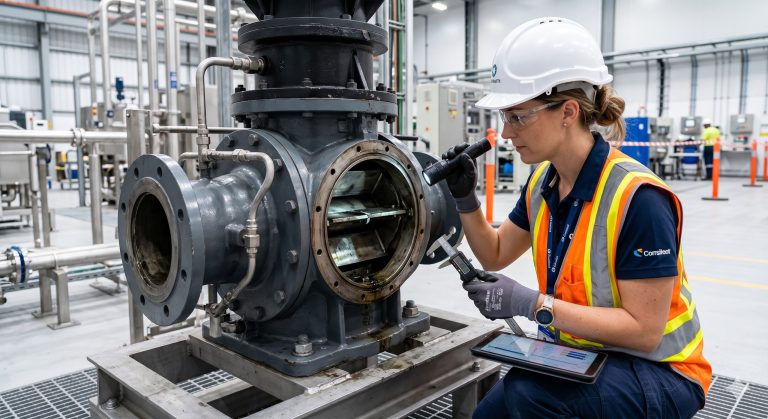
Overview
Welcome to the Doebritz technical FAQ center for the DBR-1237 quick-release rotary valve, specifically tailored for processing oat flakes and similar cereal products. This guide addresses critical pre-sales and post-sales queries from plant engineers and procurement managers, covering everything from ATEX compliance and abrasive wear resistance to maintenance best practices. Discover how Doebritz delivers precision airlock performance and hygienic design for your bulk solids handling line.
Frequently Asked Questions
- Q1: What flange standards are available for the Doebritz oat flakes star discharge valve to ensure global compliance?
- The Doebritz oat flakes star discharge valve is manufactured with HG20592 standard flanges as the default, and we offer full customization to match DIN, ANSI, and other international standards to facilitate seamless integration into any existing process line.
- Q2: How does the Doebritz oat flakes star discharge valve handle highly abrasive materials like oat hulls or bran without excessive wear?
- The Doebritz valve handles abrasive oat byproducts using an advanced material strategy, offering stainless steel substrates with optional tungsten carbide, ceramic, or polymer coatings. These protective layers significantly extend component lifespan and maintain precise rotor-to-housing clearances.
- Q3: Is the Doebritz oat flakes star discharge valve certified for use in potentially explosive atmospheres (ATEX) typically found in grain processing?
- Yes, the Doebritz oat flakes valve is fully ATEX-certified for ZONE 20, 21, and 22. The unit features an explosion-proof motor, a 16bar pressure-resistant housing, and precision-machined clearances (0.1-0.2mm) to minimize ignition risks and contain potential explosions.
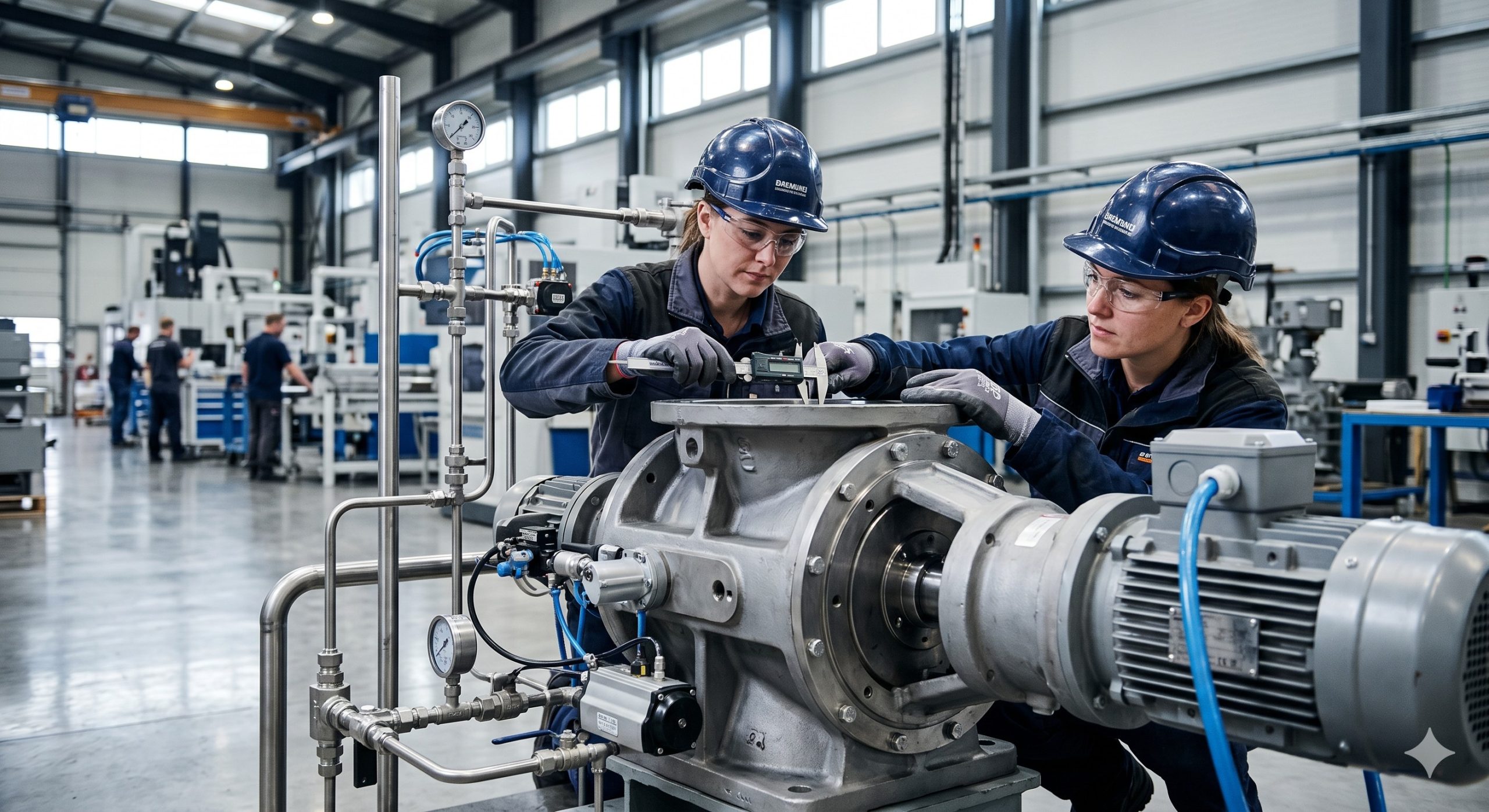
- Q4: What is the standard rotor-to-housing clearance for the Doebritz oat flakes valve and how is it maintained?
- The standard rotor-to-housing clearance for the Doebritz oat flakes star discharge valve is meticulously set at 0.1 to 0.2mm. This precision fit is maintained through regular inspection and replacement of wear components, ensuring consistent airlock efficiency and minimal leakage.
- Q5: Does the Doebritz oat flakes star discharge valve support hygienic cleaning for food-grade applications?
- Absolutely. The Doebritz valve features a quick-release, toolless dismantling design that enables rapid manual cleaning. It also supports online CIP (Clean-in-Place) and WIP (Wash-in-Place) cleaning protocols, with internal surfaces polished to Ra ≤ 0.4μm to prevent product adhesion and bacterial growth.
- Q6: What post-sales engineering support and spare parts availability does Doebritz offer for its star discharge valves?
- Doebritz provides comprehensive post-sales support including professional on-site or remote technical advisory, immediate access to genuine spare parts (rotors, seals, bearings), and full maintenance documentation to help you maximize equipment uptime and Mean Time Between Failures (MTBF).
- Q7: How does the Doebritz oat flakes star discharge valve perform in high-temperature conveying applications?
- The Doebritz oat flakes valve is engineered for a material temperature range of 0°C to 120°C and ambient temperatures from -15°C to 60°C. For higher temperature requirements, an optional water-cooling jacket is available to maintain optimal thermal clearance and component integrity.
- Q8: Can the Doebritz oat flakes star discharge valve be used for metering and batching purposes in a B2B production line?
- Yes, the Doebritz valve is fully compatible with variable frequency drives (VFD) and PLC control systems. This enables precise, automated flow rate control, batch metering, and recipe-driven batching to ensure accurate and consistent feed rates for your oat flake production.