Overview
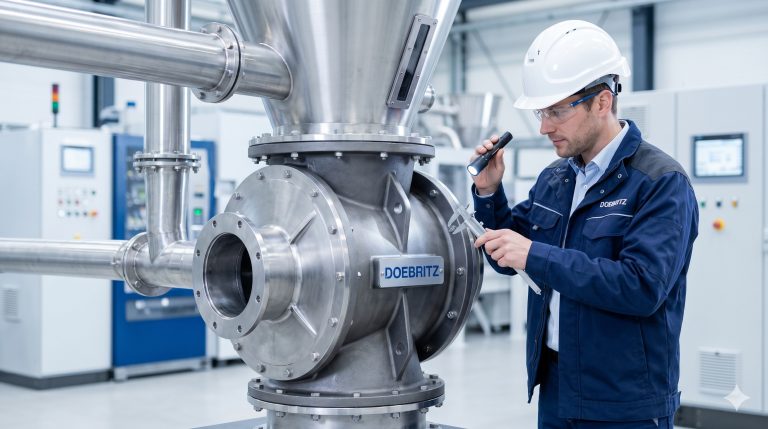
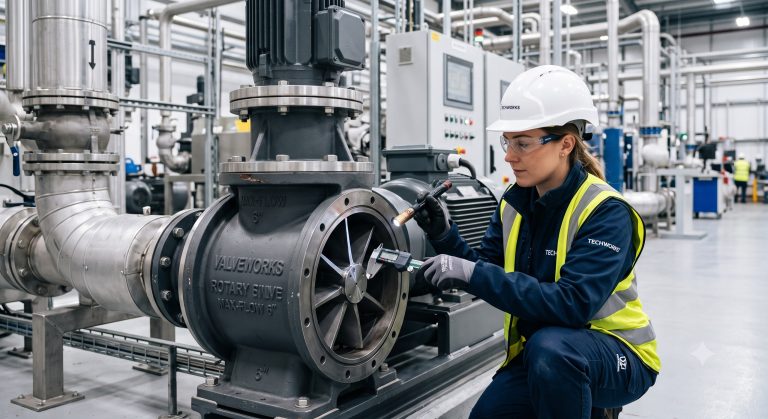
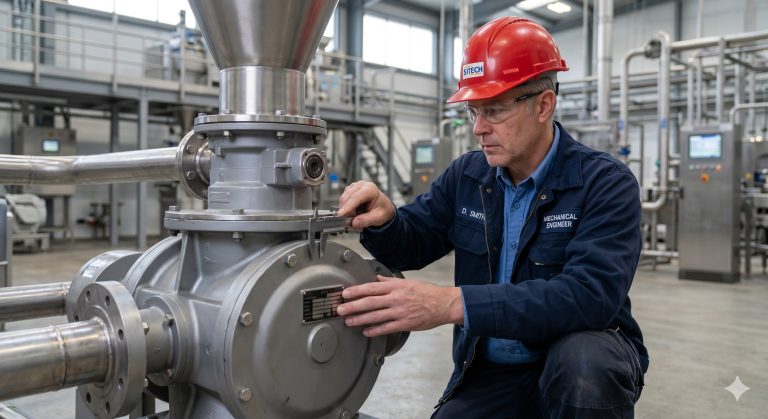
Doebritz engineers its Quick-release rotary valve (DBR-1237 series) specifically for hygienic powder handling. This FAQ addresses pre-sales and post-sales concerns for plant maintenance and procurement managers handling milk powder, whey powder, and other dairy ingredients. All answers are based strictly on Doebritz published specifications.
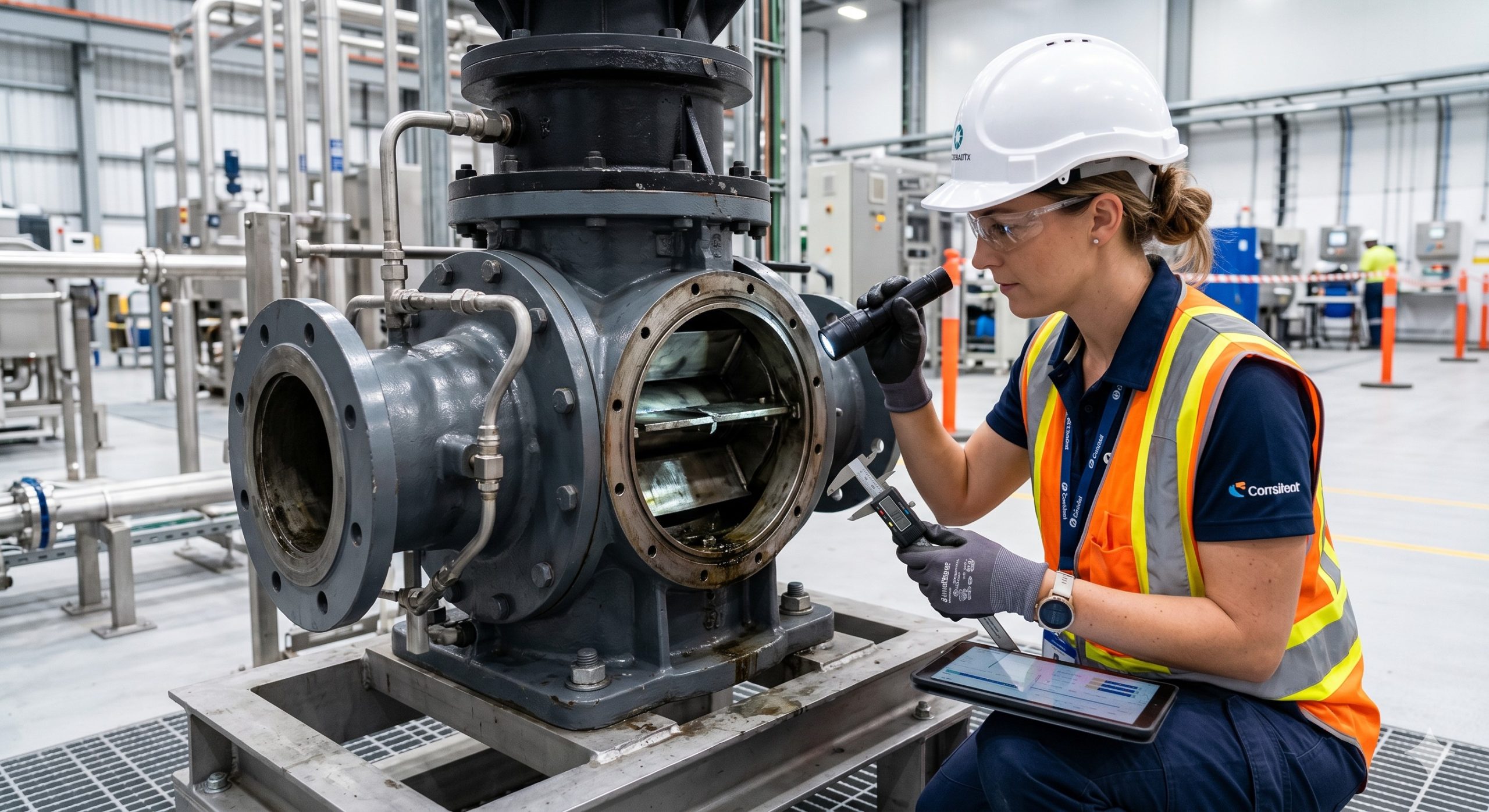
Frequently Asked Questions
- Q1: What is the standard rotor-to-housing clearance for the Doebritz milk powder airlock feeder, and how does it affect leakage?
- The Doebritz milk powder airlock feeder maintains a precision rotor-to-housing clearance of 0.1–0.2 mm. This tight tolerance significantly reduces air leakage, ensures stable pneumatic conveying pressure, and minimizes product blowback, which is critical for maintaining milk powder flow consistency and preventing dust emissions.
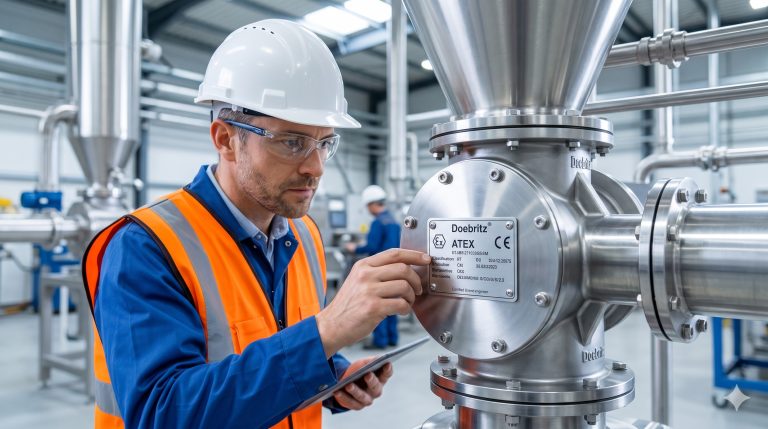
- Q2: Is the Doebritz DBR-1237 rotary valve ATEX certified for milk powder processing lines?
- Yes, the Doebritz DBR-1237 rotary valve offers ATEX certification covering Zone 20, Zone 21, and Zone 22 explosive dust atmospheres. For milk powder applications, the valve can be supplied with an explosion-proof motor, pressure rating up to 16 bar, and precision gap design to contain potential flame propagation, meeting EU safety standards.
- Q3: What flange standards are available for the Doebritz milk powder airlock feeder?
- The Doebritz milk powder airlock feeder comes standard with HG20592 flanges. For international integration, Doebritz also supports DIN and ANSI flange configurations on request. Common interface sizes include DN50, DN100, DN150, DN200, DN300, and DN350.
- Q4: How do I adjust the rotor clearance or replace shaft seals on a Doebritz milk powder rotary valve?
- The Doebritz quick-release design allows tool-free access to the rotor and shaft seals. To adjust clearance, remove the end cover and use the outboard bearing housing set screws (factory-set to 0.1–0.2 mm; re-shimming required for wear). For shaft seal replacement, remove the bearing housing to access lip seals or optional air-purge gland packing. Doebritz recommends seal inspection every 2,000 operating hours for milk powder.
- Q5: Does the Doebritz milk powder airlock feeder support online CIP cleaning?
- Yes, the Doebritz milk powder airlock feeder supports online CIP cleaning without disassembly. The internal surfaces are polished to Ra ≤ 0.4μm (mirror finish) or Ra ≤ 0.8μm, with no dead corners, preventing milk powder residue buildup. For deeper sanitation, the quick-release design enables manual cleaning after disassembly. Optionally, WIP cleaning followed by manual inspection is also available.
- Q6: What materials of construction are available for corrosive or abrasive milk powder additives?
- Standard Doebritz milk powder airlock feeders are built from SUS304 or SUS316L stainless steel. For abrasive ingredients (e.g., spices blended with milk powder), Doebritz offers tungsten carbide coating, ceramic coating, or polymer liners (PE, PTFE, PA). For corrosive environments (e.g., acidic fruit powder blends), SUS316L with electropolished surfaces is recommended.
- Q7: Can the Doebritz milk powder airlock feeder be used for gravimetric or batch metering?
- Absolutely. The Doebritz milk powder airlock feeder supports variable frequency drive (VFD) speed control and PLC integration. It achieves batch metering and recipe metering for automated配料 lines. The precision clearance ensures no leakage or powder loss, making it suitable for both continuous discharge and batch weighing applications.
- Q8: What is the maximum temperature for milk powder processing with the Doebritz rotary valve?
- For milk powder applications, the Doebritz rotary valve handles ambient temperatures from -15°C to 60°C and product temperatures from 0°C to 120°C. For processes requiring cooling (e.g., heat-sensitive dairy ingredients), an optional water cooling jacket is available to maintain product integrity.
- Q9: How does the Doebritz milk powder airlock feeder prevent cross-contamination in pharmaceutical-grade lines?
- The Doebritz milk powder airlock feeder meets Class W, Class 10W, Class 30W, Class C, and Class D cleanroom standards. Its quick-release disassembly, mirror-finished internal surfaces (Ra ≤ 0.4μm), and gap-free design prevent milk powder or pharmaceutical residue accumulation. All product-contact parts are FDA-compliant SUS316L, supporting full validation protocols.
- Q10: What drive and control options are available for the Doebritz milk powder airlock feeder?
- Doebritz offers explosion-proof motors, VFD-ready drives, and direct-coupled or chain-driven configurations. For automated dairy plants, the valve integrates with PLC systems for continuous monitoring, speed adjustment, and recipe-based metering. Standard lead time is 4–6 weeks; rush orders available for in-stock sizes.