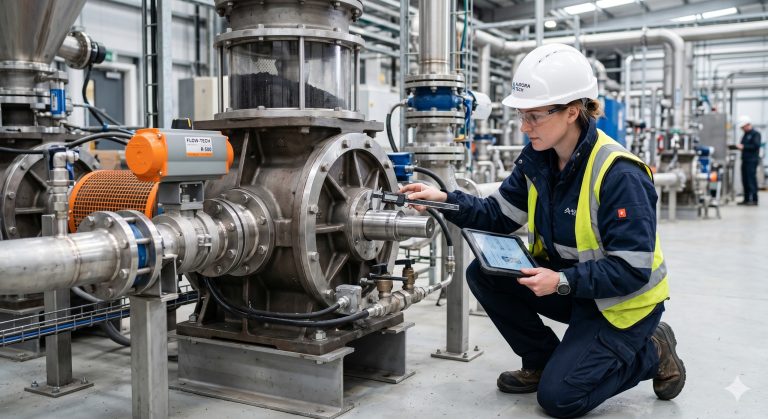
Introduction: The Critical Role of ATEX Certified Rotary Valves in Hazardous Dust Environments
In the realm of bulk solids handling, the ignition of combustible dust clouds remains a persistent and catastrophic risk. Industries ranging from food processing (e.g., flour and sugar) to chemicals (e.g., pigments and polymers) and pharmaceuticals (e.g., active ingredients) are perpetually navigating the stringent requirements of ATEX directives and NFPA standards. At the heart of this safety architecture lies the ATEX certified rotary valve, a device that serves a dual purpose: efficiently discharging material under gravity or pneumatic pressure while simultaneously acting as an airlock to prevent flame propagation and contain potential explosions. For 2026, the focus has sharpened on precision engineering and verifiable compliance. The Doebritz DBR-1237 series epitomizes this evolution, offering a Quick-release rotary valve engineered for Zone 20/21/22 environments, combining mechanical reliability with advanced safety features to mitigate explosion risks while optimizing process throughput.
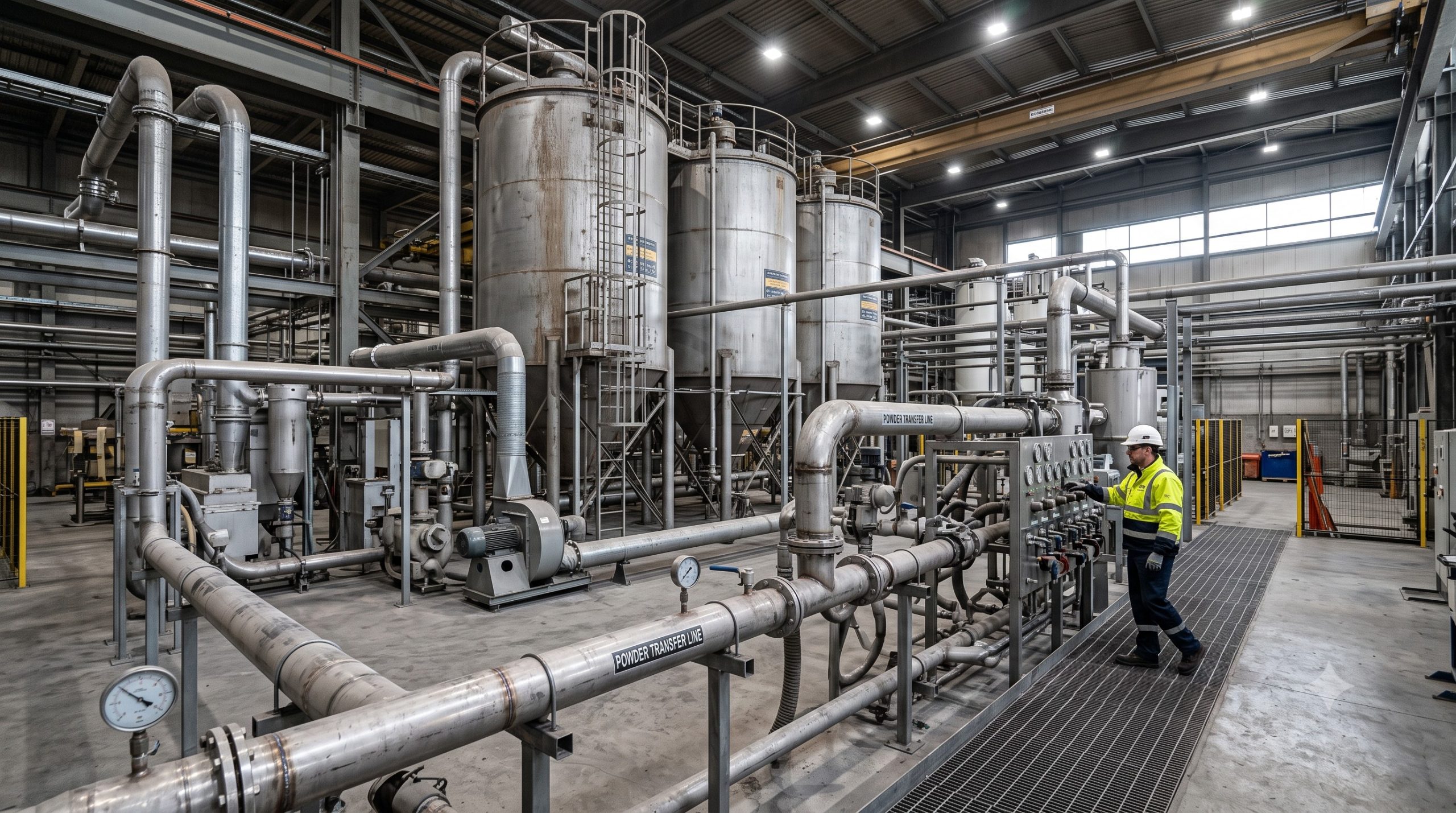
Understanding ATEX Compliance for Rotary Airlocks
Achieving ATEX certification for a rotary feeder is not a singular test but a comprehensive design philosophy. It mandates that every component, from the housing to the motor, is incapable of igniting a surrounding explosive atmosphere. The Doebritz DBR-1237 rotary valve addresses this through meticulous metallurgical selection and robust construction. The housing, available in SUS316L or carbon steel with advanced coatings, is designed to withstand internal deflagration pressures without rupturing. The certification path involves rigorous testing for maximum surface temperature, ensuring that even under locked-rotor conditions, the rotary airlock remains below the auto-ignition temperature of the specific dust being handled. Furthermore, the inclusion of outboard bearings and labyrinth seals ensures that combustible dust cannot infiltrate the bearing housings, eliminating a primary source of frictional heat and potential ignition. This holistic approach ensures that the ATEX certified rotary valve is not just a passive component, but an active contributor to plant safety, complying with both ATEX and NFPA 69 standards for explosion prevention systems.
Precision Clearances and Locking Efficiency: The Engineering Core
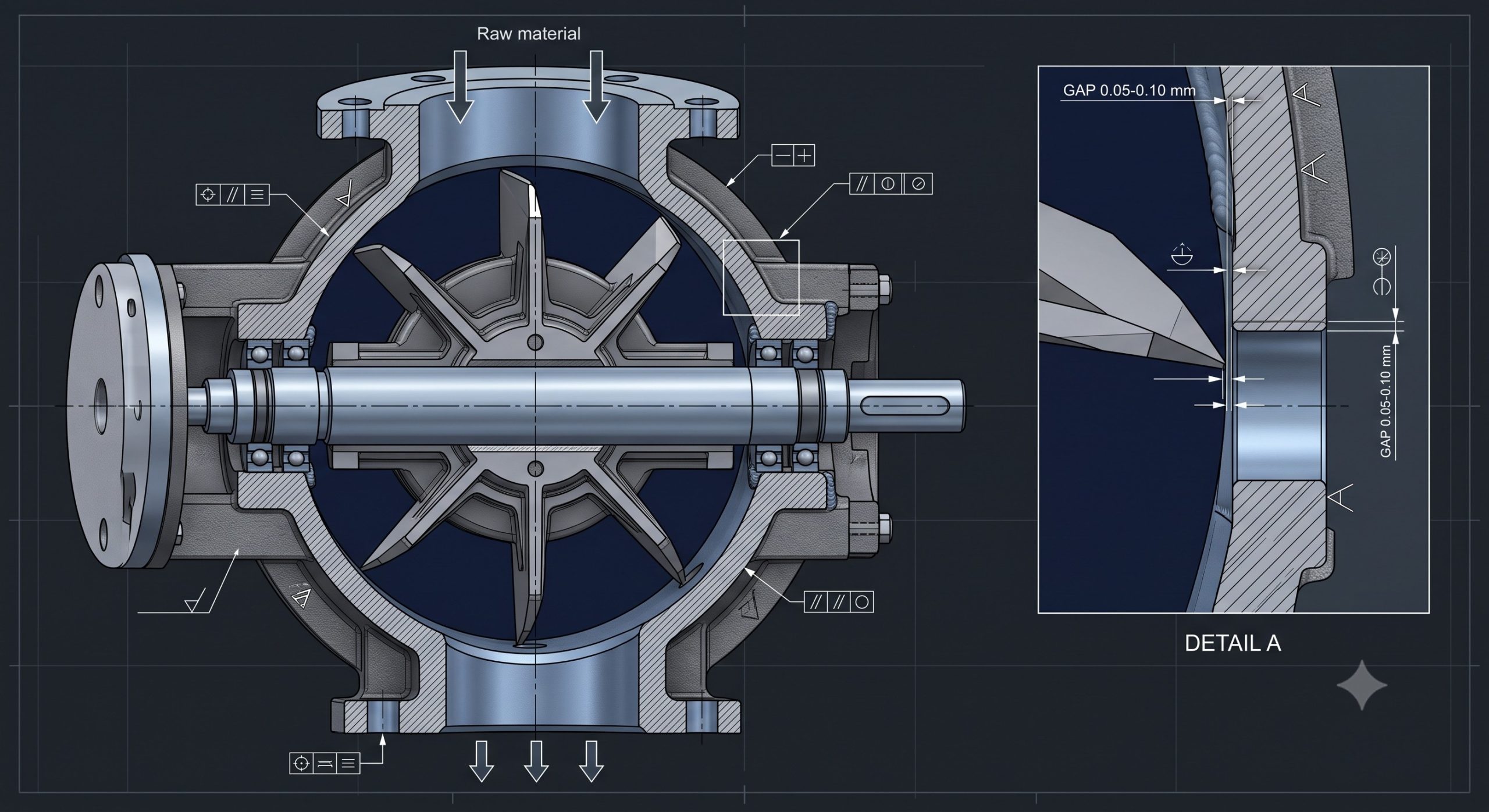
Beyond explosion containment, the efficacy of an ATEX rated rotary valve hinges on its ability to provide a reliable airlock function. The leakage rate across the rotor tips is directly proportional to the radial and axial clearance between the rotor and the housing. For the Doebritz DBR-1237, this is achieved through advanced CNC machining, ensuring a precision gap of 0.1 to 0.2 mm. This tight tolerance minimizes compressed air bypass in pneumatic conveying systems and prevents gas leakage in volatile applications, directly contributing to both safety and energy efficiency. The rotary airlock feeder features a robust shaft seal arrangement, including a lip seal air-tight seal that can be purged with inert gas to prevent dust ingress and ensure zero leakage to the atmosphere. This design is particularly critical when handling fine, abrasive powders where traditional packing glands would fail, leading to increased maintenance costs and potential safety hazards. By maintaining precise clearances and robust sealing, the Doebritz star discharge valve delivers consistent volumetric efficiency and reliable lockup across a wide range of differential pressures, from standard gravity applications to high-pressure dense phase conveying up to 1 bar (100 kPa).
Explosion Pressure Containment and Flame Arresting
One of the defining characteristics of a true ATEX valve is its ability to contain an internal explosion without propagating a flame to the upstream or downstream equipment. The Doebritz DBR-1237 achieves this through its robust housing construction, which is engineered with a pressure rating of up to 16 bar (1600 kPa) for its isolation version. This capability is crucial in processes involving easily ignitable dusts like fine carbon black or pharmaceutical excipients. The valve’s design incorporates the principles of flame quenching; the tight clearance between the rotor and the housing acts as a flame path arrestor, cooling and extinguishing any flame front trying to pass through the valve. Combined with the ATEX certified rotary valve motor and electrical components, which are fully isolated from the process stream, this creates a formidable barrier. This is compliant with ATEX Zone 20 (continuous presence of dust cloud) and Zone 21/22 requirements, providing a comprehensive solution for the most demanding hazardous areas in a chemical plant or milling operation.
Technical Specifications: Doebritz DBR-1237 Engineering Data
The following table outlines the core mechanical and performance parameters that define the Doebritz DBR-1237 Quick-release rotary valve in the context of ATEX compliance and heavy-duty operation. These specifications are derived directly from engineering documentation to ensure data integrity.
| Key Parameter | Technical Specification (Doebritz DBR-1237) |
|---|---|
| Max Differential Pressure (Standard) | Up to 1.0 Bar (100 kPa) with VFD control |
| Max Differential Pressure (Isolation) | Up to 16 Bar (1600 kPa) for explosion isolation |
| Rotor-to-Housing Radial Clearance | 0.1 – 0.2 mm (Precision CNC ground) |
| ATEX Certification Zones | Zone 20, Zone 21, Zone 22 (Gas & Dust) |
| Housing Materials (ATEX Compliant) | SUS304, SUS316L, Carbon Steel with coatings |
| Shaft Sealing (ATEX) | Lip seal with air purge / Labyrinth seals |
| Temperature Range (Process) | 0°C to +120°C (Optional water cooling jacket) |
| Pressure Resistance (Housing) | Capable of withstanding 16 bar internal deflagration |
| Cleanability | Quick-release for manual cleaning, CIP/WIP compatible |
| Flow Control | Variable Frequency Drive (VFD) for accurate metering |
| Surface Finish (Internal) | Ra ≤ 0.8 μm (Mirror finish options available) |
Applications Across Hazardous Dust Industries
The versatility of the Doebritz ATEX certified rotary valve is evident in its wide range of applications across industries handling explosive dusts. In the chemical sector, it ensures the safe discharging of PE/PP pellets and fine PTA powder from silos into conveying lines. In the food industry, it is essential for controlling the flow of combustible organic dusts like flour, starch, and milk powder without creating an ignition risk. The pharmaceutical industry relies on this valve for handling active ingredients in Zone 21 classified areas, where the exclusion of contamination is as critical as explosion prevention. The Doebritz DBR-1237’s compatibility with CIP and WIP cleaning protocols ensures it can be sanitized effectively, reducing downtime while maintaining the integrity of the airlock function. The valve’s ability to operate within a temperature range of -15°C to +120°C and its optional water-cooled jacket further extend its applicability to processes involving hot, flammable materials, providing a complete safety solution.
Conclusion: The Doebritz Commitment to Safety and Performance
Selecting an ATEX certified rotary valve is a critical decision that impacts plant safety, operational efficiency, and regulatory compliance. The Doebritz DBR-1237 series stands out as a high-integrity solution, engineered with deep technical insight into the physics of dust explosions and the mechanical demands of bulk material handling. By integrating precision-machined rotors, advanced sealing technologies, and a robust housing capable of withstanding high deflagration pressures, Doebritz provides a product that not only meets but exceeds international safety standards. For plant engineers and EPCs, investing in a validated, data-driven solution like the Doebritz rotary valve ensures peace of mind, lower total cost of ownership, and a tangible enhancement in process reliability. When you need a valve that performs under pressure and ensures safety in the harshest environments, the Doebritz DBR-1237 is the definitive choice for the modern industrial landscape.