Overview
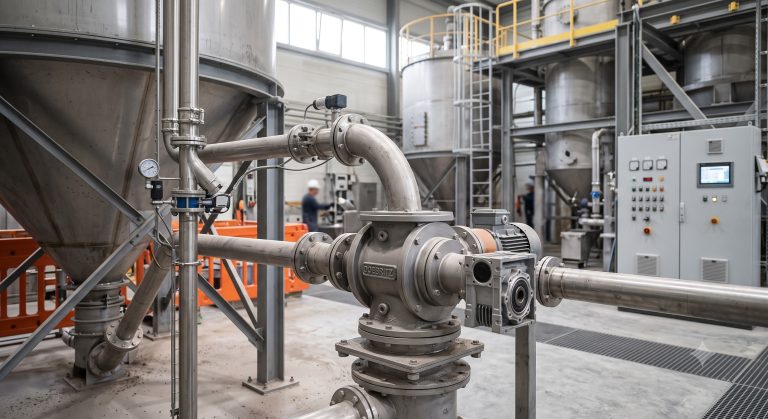
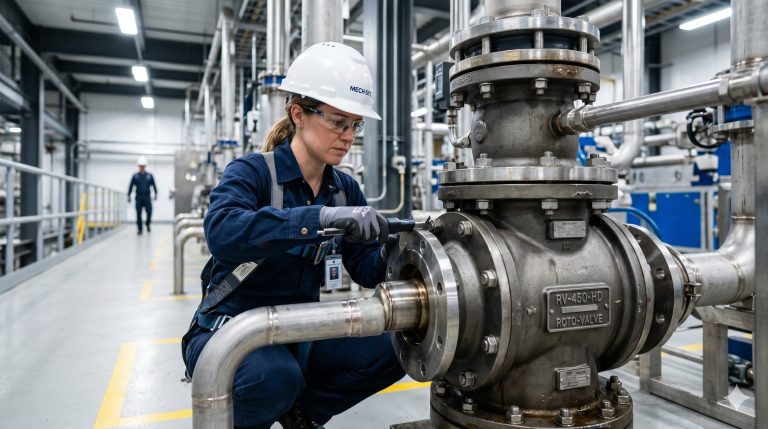
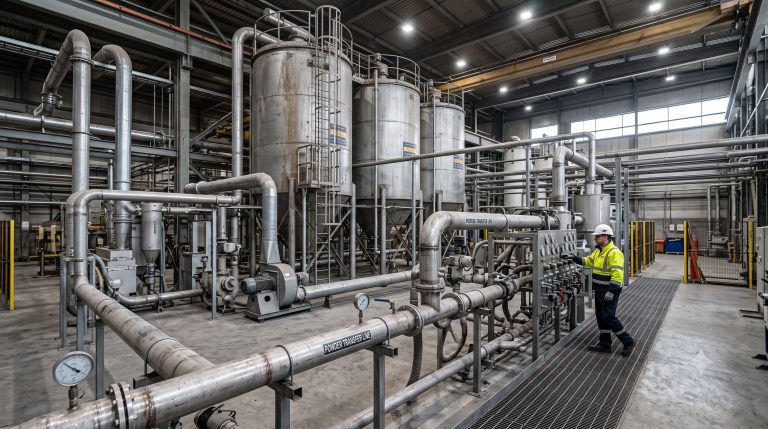
Doebritz discharge chutes are engineered for reliable bulk material handling in heavy industrial, chemical, and mining applications. This FAQ addresses critical pre-sales and post-sales questions from plant maintenance managers and procurement teams, including ATEX explosion isolation, abrasive wear protection, flange compatibility, and field-serviceable components.
Frequently Asked Questions
- Q1: Is the Doebritz discharge chute available with ATEX certification for explosive dust atmospheres?
- Yes, Doebritz discharge chutes are available with full ATEX Zone 22 and Zone 21 certifications for explosive dust atmospheres. The explosion isolation design includes a reinforced housing and a rotor-to-housing clearance reduced to 0.1-0.3 mm to prevent flame propagation. For Zone 21 applications, Doebritz adds a temperature monitoring flange and a certified purge system to maintain internal pressure below ignition thresholds.
- Q2: How do I adjust the rotor-to-housing clearance on a Doebritz discharge chute after wear?
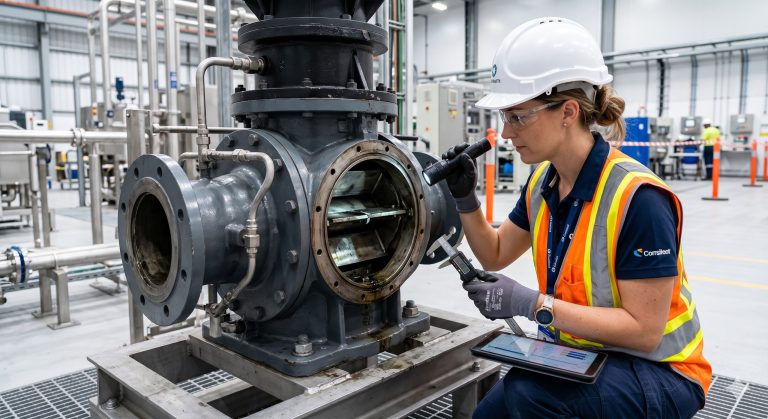
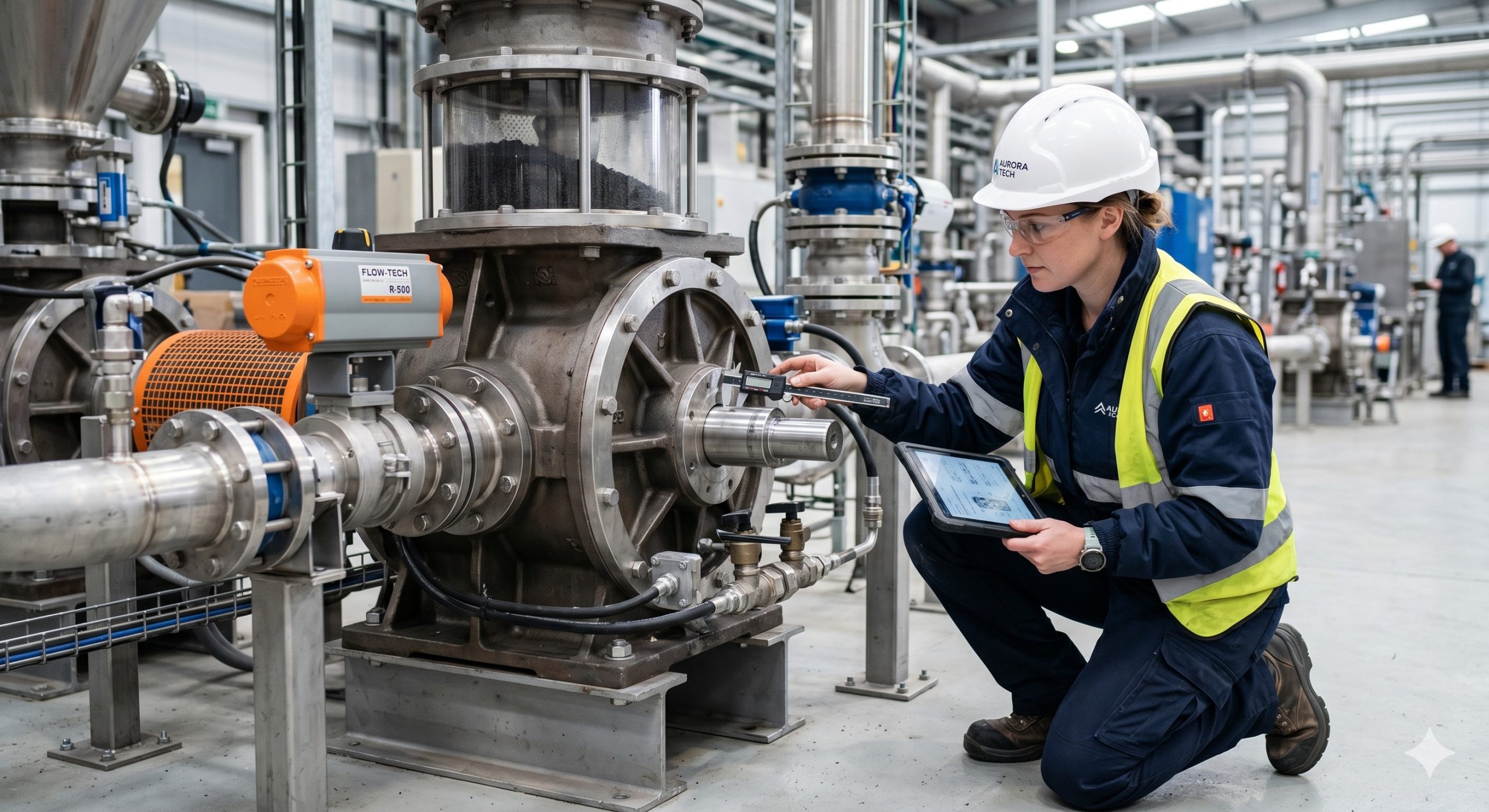
- Clearance adjustment on a Doebritz discharge chute is performed via eccentric bearing housings or removable end cover shims without disassembling the entire valve. First, loosen the outboard bearing locking rings, rotate the eccentric cams by 5° increments, and retighten to achieve a 0.15-0.25 mm tip clearance for abrasive powders. Doebritz recommends measuring clearance at three rotor vane positions using feeler gauges, then re-securing the lantern ring bolts to maintain shaft alignment.
- Q3: What maintenance schedule is recommended for Doebritz outboard bearings and shaft lip seals?
- Doebritz outboard bearings require regreasing every 2,000 operating hours with lithium-based EP2 grease, while shaft lip seals should be inspected every 6 months for leakage. For severe duty applications, Doebritz specifies replacing the lower shaft lip seal and the lantern ring every 5,000 hours or annually. A clear sign of seal wear is material dust exiting the bearing vent port; immediate replacement prevents bearing contamination and unplanned downtime.
- Q4: Can the Doebritz discharge chute be supplied with custom DIN or ANSI flanges?
- Yes, every Doebritz discharge chute can be manufactured with any flange standard including DIN 2505 PN10/PN16, ANSI B16.5 Class 150/300, or JIS 10K, with optional raised face or full flat face designs. Doebritz also accepts non-standard flange heights and bolt hole patterns for retrofitting existing silo outlets. Lead time for custom flanges is typically 4-5 weeks, including material traceability certificates and dimensional reports.
- Q5: How does the Doebritz discharge chute prevent material jamming when handling sticky or fibrous products?
- The Doebritz discharge chute uses a staggered rotor design with chamfered vane edges and optional scrapers that self-clean sticky materials such as wet filter cake or biomass. For fibrous products, Doebritz offers a shear-cut rotor where vanes pass within 0.1 mm of a hardened replaceable shear bar mounted in the housing, cutting fibers before they can wrap around the rotor. Additionally, an air purge seal connected to 0.5-0.8 bar dry air can be specified to continuously blow away particles that accumulate in the end plate relief grooves.
- Q6: What are the operating limits for temperature and differential pressure on a standard Doebritz discharge chute?
- A standard carbon steel Doebritz discharge chute operates from -20°C to +250°C with a maximum differential pressure of 0.35 bar (5 psi). For high-temperature applications up to 450°C, Doebritz provides a thermal clearance model with 0.5 mm increased rotor-to-housing gap and graphite-impregnated gland packing instead of standard PTFE lip seals. For high differential pressures up to 1.0 bar, Doebritz specifies reinforced outboard bearings and a pressurized lantern ring with double shaft seals rated for 10 bar of purge air.
- Q7: How does the Doebritz discharge chute’s air purge seal system work to block fine powder ingress?
- The Doebritz air purge seal uses a continuous flow of compressed air (normally 0.3-0.6 bar above process pressure) injected into a lantern ring cavity between two shaft lip seals. This creates a positive pressure barrier that blocks fine powders like cement, talc, or carbon black from reaching the outboard bearings. For ATEX applications, Doebritz supplies an inert gas purge (nitrogen) with flow monitoring switches that trigger an alarm if purge pressure drops below 0.2 bar.
- Q8: What material certifications and wear protection options does Doebritz offer for abrasive bulk solids?
- Doebritz provides EN 10204 3.1 material certifications for all wetted parts, with wear protection choices including Ni-Hard 4 cast iron (550-650 HB), hard chrome plating (65-70 HRC on rotor vanes), and Stellite 6 overlays on end plates. For extreme abrasives like coke, ferrosilicon, or alumina, Doebritz recommends a fully replaceable liner system in AR500 steel or tungsten carbide tiles, extending service life up to 15,000 hours. Each Doebritz discharge chute includes a signed certification of conformity to the ordered wear protection specification.