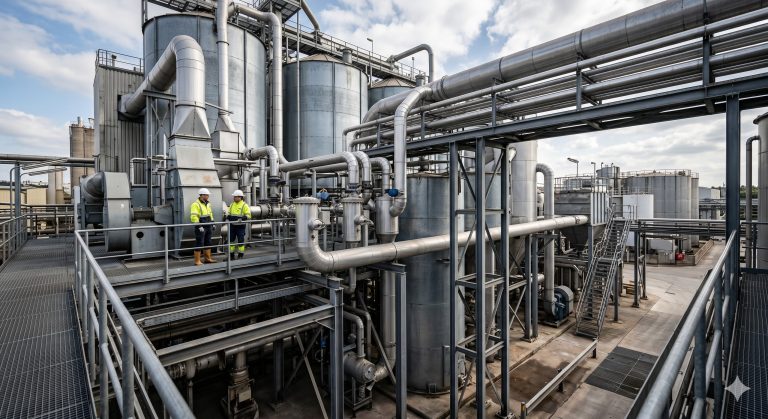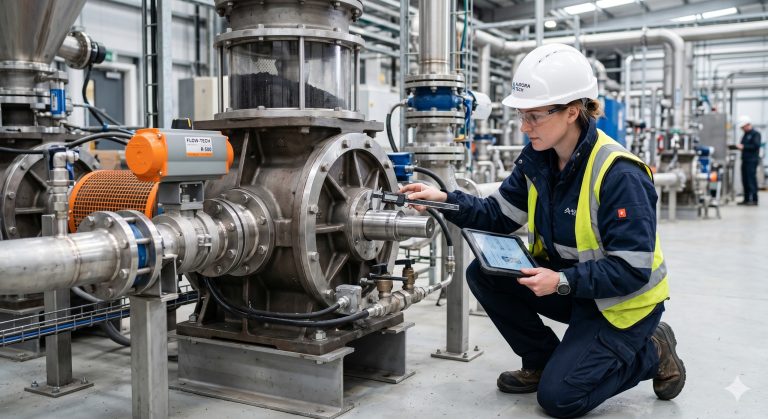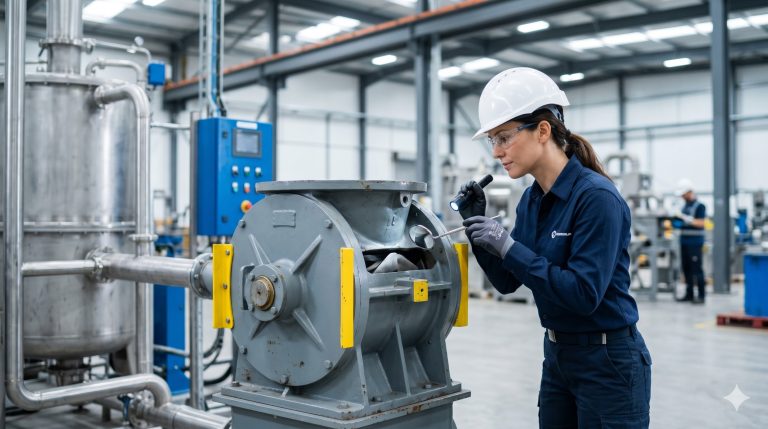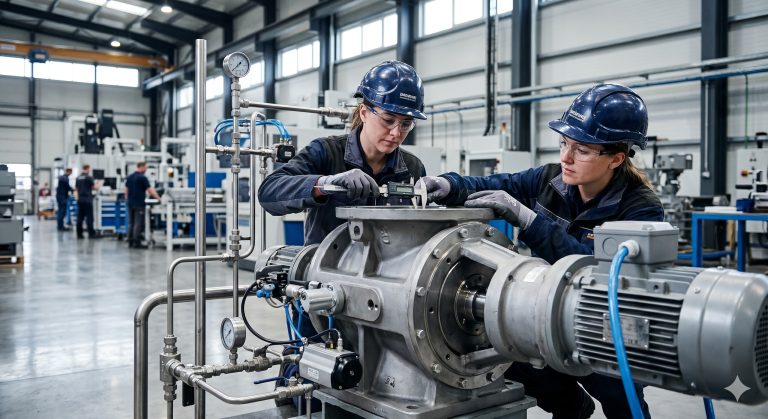
Overview
As a plant procurement or maintenance manager, specifying the right carbon steel painted airlock feeder directly impacts production uptime, safety compliance, and total cost of ownership. This FAQ addresses critical B2B pre-sales and post-sales questions about the Doebritz carbon steel painted airlock feeder, covering explosion protection, flange compatibility, wear handling, and technical maintenance—using only specifications from official Doebritz documentation.
Frequently Asked Questions
- Q1: What flange standards and custom interface options are available for the Doebritz carbon steel painted airlock feeder?
- The Doebritz carbon steel painted airlock feeder ships standard with HG20592 flanges as per Doebritz technical datasheets. For plant integration, custom flange drilling to DIN or ANSI standards can be quoted. Interface sizes range from DN50 to DN350, with non-standard inlet/outlet heights and drive adapters available through the Doebritz custom engineering program.
- Q2: Is the Doebritz carbon steel painted airlock feeder certified for ATEX / explosion-proof zones?
- Yes, the Doebritz carbon steel painted airlock feeder is configurable for ATEX Zone 20, 21, and 22. In explosion-isolating configuration, the unit is pressure-rated to 16 bar with precision rotor-to-housing clearance of 0.1–0.2 mm, explosion-proof motor, and sealed shaft design. Standard non-explosion-proof versions are also offered.
- Q3: How does the Doebritz carbon steel painted airlock feeder handle abrasive powders (e.g., carbon black, lithium battery materials)?
- For highly abrasive materials, the Doebritz carbon steel painted base unit accepts internal wear protection including tungsten carbide (WC) coating, ceramic coating, or polymer liners (PE/PTFE/PA). Standard painted carbon steel alone is not recommended for heavy abrasion; Doebritz engineers specify coated internals to extend MTBF in abrasive service.
- Q4: What are the standard production lead times and do you provide material certificates?
- Doebritz standard carbon steel painted airlock feeders typically ship in 4–6 weeks ARO for DN100–DN200 sizes. Each unit ships with material certificates (EN 10204 3.1 or 2.2 as required) for housing, rotor, and fasteners. Expedited and custom-engineered units have extended lead times quoted at order confirmation.
- Q5: How do I adjust the rotor-to-housing clearance on a Doebritz carbon steel painted airlock feeder?
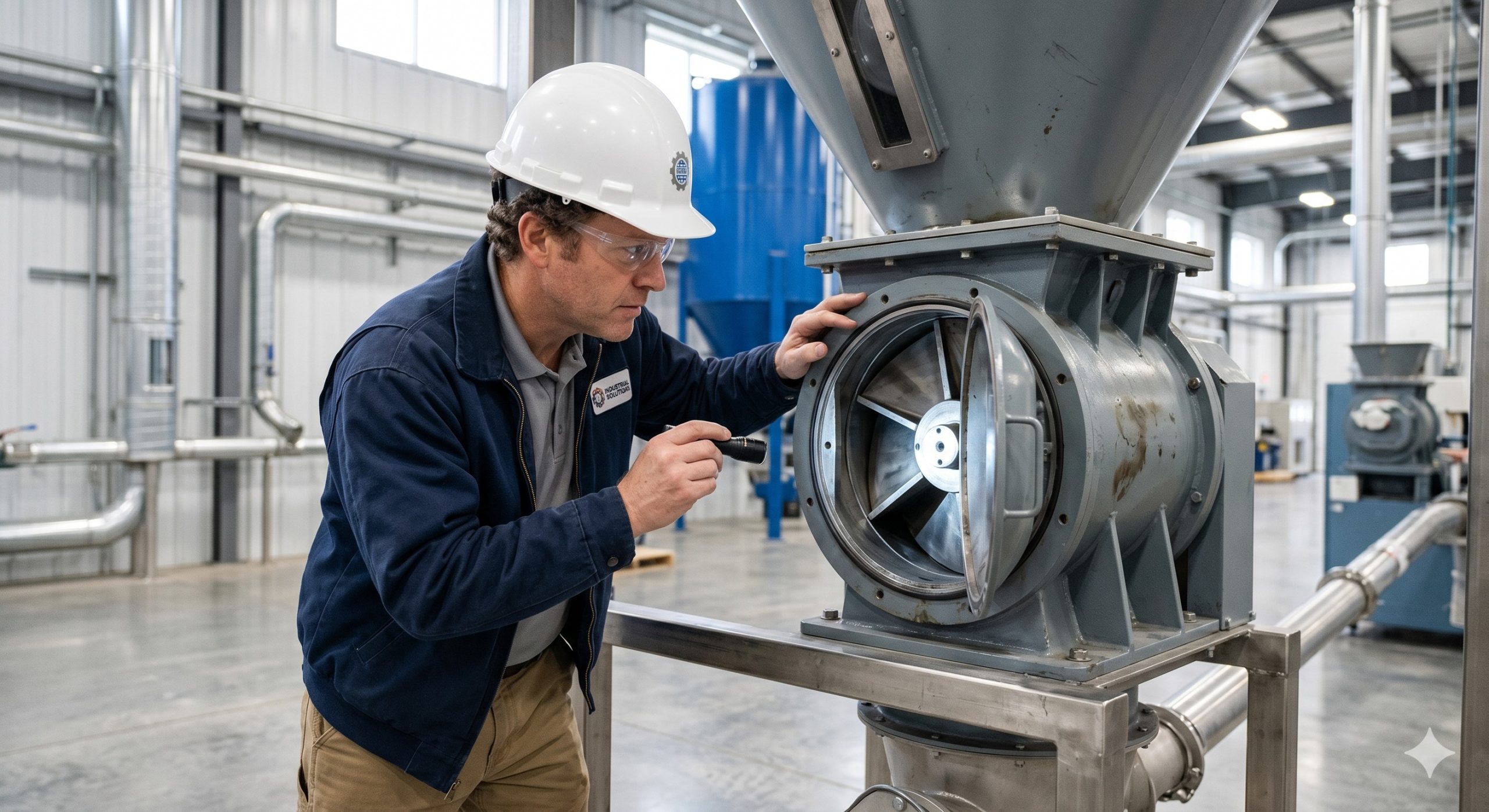
- The Doebritz carbon steel painted airlock feeder is factory-set to 0.1–0.2 mm clearance. Field clearance adjustment is not a routine maintenance task; it requires removing the end cover and selectively shimming the outboard bearing housing. Doebritz recommends contacting technical support for any clearance modification to maintain airlock efficiency and avoid rotor drag.
- Q6: What shaft sealing and air purge options exist for dusty or pressure-vacuum cycling?
- The Doebritz carbon steel painted airlock feeder uses a lip seal with air-tight purge connection (compressed air or inert gas) to prevent dust ingress at the shaft. Outboard bearing protection is standard. For extreme duties, a gland packing retrofit or nitrogen purge kit is available to maintain zero leakage in -1 bar to +1 bar pressure-vacuum cycles.
- Q7: What is the maximum differential pressure and temperature for the carbon steel painted airlock feeder?
- The Doebritz carbon steel painted airlock feeder handles positive pressure up to 1 bar (with VFD) and negative pressure down to -1 bar. Ambient operating range is -15°C to +60°C; maximum material temperature is 120°C. For higher temperatures, Doebritz offers water-cooled jacketed housings as an option.
- Q8: How do I clean the Doebritz carbon steel painted airlock feeder without disassembly?
- While the unit supports quick-release disassembly for manual cleaning, online CIP (clean-in-place) and WIP (wash-in-place) protocols are also valid. For WIP, after internal washing an operator must perform visual inspection. The painted external finish is not suitable for aggressive caustic washdowns; for frequent CIP, Doebritz recommends upgrading to stainless steel (SUS304/SUS316L) with mirror or Ra≤0.8μm internals.