Introduction
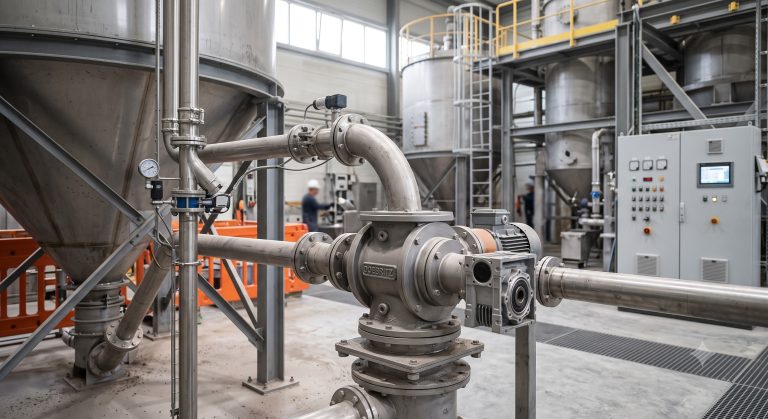
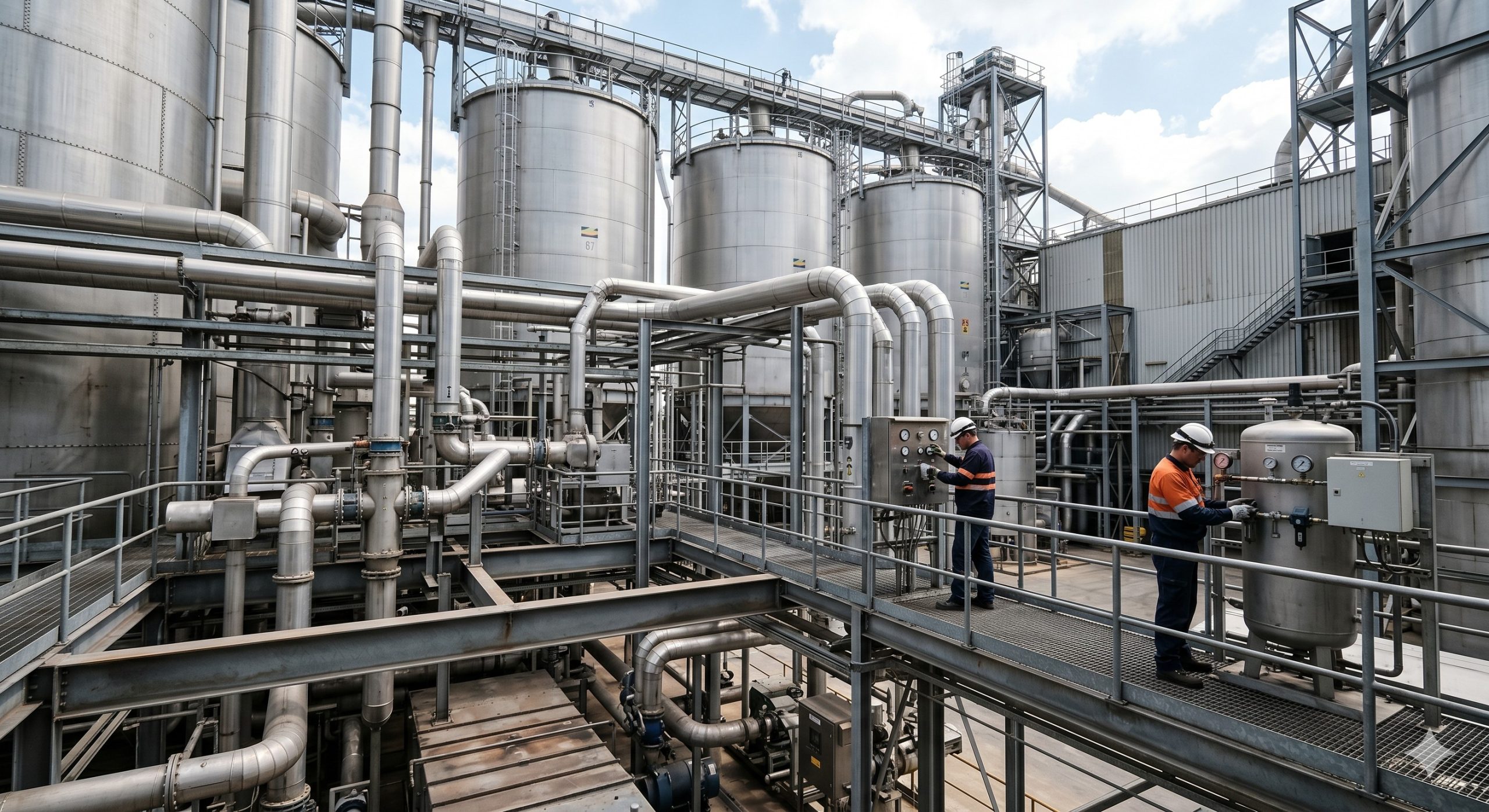
In modern cement production, pneumatic conveying systems face two relentless enemies: air leakage and material jamming. These issues degrade volumetric efficiency, increase energy consumption, and cause unplanned downtime. The cement industry rotary valve is the critical mechanical barrier that must maintain a reliable pressure seal while handling highly abrasive clinker dust and powdered cement. A poorly designed rotary valve can reduce airlock efficiency below 70%, spiking your plant’s TCO. This technical deep dive explores how precision-engineered solutions from Doebritz solve these challenges with measurable metallurgical and geometrical advantages.
Housing & Rotor Engineering for Abrasive Cement Media
Metallurgy & Hardness Strategy
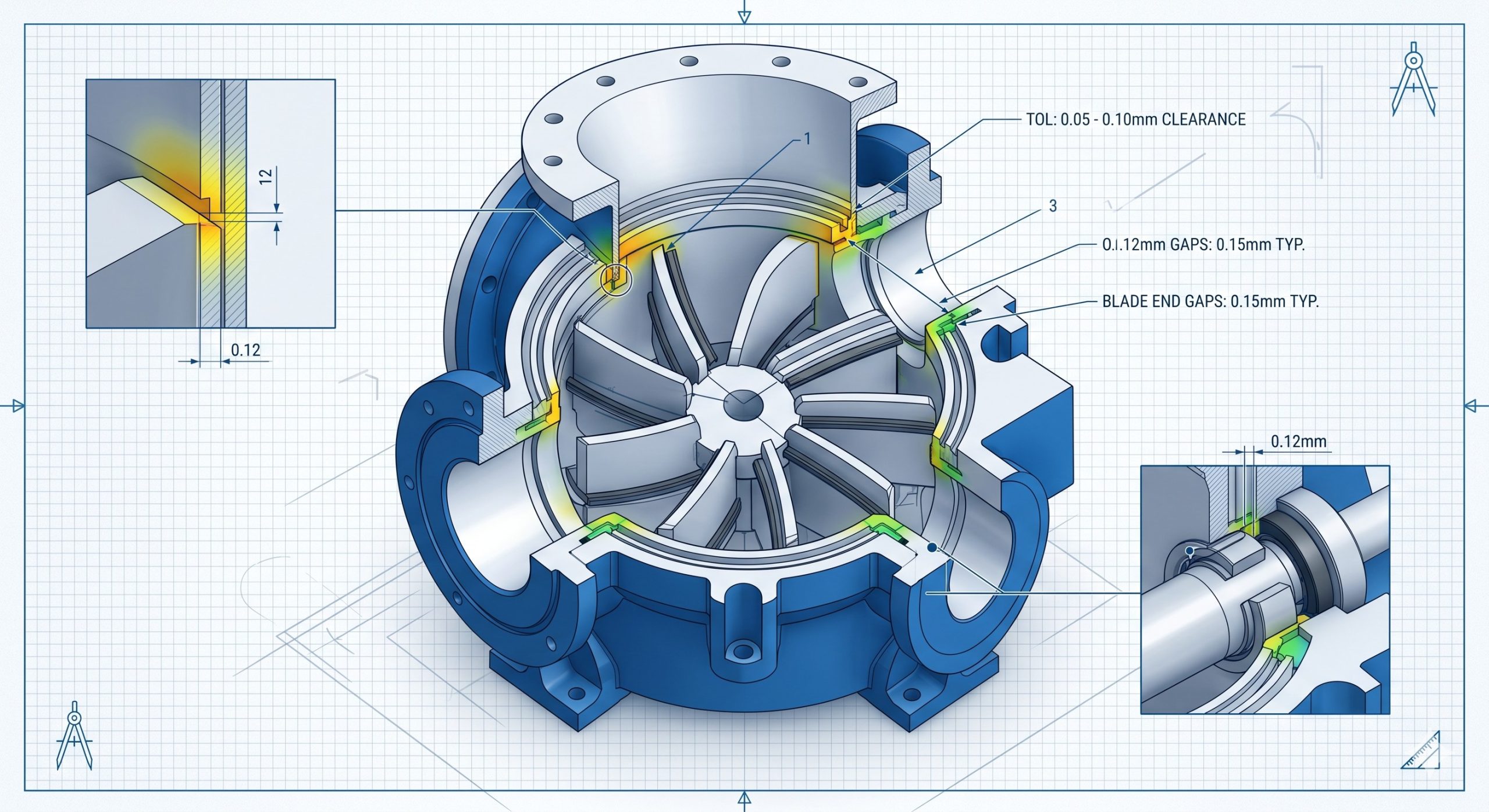
The housing of a cement industry rotary valve must resist particle erosion. Doebritz utilizes abrasion-resistant cast steel (e.g., Hardox 400 equivalent or Ni-Hard 4) with a surface hardness of 55–62 HRC, combined with replaceable stainless steel liners (AISI 304/316) for media that demands corrosion resistance. Standard housings feature a minimum wall thickness of 12 mm for heavy-duty cement applications.
Rotor Geometry & Clearance Control
CNC-machined rotors from Doebritz achieve radial clearances as tight as 0.10–0.15 mm on the tip-to-housing interface and 0.05–0.10 mm on end discs. This precision minimizes compressed air cross-leakage. Rotor vane configurations include:
- Open Rotor (Standard): For fine cement powders, allows self-cleaning through centrifugal force.
- Closed Rotor (Heavy-Duty): With end disc seals, recommended for differential pressures >0.8 Bar and highly abrasive materials.
- Chamfered Vane Edges: Reduces particle shearing and lowers torque requirement by up to 18%.
Surface Finish & Exhaust Ports
All internal surfaces are precision-ground to Ra ≤ 1.6 µm to prevent material build-up (ratholing). Optional purge air ports (located at 12 o’clock and 6 o’clock positions) allow connection to a low-pressure air system for flushing dusty pockets without stopping production.
Technical Specifications
The following parameters define the Doebritz cement industry rotary valve series. All models comply with ATEX Zone 22 (dust explosion protection), NFPA 69, and CE Machinery Directive 2006/42/EC.
| Key Parameter | Technical Specification |
|---|---|
| Max Differential Pressure | 1.5 Bar (150 kPa) |
| Operating Temperature | -20°C to +250°C (Standard) / +400°C (High-temp option) |
| Rotor Clearance (Radial) | 0.10–0.15 mm |
| Housing Hardness | 55–62 HRC (Abrasion-resistant steel) |
| Capacity Range (L/rev) | 3 – 150 L/rev |
| Max Rotor Speed | 40 RPM (cement powders) |
| Approvals | ATEX Zone 22, NFPA 69, CE |
Comparative Advantage: Doebritz vs. Legacy Alternatives
Legacy rotary valves with standard cast iron housings and >0.30 mm clearances show air leakage rates up to 3.5 m³/h per m² of rotor surface at 1 Bar differential. Doebritz valves with CNC clearances reduce that leakage to <1.2 m³/h, improving airlock efficiency to >95%. Mean Time Between Failures (MTBF) on cement pneumatic conveying applications increases from 8,000 hours (industry average) to >24,000 hours due to hardened wear parts and replaceable liner systems. Total cost of ownership (TCO) analysis over 5 years shows a 42% reduction when factoring energy savings, maintenance labor, and downtime.
Heavy-Duty Application Scenarios
Silo Discharging & Dust Collection
Under cement silos, the Doebritz rotary valve operates as a metering feeder handling up to 200 tons per hour of powder (bulk density 1.2–1.5 t/m³). In dust collector service (e.g., baghouse under silo venting), the valve maintains a pressure differential up to 0.7 Bar while preventing blowback into hoppers.
Pneumatic Conveying (Dilute & Dense Phase)
For dense phase pneumatic conveying of raw meal or finished cement, the Doebritz cement industry rotary valve withstands system pressures up to 1.5 Bar(g) and temperatures to 250°C (with high-temp seals). Rotor displacement ranges from 3 to 150 liters per revolution, precisely dosed via a VFD-controlled drive.
Conclusion
Optimizing your cement handling line demands a cement industry rotary valve that is not merely a component but an engineered system for abrasion management, air-sealing effectiveness, and operational longevity. Doebritz delivers measurable gains through tight CNC tolerances, advanced metallurgy, and application-specific rotor configurations. For plant engineers aiming to slash conveying energy costs and maximize uptime, upgrading to a Doebritz rotary valve is a data-backed, high-ROI decision.