Introduction: The Critical Role of a Powder Handling System in Modern Industry
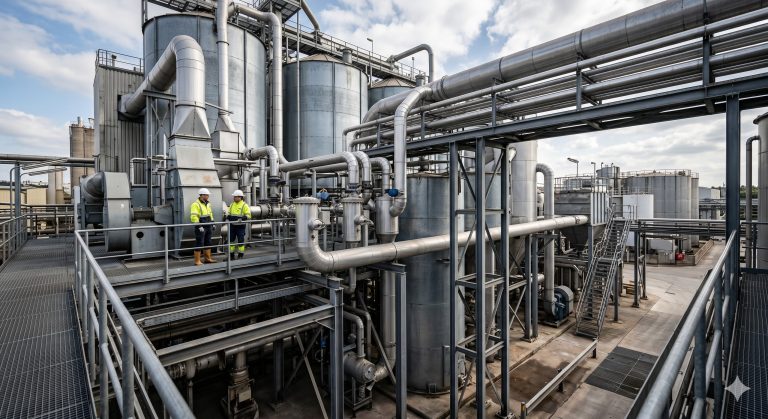
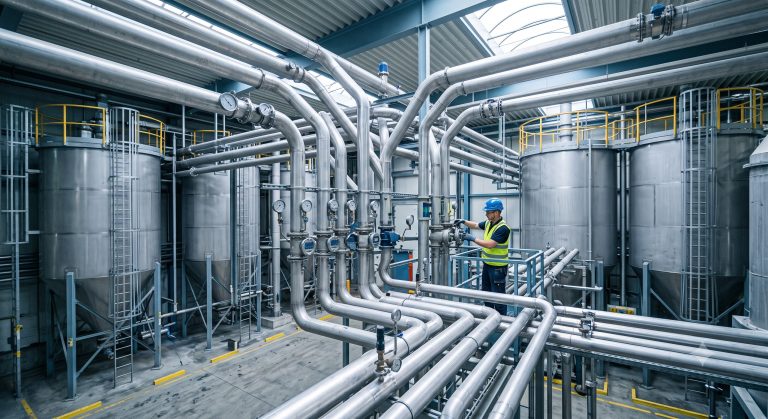
In the landscape of bulk material processing, the efficiency, safety, and profitability of a facility are fundamentally linked to the integrity of its powder handling system. From the reception of raw materials to the final packaging of finished goods, the seamless transfer of powder and granular solids is a complex engineering challenge. Failures in this domain manifest not merely as minor inconveniences but as significant operational losses: product contamination, unscheduled downtime, increased energy consumption, and severe safety hazards, particularly in explosive atmospheres.
The cornerstone of any robust powder handling system, especially in pneumatic conveying and gravity discharge applications, is the rotary airlock valve. This component serves a dual, and often conflicting, purpose: it must meter product consistently while simultaneously maintaining an effective airlock seal. A failure to master this balance results in blowback, reduced system efficiency, and accelerated component wear.
This guide provides a deep technical dive into the engineering principles governing the selection and design of these critical components, specifically focusing on the metallurgical, precision, and sizing considerations that define a reliable and high-performance powder handling system. We will explore how a leading solution, engineered for demanding environments, utilizes advanced manufacturing techniques, such as those found in the Doebritz DBR-1237 series, to set a benchmark for excellence in the field.
Housing & Rotor Engineering: The Foundation of a Reliable Powder Handling System
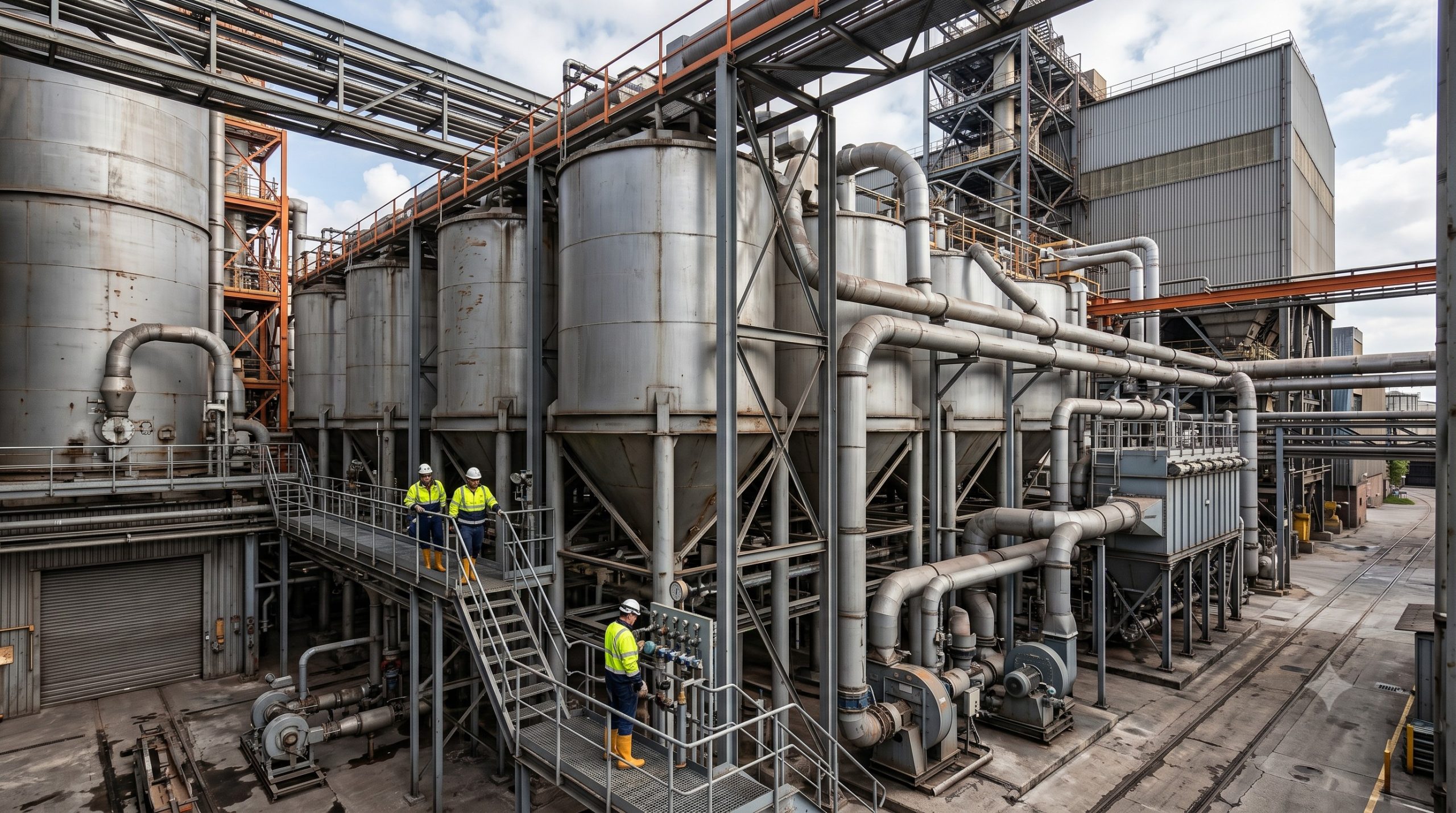
The durability and performance of a powder handling system are directly dictated by the engineering and materials used in its primary components: the rotor and the housing. The selection of these elements must be driven by a rigorous analysis of the process parameters.
Metallurgy and Wear Resistance
The contact surfaces within a rotary valve are subjected to continuous abrasion and potential corrosion. The base material is the first line of defense. For general applications, SUS304 stainless steel provides a robust and cost-effective solution. However, for high-purity applications, such as in food and pharmaceutical powder handling, SUS316L is mandated due to its superior corrosion resistance and compatibility with aggressive cleaning agents.
When the conveyed material is highly abrasive—such as carbon black, titanium dioxide, or lithium battery materials—advanced surface engineering becomes paramount. A hardened metallurgy alone is often insufficient. The application of specialized coatings is critical:
- Tungsten Carbide Coating: Applied via HVOF (High-Velocity Oxygen Fuel) thermal spray, this coating provides exceptional resistance to abrasive wear, significantly extending the operational lifespan of the valve. Typically, a hardness of >1200 HV can be achieved, far exceeding that of standard stainless steel.
- Ceramic Coatings: Ideal for applications where high-temperature or highly corrosive environments are a factor, ceramic linings provide excellent hardness and chemical inertness.
- Polymer Coatings (PE, PTFE, PA): For non-abrasive, sticky, or ultra-sanitary applications, polymer coatings reduce friction, prevent material build-up (caking), and ensure easy cleaning.
A high-quality housing casting, such as that used in the Doebritz DBR-1237, will undergo stress-relieving processes to ensure dimensional stability over its entire service life, preventing warping that could lead to a catastrophic failure of the airlock seal.
CNC Precision and Operating Clearances
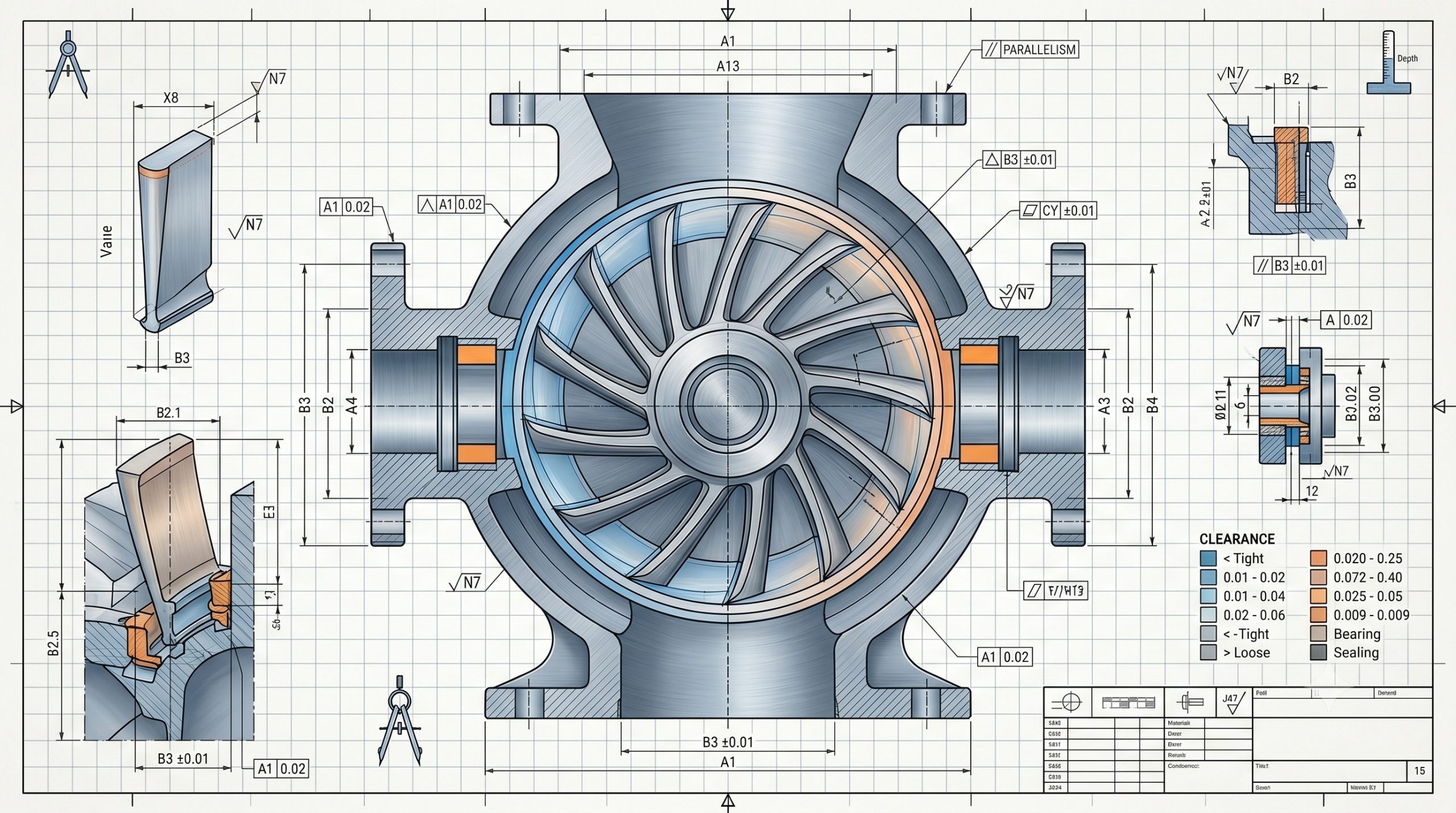
This is arguably the most critical factor determining the airlock efficiency of a powder handling system. The clearance between the rotating rotor tips and the stationary housing is the primary path for air leakage. This gap must be as tight as possible without risking mechanical interference (seizing) due to thermal expansion or particulate ingress.
State-of-the-art manufacturing, utilizing high-precision CNC machining, is essential to achieve and maintain the tight tolerances required for a modern, efficient powder handling system. In high-performance designs, such as the Doebritz DBR-1237, the rotor-to-housing clearance is specified at a remarkable 0.10 – 0.20 mm. This precision ensures:
- Low Air Leakage: By minimizing the bypass path, the system maintains pressure, reducing energy waste and ensuring consistent pneumatic conveying performance.
- Superior Seal Integrity: This tight clearance, combined with the material bed, acts as an effective seal, preventing blowback during high-pressure drop operations.
- Enhanced Metering Accuracy: A consistent clearance ensures that the volumetric displacement of the rotor remains stable, enabling precise flow control when paired with variable frequency drives (VFD).
Furthermore, the shaft sealing mechanism is critical to preventing product contamination and bearing failure. Advanced designs utilize robust lip seal air-tight sealing with purge air connections. This prevents fine dust from migrating along the shaft into the bearing housing, which is the primary cause of premature valve failure. This setup is a non-negotiable feature for reliable continuous operation.
Technical Specifications
The following table provides a technical overview of the key performance parameters and options available for a high-grade powder handling system component like the Doebritz DBR-1237. These specifications are the foundation of a reliable engineering assessment.
| Key Parameter | Technical Specification |
|---|---|
| Model Series | Doebritz DBR-1237 |
| Material of Construction | SUS304, SUS316L, Carbon Steel |
| Wear Protection (Coating) | Tungsten Carbide, Ceramic, PE, PTFE, PA |
| Rotor-to-Housing Clearance | 0.10 – 0.20 mm |
| Max Differential Pressure | 1.5 Bar (150 kPa) – Standard, Up to 16 Bar (Flameproof) |
| Operating Temperature | Ambient: -15°C to +60°C; Material: 0°C to +120°C (Standard, Higher with Jacket) |
| Flange Connection | HG20592, DIN, ANSI (DN50 to DN350) |
| Control & Automation | VFD Speed Control, PLC Integration for Batching/Metering |
| Ex-Protection | ATEX Zone 20/21/22, NFPA |
| Sanitary/Cleanliness | CIP/WIP Cleanable, Polished to Ra ≤ 0.4 µm, FDA Compliant Materials |
| Shaft Sealing | Lip Seal / Air Purge Seal |
| Surface Finish (Internal) | Mirror Finish, Ra 0.4/0.8/1.6 µm, Various Coatings |
Heavy-Duty Application Scenarios in Powder Handling
The choice of a rotary valve is highly dependent on the specific application, driven by the material properties and the system operating parameters. The adaptability of a modular design is a major advantage.
Explosion-Protected (ATEX) Operations
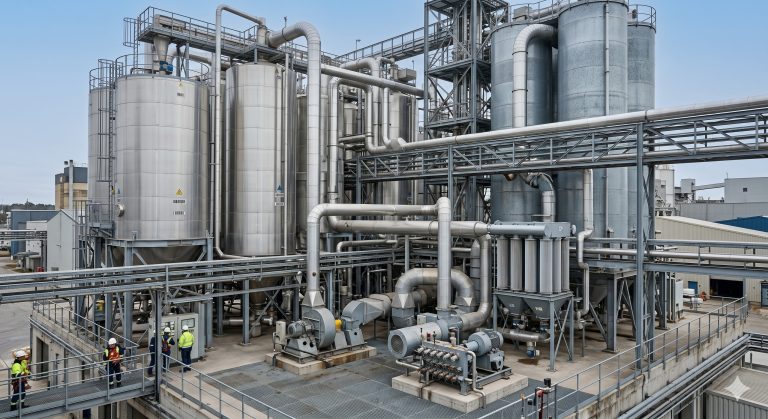
In industries such as chemical, pharmaceutical, and wood processing, combustible dusts are an inherent hazard. A powder handling system operating in these areas must be certified for explosion safety. A modern valve solution, such as the Doebritz series, is certified for ATEX Zone 20, 21, and 22. The construction features include a robust housing with a pressure rating of 16 bar to contain an internal deflagration and flameproof motor configurations. The precision-engineered clearance acts as a passive flame arrestor, preventing the propagation of a deflagration from the valve into upstream or downstream equipment.
Sanitary and Hygienic Processing (Food & Pharma)
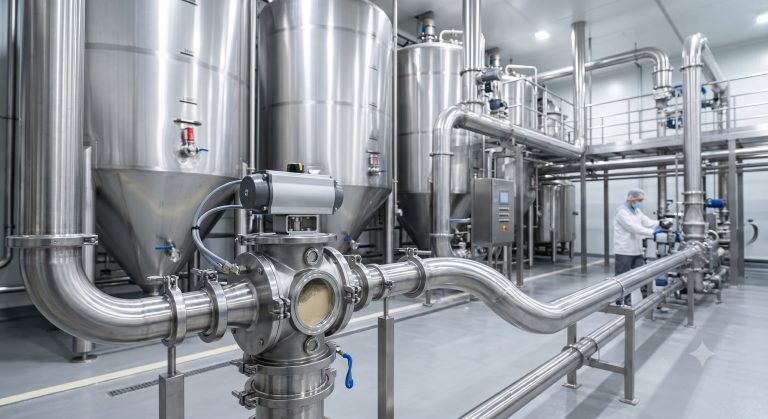
For applications handling food-grade or pharmaceutical powders, wash-down capability and material purity are the highest priorities. These processes demand a hygienically designed powder handling system. The valve must be constructed with a quick-release / demountable structure to enable rapid and thorough cleaning without specialized tools. Online CIP (Clean-in-Place) and WIP (Wash-in-Place) cleaning systems are essential for validating the process and minimizing downtime. The internal surface finish must be of high quality, with requirements such as Ra ≤ 0.4/0.8 µm and a mirror finish to prevent product adhesion and bacterial growth. The Doebritz DBR-1237 excels in this area, ensuring full compliance with stringent cleanroom classifications.
High-Wear and High-Temperature Materials
Handling abrasive materials like mining ores, cement clinker, or metallurgical powders requires a valve built for maximum longevity. The high cost of unscheduled downtime and part replacement makes material selection critical. The use of tungsten carbide coatings on the rotor and housing dramatically extends Mean Time Between Failures (MTBF). For processes involving high temperatures, such as petrochemical applications or drying stages, the valve can be equipped with a water cooling jacket and configured with special clearances to account for thermal expansion of the components.
Conclusion: Engineering Excellence for Reliable Powder Handling
The design of an efficient and durable powder handling system is a sophisticated engineering discipline that requires careful consideration of material properties, operating pressure, cleanliness requirements, and process safety. The critical decisions—selecting the correct metallurgy, specifying an appropriate internal coating, and, most importantly, defining the operational clearances—directly impact the system’s bottom line through energy costs, maintenance schedules, and product quality.
Expertise in the powder handling system design ensures that these interdependent variables are balanced to deliver optimal performance. The Doebritz DBR-1237 series illustrates the culmination of these engineering principles, offering a robust, flexible, and safe solution that sets a high standard for modern industrial processing. By emphasizing quick-clean design, precision engineering, and regulatory compliance, such components guarantee a high return on investment for even the most demanding applications.