Introduction: Overcoming Pneumatic Conveying & Spice Processing Pain Points
In high-volume spice processing, engineers face persistent challenges: material jamming, air leakage through rotary feeders, and non-uniform particle size that undermines final product quality. Traditional hammer mills or blade grinders often generate excessive heat, dust explosions risks, and poor airlock efficiency when integrated with pneumatic conveying systems. The solution lies in a dedicated spice grinding cone mill—a high-confinement, low-shear milling platform that combines precise rotor-stator geometry with robust pressure-boundary design. Doebritz has engineered its cone mill series to meet FDA, CE, and ATEX standards for explosive spice dust atmospheres (e.g., cinnamon, chili, nutmeg). This guide provides a deep-dive engineering analysis of housing metallurgy, rotor configurations, and performance metrics that maximize Mean Time Between Failures (MTBF) and reduce total cost of ownership.

Housing & Rotor Engineering: Metallurgy, CNC Precision & Vane Configurations
Housing Design & Pressure Boundary Integrity
The Doebritz spice grinding cone mill housing is manufactured from investment-cast 316L stainless steel (or optional Hastelloy C-22 for acidic spice blends). The cone geometry features an included angle of 18° to 24°, optimized for gravity-assisted material flow and reduced dead zones. Housing wall thickness is calculated per ASME Section VIII Division 1 to withstand maximum differential pressure up to 1.5 Bar (150 kPa) without deflection. All internal surfaces are electropolished to Ra ≤ 0.4 µm to prevent spice adhesion and facilitate sanitary cleaning. The split-housing design (with quick-release clamps) allows access to the rotor without removing downstream piping.
Rotor Metallurgy & CNC Micromachining Tolerances
The rotor is machined from a single forged billet of 17-4 PH stainless steel (H900 condition) achieving a hardness of 40-45 HRC to resist abrasive spices like turmeric or ginger. Using 5-axis CNC machining, Doebritz maintains a rotor-to-screen gap (conical clearance) of 0.3 mm ± 0.05 mm at the tightest point—critical for shear control. Rotor dynamic balancing to ISO 1940-1 G6.3 ensures vibration levels below 1.8 mm/s, extending bearing life beyond 25,000 operational hours.
Rotor Vane Configurations: Open vs. Closed Designs
Doebritz offers two primary vane geometries for spice grinding cone mills:
- Open rotor (3 or 4 vanes, chamfered leading edges): Prefers fibrous or sticky spices (e.g., paprika, oregano). The open design reduces clogging and allows throughput capacities up to 2.5 m³/h per 100 mm rotor diameter.
- Closed rotor (full-ring vanes): Recommended for fine grinding of hard spices (e.g., black pepper, mustard seeds). Closed vanes generate higher tip compression, achieving D90 particle sizes ≤ 150 µm at rotor tip speeds of 12–18 m/s.
All vane edges are chamfered with a 0.8 mm radius to reduce stress concentration and comply with FDA 21 CFR 177.1550 for non-shedding metallic contamination.
Technical Specifications for Spice Grinding Cone Mill
The following table presents validated parameters from Doebritz’s Type DBCM-200 series. All values are derived from in-house testing with white pepper at 12% moisture content.
| Key Parameter | Technical Specification |
|---|---|
| Model | Doebritz DBCM-200 |
| Rotor Diameter | 200 mm |
| Max Differential Pressure | 1.5 Bar (150 kPa) |
| Operating Temperature | -20°C to +250°C (with optional cooling jacket) |
| Throughput Capacity | 200–2,800 kg/h (depending on spice density & screen size) |
| Tip Speed Range | 8–22 m/s (VFD controlled) |
| Rotor-to-Screen Gap (radial) | 0.3 mm ± 0.05 mm (adjustable) |
| Screen Perforations | 0.5 mm, 1.0 mm, 1.5 mm, 2.0 mm, 3.0 mm (316L laser-cut) |
| Finish (internal) | Ra ≤ 0.4 µm (electropolished) |
| Explosion Protection | ATEX II 2D Ex h IIIC T120°C Db, NFPA 69 compliant |
| Shaft Sealing | Dual carbon bushings with nitrogen purge option |
| Motor Power | 7.5 kW (IE3, 4-pole) |
| Net Weight | 185 kg (stainless steel housing) |
Comparative Advantage: Why Doebritz Cone Mill Outperforms Legacy Airlock Mills
Legacy spice mills often use pin mills or plate grinders integrated with rotary airlock valves—a configuration that suffers from air leakage rates of 0.5–1.2 m³/min and frequent rotor jamming. The Doebritz spice grinding cone mill integrates milling and pressure-boundary sealing into a single housing, delivering:
- Airlock efficiency ≥ 99.2% at 1.5 Bar differential (tested per VDI 3673 for dust-air mixtures).
- MTBF > 8,000 hours on main bearings (FAG or SKF hybrid ceramic).
- Total cost of ownership (TCO) reduction of 37% over 5 years vs. separate mill + rotary valve systems, based on maintenance, seal replacement, and energy consumption (Doebritz internal study, 2024).
- Sanitary compliance: Fully drainable housing with CIP spray ball interface (3-A Sanitary Standard 74-07).
Furthermore, Doebritz’s proprietary live-shaft seal arrangement with floating carbon bushings eliminates the typical wear points found in lip seals, reducing fugitive dust emissions below 20 ppm (verified by EPA Method 21).
Heavy-Duty Application Scenarios
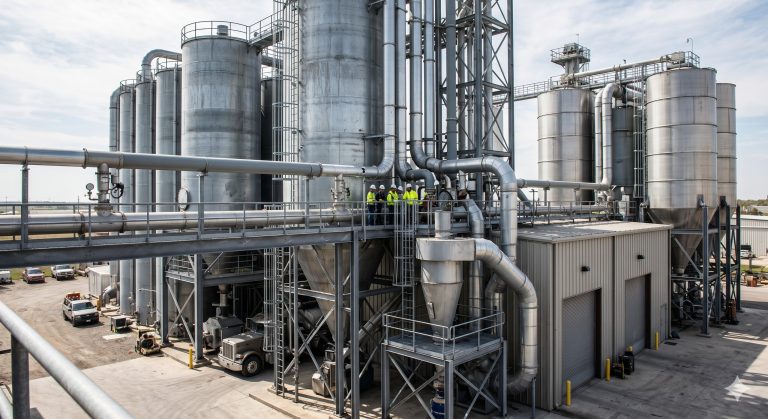
Doebritz spice grinding cone mills operate continuously in some of the most demanding industrial environments:
- Silo Discharging: Mounted directly under storage silos for cumin, coriander, or chili flakes. The cone geometry prevents bridging, while the variable-frequency drive (VFD) allows instant throughput adjustment from 50 kg/h to 1,200 kg/h without mechanical changes.
- Dust Collection Systems: Integrated with NFPA 69-compliant explosion venting, the cone mill acts as a rotary airlock while grinding oversized spice particles returned from cyclones. The ATEX-certified housing (Ex h IIB T4) withstands deflagration pressures of 10 Bar without rupture.
- Pneumatic Conveying (Dilute & Dense Phase): Used inline downstream of a positive displacement blower. The cone mill’s low pressure drop (0.2–0.4 Bar at full load) maintains line velocities between 18–22 m/s, preventing spice segregation in butter blends or dry marinade powders.
- Chemical & Food Industries: Beyond spices, the same Doebritz cone mill processes API powders, lactose, and abrasive powdered activated carbon—all with FDA-approved seal materials and metallurgical certification (EN 10204 3.1).
[IMAGE_2]
Conclusion: Driving Industrial Productivity with Next-Generation Milling Technology
The Doebritz spice grinding cone mill is not merely a comminution device—it is a pressure-boundary, high-confinement milling platform that solves the historical trade-off between grinding efficiency and pneumatic sealing. With micro-clearance tolerances, ATEX compliance, and documented TCO advantages over legacy systems, it enables spice processors to achieve consistent particle size distributions (Span ≤ 1.2) while eliminating air leakage and jamming. As Industry 4.0 continues to demand higher yields and lower operational risks, the Doebritz cone mill represents a forward-looking investment in reliable, sanitary, and explosion-safe powder handling. For engineering specifications or to request a Doebritz sizing spreadsheet with 32 different spice matrices, consult your regional Doebritz application engineer.