Overview
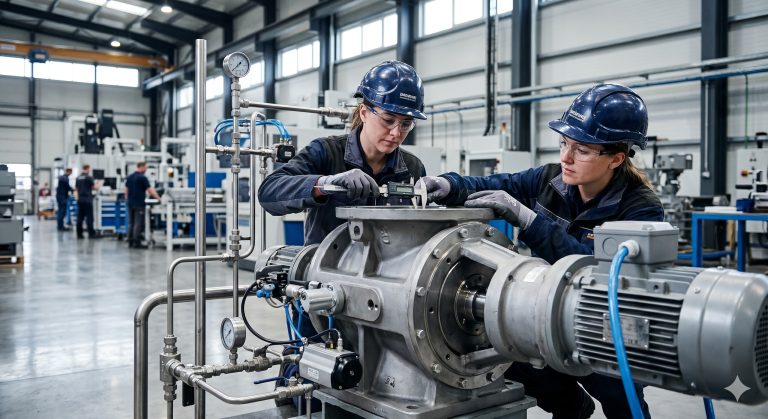
For plant engineers and procurement managers in the powder processing industry, ensuring operational safety in potentially explosive atmospheres is non-negotiable. The Doebritz DBR-1237 Quick-Release Rotary Valve is engineered with ATEX-certified components to provide secure explosion isolation and reliable material handling. This FAQ addresses critical pre-sales and post-sales questions about ATEX compliance, mechanical design, and maintenance, specifically for the Doebritz DBR-1237 gravity-fed rotary valve.
Frequently Asked Questions
- Q1: Why is ATEX certification critical for the Doebritz DBR-1237 in powder handling?
- ATEX certification is mandatory to legally operate the Doebritz DBR-1237 in environments with combustible dust, ensuring it meets the EU Directive 2014/34/EU for equipment in explosive atmospheres. This certification validates the valve’s design to prevent ignition sources, contain potential explosions, and safely handle static electricity, thereby protecting personnel and plant assets. For the DBR-1237, this includes certifications for Zone 20, 21, and 22, confirming its suitability for continuous, occasional, or abnormal presence of explosive dust clouds.
- Q2: What specific ATEX zones is the Doebritz DBR-1237 rotary valve certified for?
- The Doebritz DBR-1237 is certified for Zone 20 (continuous presence of explosive dust), Zone 21 (likely presence), and Zone 22 (not likely, but possible in normal operation). This broad coverage makes it a versatile choice for diverse processing environments, from silo discharge (often Zone 20/21) to packaging areas (Zone 22). The specific rating is detailed on the valve’s nameplate and in the product certification documents, tailored to the selected motor and accessory configurations.
- Q3: How does the Doebritz DBR-1237 achieve explosion isolation in a pneumatic conveying line?
- The Doebritz DBR-1237 acts as an explosion isolation barrier through its precise rotor-to-housing clearance of 0.1-0.2mm, which minimizes the passage of flame and pressure waves. In the event of a deflagration, the tightly controlled gap, combined with the valve’s robust construction, helps to quench the flame front. For high-risk applications, the DBR-1237 can be equipped with a 16bar pressure-resistant housing and specialized seals to contain an internal explosion, preventing it from propagating to upstream or downstream equipment.
- Q4: What standard flange options are available for the Doebritz DBR-1237, and can it be custom-made?
- The standard Doebritz DBR-1237 is supplied with HG20592 flanges, which are widely compatible in many global markets. However, we understand the criticality of seamless integration. Therefore, the DBR-1237 can be custom-fabricated to meet DIN, ANSI/ASME, or JIS flange standards. This custom service includes matching bolt hole patterns, flange diameters, and face types (e.g., raised face, flat face) to ensure a perfect, leak-proof connection to your existing ductwork without the need for costly adapters.
- Q5: What design features in the Doebritz DBR-1237 prevent dust explosions from static electricity?
- The Doebritz DBR-1237 is designed with full electrical continuity to prevent static charge accumulation. A key feature is the use of a conductive rotor and housing, ensuring all metallic components are properly grounded. In applications requiring additional safety, or when handling non-conductive materials, the DBR-1237 can be fitted with ATEX-certified anti-static components, such as a purge air system to create an inert atmosphere and specialized PTFE/PE liners that are static-dissipative, safely channeling any generated charge away from the explosion risk zone.
- Q6: How do I maintain the low leakage rate of the Doebritz DBR-1237 in abrasive service?
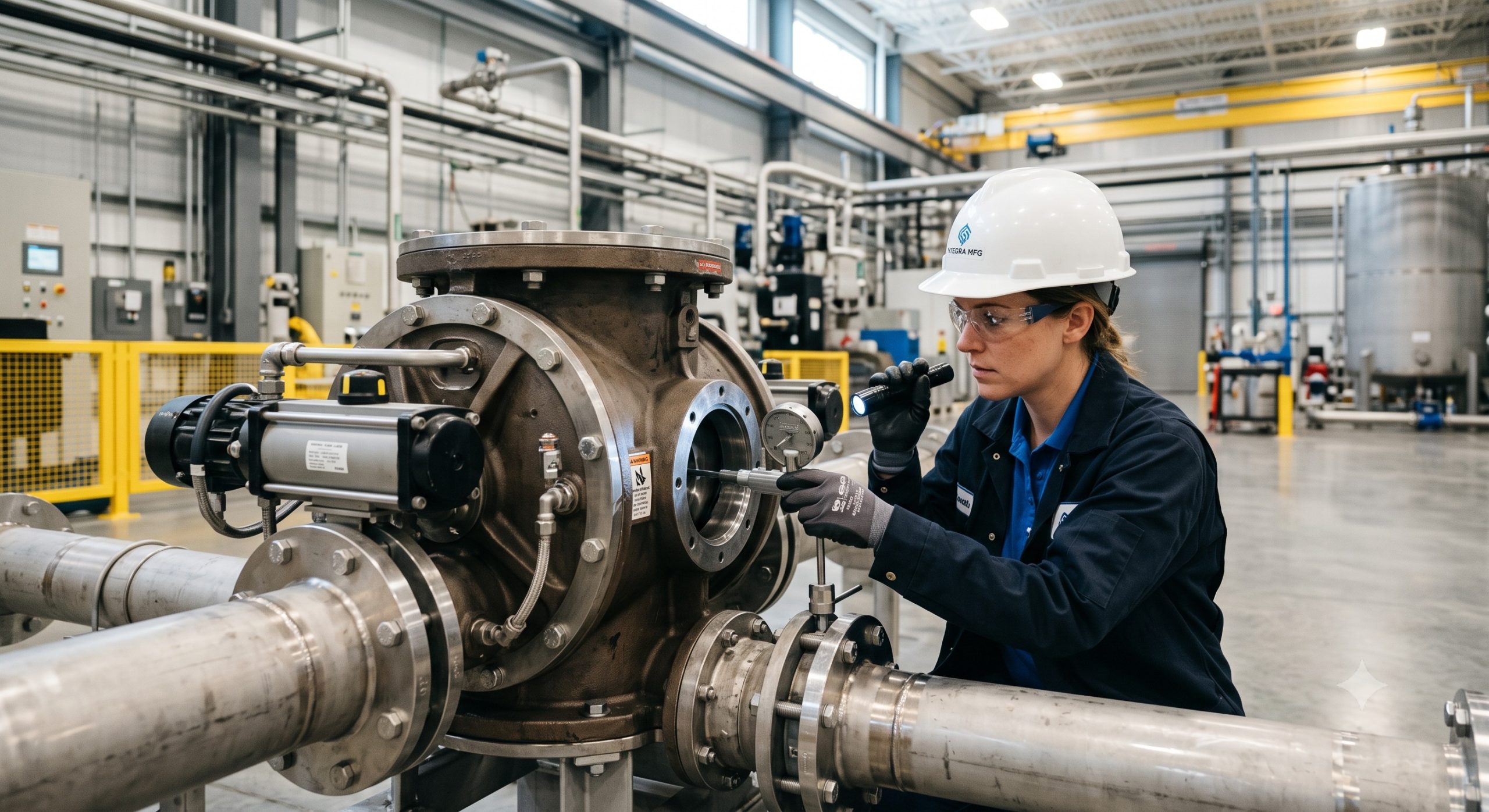
- Maintaining the Doebritz DBR-1237’s low leakage (<0.1% of conveying air) in abrasive service primarily involves regular clearance checks and the use of hard-wearing materials. The valve's 0.1-0.2mm tip clearance is the first line of defense, and our maintenance schedule recommends quarterly checks with a feeler gauge. For high wear, the DBR-1237 can be ordered with internal wear plates and a rotor coated with tungsten carbide or ceramic, which significantly extends the service life and preserves the airtight seal. If leakage increases, the rotor tip clearance can be adjusted or the rotor can be replaced.
- Q7: What are the critical maintenance points for the Doebritz DBR-1237’s shaft seals in ATEX zones?
- For ATEX compliance, the shaft seal integrity of the Doebritz DBR-1237 is paramount. The primary maintenance point is the shaft seal itself, which typically consists of lip seals with an air-purge connection. Regularly verify the purge air pressure (typically 0.2-0.5 bar above line pressure) is functioning to create a positive seal and prevent dust ingress into the bearing housing. It is also critical to inspect outboard bearings for proper lubrication and secure mounting, as bearing failure is a potential ignition source. Always use original Doebritz seals to guarantee ATEX integrity.
- Q8: Can the Doebritz DBR-1237 be integrated into a CIP (Clean-in-Place) system without compromising its ATEX rating?
- Yes, the Doebritz DBR-1237’s quick-release design is perfectly suited for CIP, allowing for rapid disassembly and thorough cleaning without tools. Its ATEX rating is not compromised during cleaning when following the specified protocol. The valve’s 316L stainless steel construction and mirror-polished internal surfaces (Ra ≤ 0.4μm) prevent product buildup and facilitate cleaning, which is crucial for both hygiene and safety. The design features no dead spaces, ensuring that cleaning agents can effectively wash all surfaces, removing potential dust residues that could otherwise pose a combustible dust hazard.