Overview
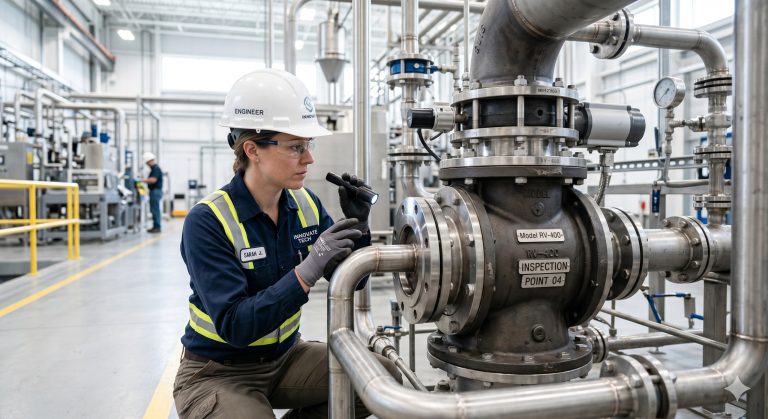
For chocolate processors, preventing cross-contamination, ensuring precise airlock sealing, and maintaining hygienic quick-release access are non-negotiable. The Doebritz Quick-release airlock valve (DBR-1237 series) is specifically engineered for cocoa powder, chocolate nibs, and sugar-based mixes. This FAQ provides verified technical answers for B2B procurement and plant maintenance engineers based strictly on Doebritz published specifications.

Frequently Asked Questions
- Q1: What ATEX certifications are available for the Doebritz Chocolate Quick-release airlock valve?
- The Doebritz Quick-release airlock valve is certified for ATEX Zones 20, 21, and 22. For explosion isolation, the heavy-duty version offers pressure resistance up to 16 bar with a precision rotor-to-housing clearance of 0.1–0.2 mm and an explosion-proof motor option.
- Q2: Does the Doebritz chocolate valve support DIN or ANSI flanges?
- Yes. The Doebritz valve uses HG20592 standard flanges as base, but full custom flange matching (DIN, ANSI, JIS) is available. Standard interface sizes range from DN50 to DN350, and non-standard heights or drives can be accommodated.
- Q3: How does the valve prevent leakage when handling fine cocoa powder?
- The Doebritz airlock valve achieves low leakage through a rotor-to-housing clearance of 0.1–0.2 mm combined with lip seal air-tight shaft sealing. This design minimizes blowback air and prevents fine cocoa powder from escaping into the environment.
- Q4: Can the Doebritz valve handle abrasive chocolate ingredients like sugar crystals or nibs?
- Yes. For abrasive materials, Doebritz offers tungsten carbide (WC) coating, ceramic coating, or polymer-lined internals (PE, PTFE, PA) on SUS304 or SUS316L base material. These耐磨 options significantly extend component life when handling sugar crystals, nibs, or other abrasive particulates.
- Q5: How do I adjust rotor-to-housing clearance or maintain outboard bearings?
- Clearance is factory-set to 0.1–0.2 mm and not field-adjustable; replacement of worn components is required if tolerance exceeds specification. Outboard bearings are grease-lubricated and accessible without full disassembly. For air purge seals, the optional water cooling jacket and气密封 system require periodic inspection of lip seals.
- Q6: Is the valve suitable for CIP or manual cleaning in food-grade chocolate production?
- Absolutely. The Doebritz quick-release design allows tool-free disassembly for manual cleaning. It also supports online CIP cleaning or WIP cleaning with post-wash manual inspection. Internal surfaces can be specified as mirror finish with Ra ≤0.4 μm, meeting GMP and Class 10W/30W/C/D cleanroom standards.
- Q7: What is the maximum temperature range for the Doebritz chocolate airlock valve?
- The standard Doebritz Quick-release airlock valve operates at ambient temperatures from -15°C to 60°C and handles物料 temperatures from 0°C to 120°C. For higher temperature applications above 120°C, a water cooling jacket is required.
- Q8: What is the typical lead time and what material certifications are provided?
- Standard lead time for the Doebritz DBR-1237 series is 4–6 weeks. Each valve comes with CE, TÜV, and Statement certifications. Material certs (3.1 per EN 10204) for SUS304/SUS316L or carbon steel are included. Custom coating (WC/ceramic) and防爆 configurations may extend lead time by 1–2 weeks.