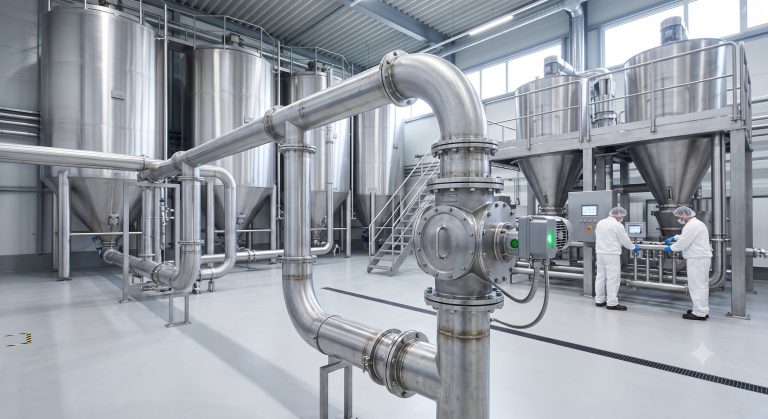
Introduction: The Critical Role of Metering Screws in Bulk Solids Handling
In the realm of pneumatic conveying and gravimetric feeding, the powder metering screw is the heart of system accuracy. For plant engineers, the challenge is not merely moving material, but moving it with precise volumetric or gravimetric consistency, regardless of particle shape, bulk density, or abrasiveness. This guide delves into the engineering complexities of designing and selecting a high-performance metering screw, drawing on decades of field data and manufacturing expertise from Doebritz.
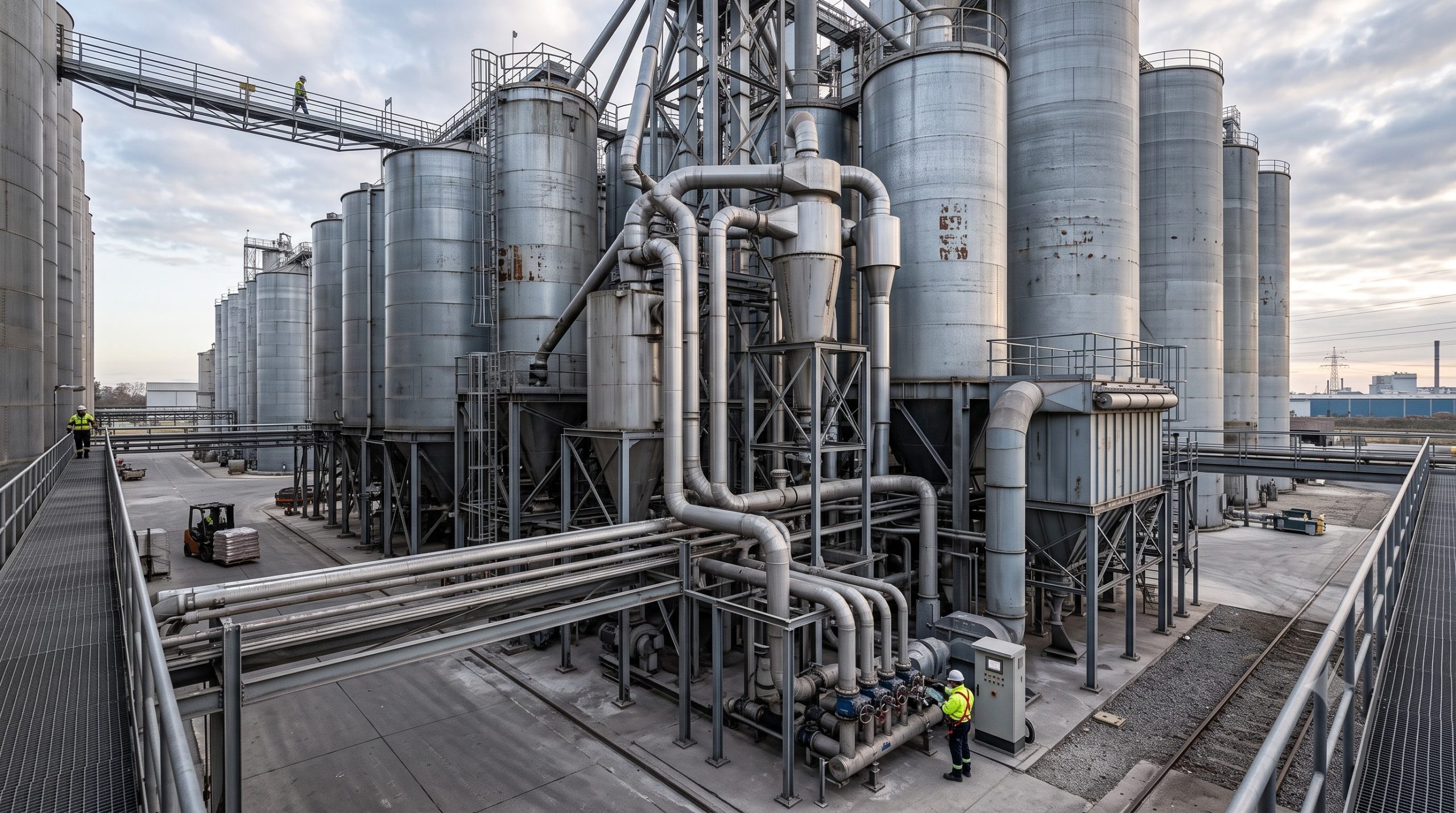
Metallurgy and Material Selection: The Foundation of Durability
The choice of metallurgy is paramount and is directly dictated by the product characteristics. In the majority of food and pharmaceutical applications, SUS316L stainless steel is the benchmark. Its corrosion resistance ensures product purity and compliance with stringent FDA and EHEDG guidelines. For abrasive industrial applications, such as handling titanium dioxide, carbon black, or lithium battery cathode materials, a base of SUS304 with advanced surface treatments is standard practice.
Wear Protection Strategies
- Tungsten Carbide Coating: Applied to the screw flight tips and casing, this offers exceptional resistance to abrasive wear, extending the Mean Time Between Failures (MTBF) significantly.
- Ceramic Coatings: Ideal for applications requiring high hardness and resistance to chemical attack, often deployed in fine chemical processes.
- Polymer Linings (PE/PTFE): Used to prevent material build-up (rat-holing) on the screw flights, ensuring a clean discharge and reducing the risk of cross-contamination.
CNC Precision and Operational Clearances
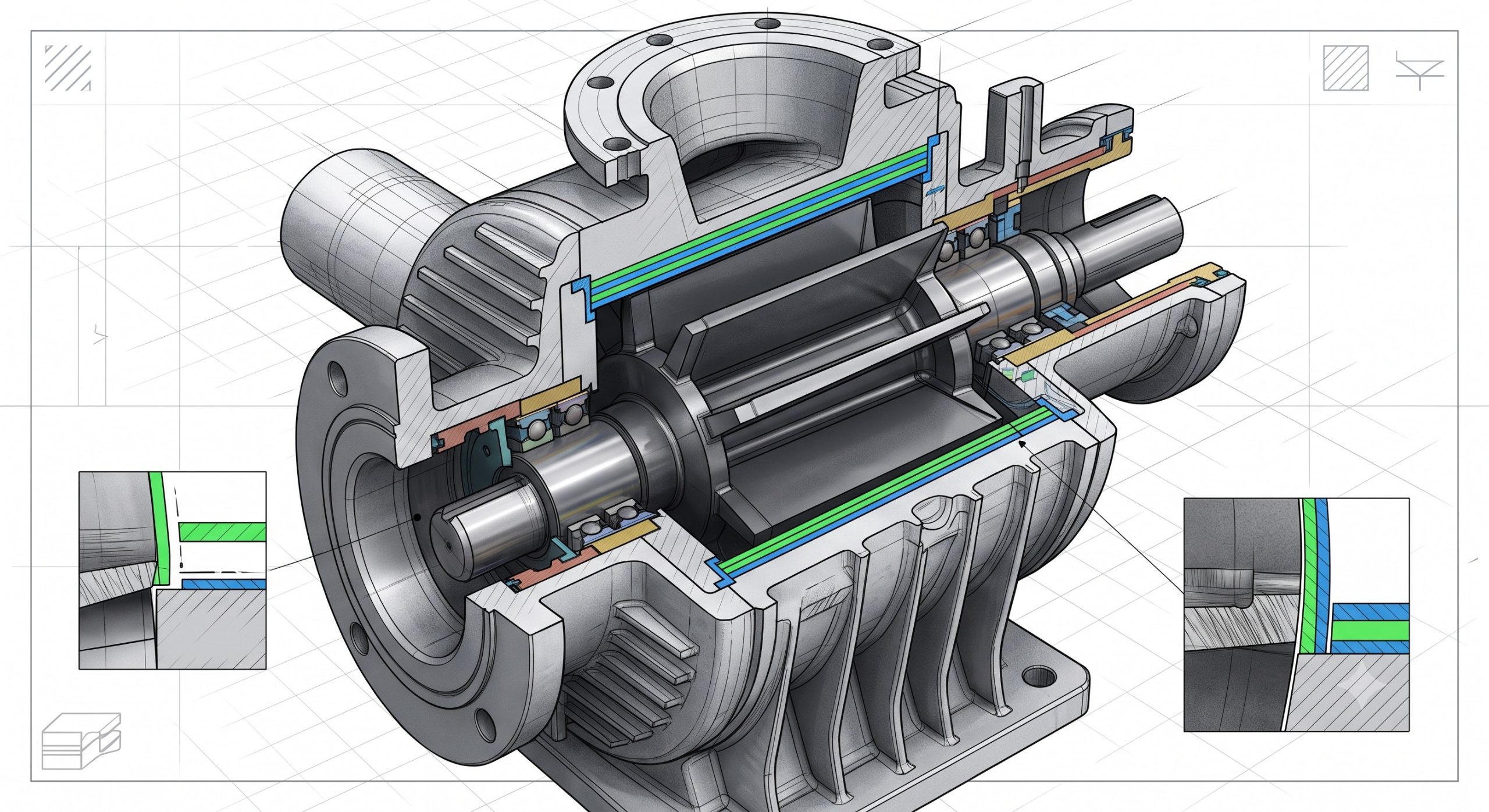
The performance of a powder metering screw is intrinsically linked to its manufacturing precision. Doebritz employs advanced 5-axis CNC machining to maintain critical tolerances. The rotor-to-housing clearance is typically held within 0.1 to 0.2 mm. This tight clearance is essential for creating a ‘metal-to-metal’ barrier that prevents air blowback, ensuring volumetric efficiency even under high differential pressures.
For high-temperature applications (up to 120°C), metallurgical engineering is crucial. Special clearances are calculated to account for thermal expansion, preventing seizure while maintaining the required sealing action. The use of advanced shaft sealing technologies, such as lip seal air-tight seals and lantern ring packing, ensures that the product remains isolated from the bearing housing, a critical feature for maintaining product integrity and meeting ATEX safety standards.
Technical Specifications
| Key Parameter | Technical Specification |
|---|---|
| Rotor-to-Housing Clearance | 0.1 – 0.2 mm (Precision Machined) |
| Max Differential Pressure | Up to 1.0 Bar (Dense Phase) |
| Operating Temperature (Ambient) | -15°C to +60°C |
| Operating Temperature (Material) | 0°C to +120°C |
| Base Materials | SUS304 / SUS316L / Carbon Steel (Nickel-Plated/Painted) |
| Wear-Resistant Coatings | Tungsten Carbide, Ceramic, PE/PTFE Linings |
| Safety & Compliance | ATEX (Zone 20/21/22), CE, TÜV, FDA Compliant |
| Airlock Efficiency | Volumetric Efficiency > 98% (with tight clearances) |
Performance and Sizing: Volumetric Efficiency
The capacity of a metering screw is not a fixed figure; it varies dramatically based on the material’s bulk density and flowability. A key metric engineers must evaluate is the volumetric efficiency, typically expressed in Liters per Revolution (L/rev). Doebritz engineers use a combination of empirical data and Computational Fluid Dynamics (CFD) to model material flow, ensuring the selected screw geometry—whether open-flight for free-flowing granules or closed-flight for floodable powders—perfectly matches the application.
Pneumatic Conveying Integration
In dense phase pneumatic conveying systems, the metering screw acts as a ‘lock’ to prevent pressure loss. The differential pressure across the valve can range from low pressure (< 0.4 bar) to high pressure (0.4 to 1 bar). Doebritz’s design philosophy ensures the screw’s geometry and housing withstand these forces, providing a stable feed rate and preventing system ‘blowback’ which can lead to unscheduled downtime.
Heavy-Duty Application Scenarios
Adaptability is a cornerstone of the Doebritz design. In the food and beverage industry, quick-release (demountable) designs allow for rapid manual cleaning or online CIP/WIP cleaning, eliminating cross-contamination risks. In chemical and petrochemical plants, ATEX-certified configurations (Zone 20/21/22) with explosion-proof motors are mandatory. Doebritz valves support these requirements with robust, documented design qualifications, including TÜV and CE certifications.
For lithium battery manufacturing, the handling of expensive and sensitive cathode/anode materials demands a ‘zero leakage’ profile. The precision-machined rotors with ceramic or tungsten carbide coatings ensure not only product integrity but also the safety of the cleanroom environment (Class W, 10W, 30W, C, D).
Conclusion: Achieving Plant Efficiency Through Superior Design
Selecting the right powder metering screw is a critical engineering decision that impacts plant throughput, product quality, and operational cost. From the selection of SUS304/SUS316L substrates to the application of carbon-fiber infused polymer coatings and the fine-tuning of sub-0.2mm clearances, Doebritz offers an engineered solution designed for lifecycle value. Whether the goal is to feed a high-speed automated batching line or to meter abrasive material into a high-pressure conveying system, Doebritz provides the precision and reliability that modern industry demands.