Overview
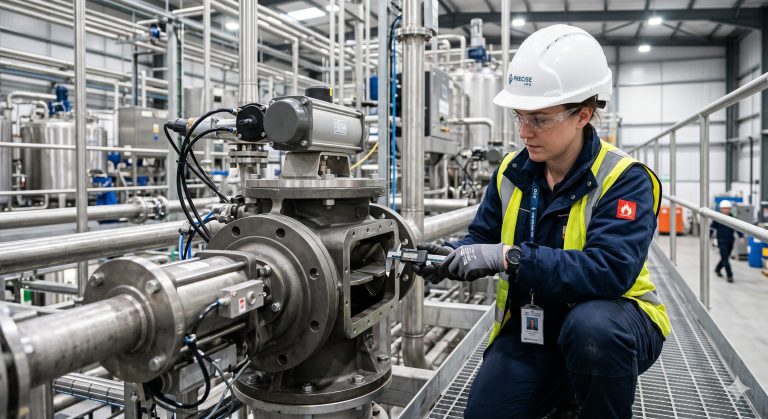
Doebritz PTFE Quick-release airlock valve combines precision-engineered rotor-to-housing clearance (0.1–0.2 mm) with PTFE-coated or solid PTFE contact surfaces, delivering exceptional low friction, chemical resistance, and non-stick performance for sticky, corrosive, or ultra-fine powders. Designed for fast disassembly without special tools, it supports online CIP/WIP cleaning, ATEX Zone 20/21/22, and pressures up to 16 bar for explosion-isolated installations.
Frequently Asked Questions
- Q1: How does the Doebritz PTFE Quick-release airlock valve handle highly abrasive or corrosive powders?
- The Doebritz PTFE Quick-release airlock valve uses either solid PTFE liners or stainless steel SUS316L base material coated with PTFE, which provides excellent corrosion resistance against acids, alkalis, and solvents. For abrasive powders mixed with corrosive media, Doebritz offers a PTFE + ceramic hybrid coating or PA/PE wear liners. The standard rotor-to-housing clearance remains 0.1–0.2 mm, ensuring low air leakage even when handling titanium dioxide, lithium battery materials, or pharmaceutical intermediates.
- Q2: Is the Doebritz PTFE Quick-release airlock valve ATEX certified for dust explosion zones?
- Yes, the Doebritz PTFE Quick-release airlock valve is available with full ATEX certification for Zone 20 (continuous dust), Zone 21 (high probability), and Zone 22 (low probability). The explosion-isolated configuration includes a pressure-resistant housing rated at 16 bar, precision 0.1–0.2 mm clearance to prevent flame propagation, anti-static PTFE grounding, and an ATEX-certified motor. All Doebritz ATEX valves comply with EN 14460 (explosion pressure resistant design).
- Q3: What flange standards and custom interface options are available for the Doebritz PTFE Quick-release airlock valve?
- Doebritz PTFE Quick-release airlock valves are delivered as standard with HG20592 flanges (DN50, DN100, DN150, DN200, DN300, DN350). For global B2B projects, Doebritz also supplies ANSI B16.5 (150# / 300#), DIN EN 1092-1 (PN10/PN16), and JIS flanges upon request. Non-standard inlet/outlet heights, square flanges, or sanitary tri-clamp connections can be custom-engineered without changing the quick-release body architecture.
- Q4: How do I adjust or verify the rotor-to-housing clearance on a Doebritz PTFE Quick-release airlock valve during maintenance?
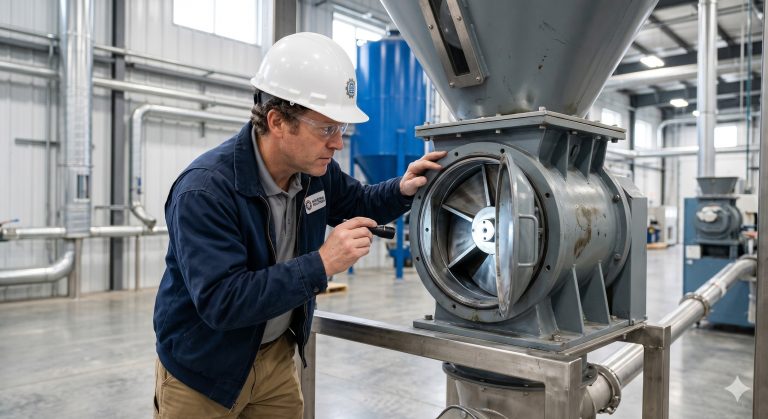
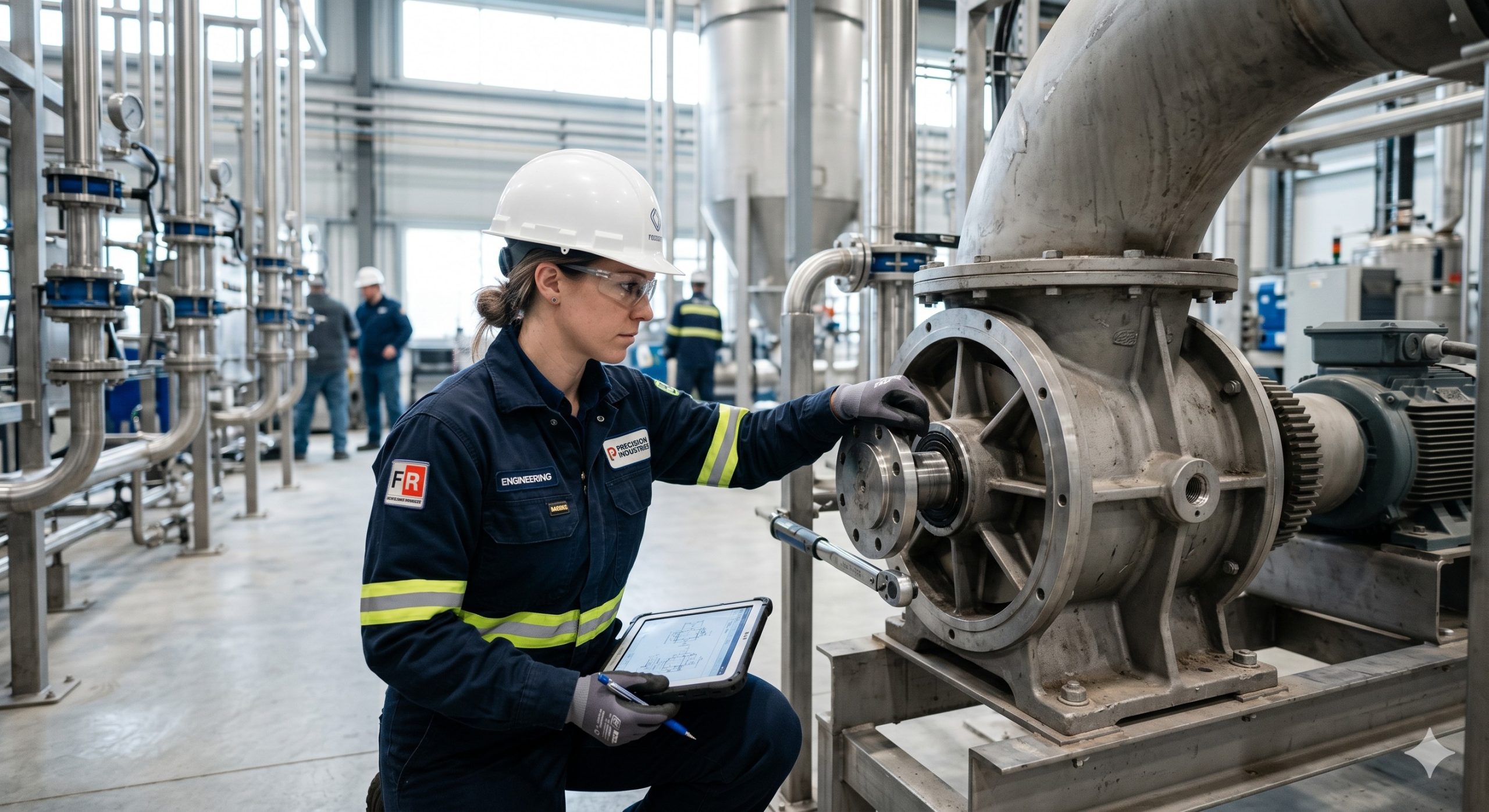
- The standard factory-set radial clearance for a Doebritz PTFE Quick-release airlock valve is 0.1–0.2 mm. To verify clearance, remove the quick-release end cover using the tool-free clamp system, then use feeler gauges between the rotor tip and housing bore. If clearance exceeds 0.25 mm due to PTFE wear, Doebritz recommends replacing the PTFE liner or rotor sleeve. Doebritz does not support field grinding of PTFE components; replacement parts are available with full material certificates.
- Q5: What shaft sealing systems are used on the Doebritz PTFE Quick-release airlock valve, and can they be replaced without removing the valve?
- The Doebritz PTFE Quick-release airlock valve is equipped with lip-type air-tight seals (nitrile or FKM) plus an optional purge air connection to prevent dust ingress into outboard bearings. For high-temperature or aggressive chemical applications, Doebritz offers PTFE-lip seals or gas-purged gland packing. Seal replacement can be performed with the valve in place by removing the outboard bearing housing and lantern ring; no special tools are required thanks to the quick-release shaft access design.
- Q6: How do I clean the Doebritz PTFE Quick-release airlock valve for pharmaceutical or food grade changeovers?
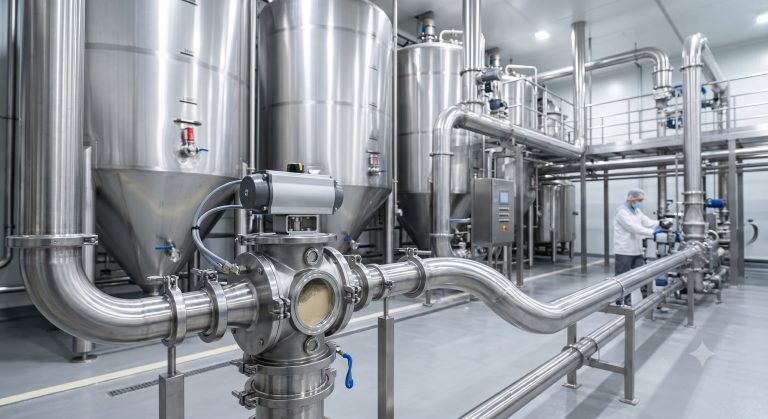
- Doebritz PTFE Quick-release airlock valves support three cleaning modes: (1) Tool-free manual disassembly followed by manual washdown; (2) Online CIP (clean-in-place) with spray balls directed through the inlet/outlet; (3) Online WIP (wash-in-place) followed by visual inspection of the PTFE surface. The quick-release rails allow the complete rotor assembly to be extracted in under 2 minutes. All product-contact PTFE surfaces are Ra ≤ 0.8 μm or mirror-polished SUS316L under PTFE, meeting GMP and FDA requirements.
- Q7: What is the maximum operating temperature and pressure for the Doebritz PTFE Quick-release airlock valve in pneumatic conveying?
- For continuous service, the Doebritz PTFE Quick-release airlock valve handles ambient temperatures from -15°C to 60°C and material temperatures from 0°C to 120°C. Standard PTFE components are rated up to 120°C; for higher temperatures Doebritz recommends a high-performance PA or PEEK coating. Pressure limits: gravity discharge (unlimited), low-pressure pneumatic conveying (<0.4 bar), high-pressure pneumatic conveying (0.4 to 1 bar with VFD control), and explosion-isolated designs withstand 16 bar differential pressure.
- Q8: What typical lead times, spare parts, and material certifications does Doebritz provide for the PTFE Quick-release airlock valve?
- Doebritz standard PTFE Quick-release airlock valves (SUS304/SUS316L, DN100–DN200) are shipped within 4–6 weeks. Custom ATEX Zone 20 or non-standard flanges require 8–10 weeks. Each valve includes a 3.1 material certificate (EN 10204) for all wetted parts. Spare parts (PTFE liners, lip seals, bearing kits, rotors) are available for 48-hour emergency dispatch. Doebritz also provides a 24-month warranty and on-site commissioning support upon request.