Overview
Pharmaceutical sieve shakers are precision machines essential for particle size analysis and powder separation in GMP environments. Procurement and plant maintenance managers frequently encounter challenges with ATEX compliance, abrasive API powder handling, flange standards (DIN vs. ANSI), and long-term maintenance of outboard bearings and air purge seals. Below, Doebritz engineering answers the most critical pre-sales and post-sales questions to ensure safe, compliant, and efficient operation.

Frequently Asked Questions
- Q1: Is the Doebritz pharmaceutical sieve shaker ATEX certified for hazardous dust environments?
- Yes, Doebritz pharmaceutical sieve shakers are available with ATEX Zone 22 and Zone 21 certification for explosive dust atmospheres. The ATEX-compliant models feature anti-sparking contact parts, grounded stainless steel mesh frames, and sealed motor enclosures. Doebritz provides full documentation, including CE/ATEX declaration of conformity and a technical file for each certified unit.
- Q2: How does the Doebritz sieve shaker handle highly abrasive pharmaceutical powders like crushed crystals or metal stearates?
- Doebritz designs abrasive-handling sieve shakers with wear-resistant internals, including 304/316L stainless steel with electropolished surfaces or optional hard-chrome plating on contacting components. The replaceable mesh screens are heat-treated for hardness, and the gasketless clamping system eliminates abrasive particle entrapment. For extreme abrasion, Doebritz offers a nitrogen-carburized deck surface that extends screen life by up to 300%.
- Q3: What flange standards are available on Doebritz pharmaceutical sieve shakers: DIN or ANSI?
- Doebritz supports both DIN (EN 1092-1, PN6/PN10/PN16) and ANSI (ASME B16.5, Class 150/300) flanges as standard. Quick-delivery configurations include DIN 2576 PN10 and ANSI 150# flanges with sanitary tri-clamp options for GMP washdown areas. Custom flange drilling patterns are also available for retrofitting existing process lines without modification.
- Q4: How do I adjust the gap clearance on a Doebritz pharmaceutical sieve shaker to reduce leakage?
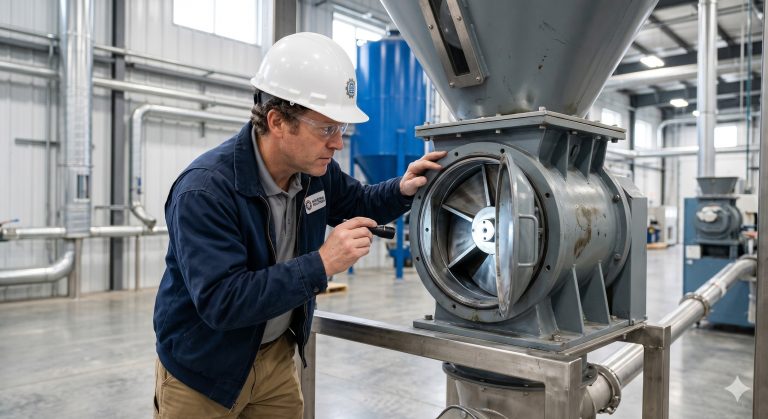
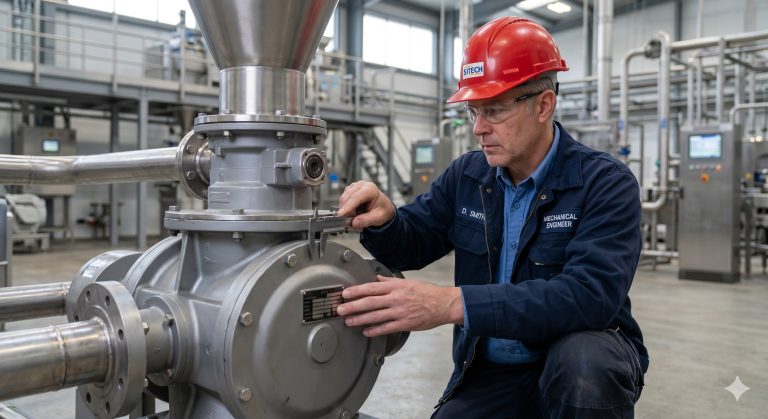
- To adjust rotor-to-housing clearance on a Doebritz sieve shaker, first loosen the four adjusting bolts on the bearing housing cover. Then, rotate the eccentric adjusting sleeves clockwise to reduce clearance (target: 0.15-0.30 mm for powders below 100 microns). Retighten bolts to 35 Nm and verify using a feeler gauge at three points around the rotor. Doebritz recommends checking clearance every 300 operating hours or after any abrasive product change.
- Q5: What is the correct maintenance procedure for outboard bearings on Doebritz sieve shakers?
- Outboard bearings on Doebritz pharmaceutical sieve shakers require relubrication every 1,000 hours using NLGI 2 lithium-based food-grade grease (NSF H1). To service: remove the bearing shield, clean old grease completely, pack bearing with 40% grease by volume (do not overpack), and replace the labyrinth seal. Doebritz outboard bearings are preloaded to P6 precision class; if radial play exceeds 0.05 mm, replace the bearing and the eccentric shaft as a matched set.
- Q6: How do the air purge seals on Doebritz pharmaceutical sieve shakers prevent product contamination?
- Doebritz air purge seals create a positive differential pressure (2-5 psi, 0.14-0.35 bar) that blocks fine powder ingress into bearing housings. The seal system uses filtered, dry compressed air injected through two tangential ports, creating a radial air curtain. For sterile applications, Doebritz provides a 0.2-micron sterile air filter and a pressure monitoring switch that alarms if purge pressure drops below 1 psi (0.07 bar).
- Q7: What is the recommended schedule for replacing sieve screens in high-throughput pharmaceutical production?
- Doebritz recommends sieve screen replacement every 500-800 hours for high-throughput continuous production (≥500 kg/hr of abrasive APIs). Pre-sales: request a screen wear test using your actual product. Post-sales: perform a daily visual inspection and a weekly sieve analysis accuracy check using a reference standard powder. Doebritz offers a Screen Life Optimization Service that correlates wear rate with motor vibration settings to extend screen life by up to 40%.