Introduction: The Critical Imperative of Dust Explosion Prevention in Powder Handling
In the industrial processing of bulk solids, the risk of a dust explosion is a paramount safety concern that transcends mere regulatory compliance. For engineers and plant operators, the management of combustible dusts, particularly in pneumatic conveying and gravity discharge systems, demands a deep understanding of the explosion pentagon. This article provides a highly authoritative, data-driven technical guide to dust explosion prevention, focusing on the mechanical engineering principles, metallurgical considerations, and operational strategies that ensure safety and efficiency. We will examine the specific technologies employed by Doebritz, a leader in the field of rotary valves, to mitigate these risks. This guide is essential for any B2B industrial operation looking to enhance safety, protect personnel, and ensure uninterrupted production in hazardous environments.
Understanding the Physics of Dust Explosions in Pneumatic Conveying
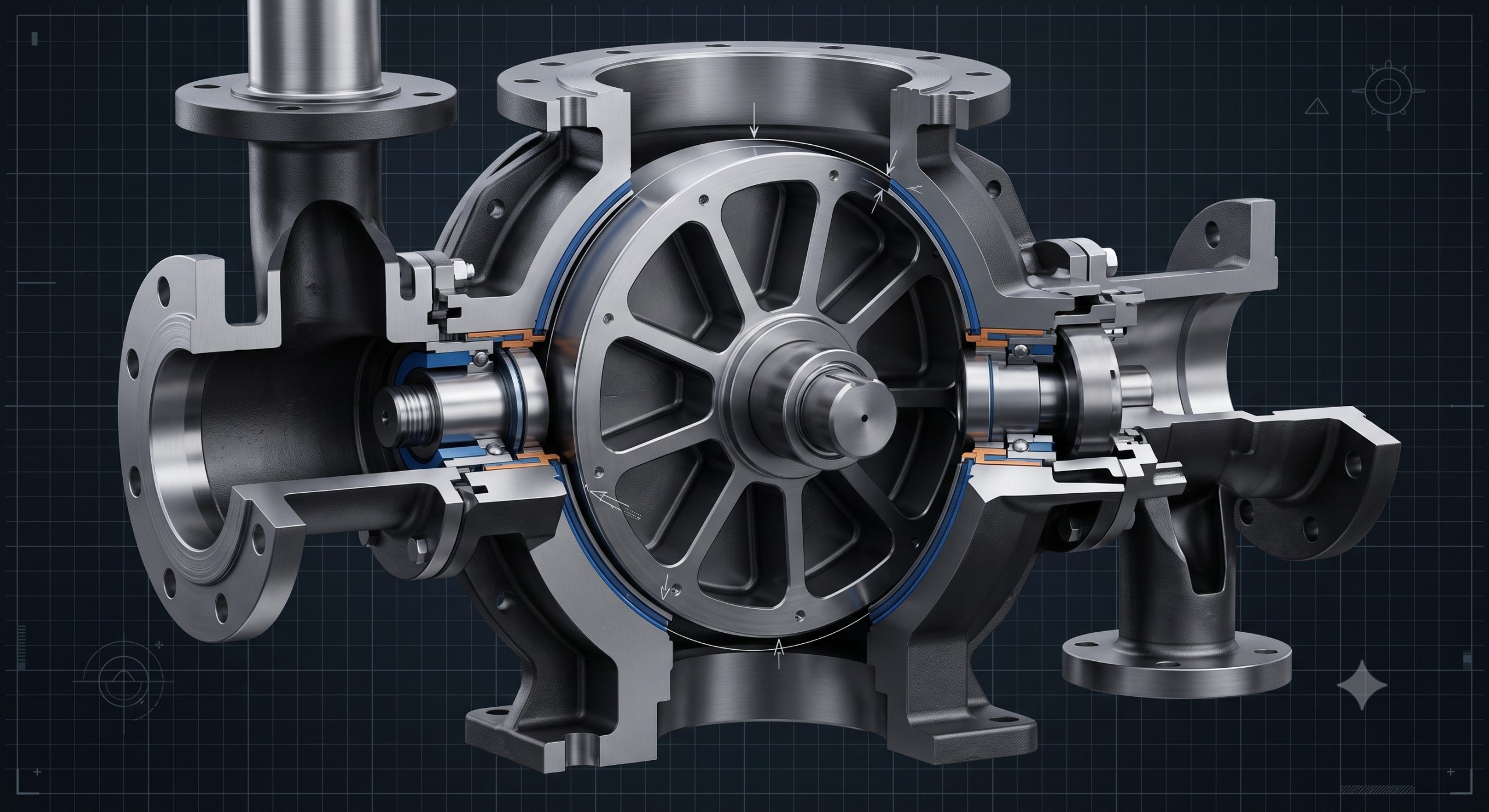
A dust explosion requires five elements: fuel (combustible dust), oxidant (oxygen), an ignition source, dispersion of dust into a cloud, and confinement. In powder handling, the rotary valve or airlock is often the most vulnerable component, acting as both a source of ignition through mechanical friction and a potential point of flame propagation. The primary defense against a secondary explosion or flame jetting is the ability of the rotary valve to serve as a flame barrier. This is why ATEX and NFPA compliance are not just labels but critical engineering requirements. The Doebritz DBR-1237 gravity rotary valve is engineered with a precision of 0.1–0.2 mm rotor-to-housing clearances, a key metric that limits the propagation of a flame front and reduces the risk of a dust explosion. Furthermore, the use of ATEX-certified components (ZONE 20/21/22) ensures that all electrical and mechanical parts are safe for use in potentially explosive atmospheres.
Material Selection and Anti-Static Engineering
The choice of material is fundamental to explosion prevention. SUS304 and SUS316L stainless steels are standard, but their surface properties and conductivity are critical. To prevent the buildup of static electricity, a common ignition source, the Doebritz valve incorporates specific design features. The use of PTFE, PE, and PA coatings or liners, while excellent for material flow and wear resistance, must be engineered to be anti-static. This is often achieved through the incorporation of conductive fillers or by ensuring that the valve body is properly grounded. The valve’s internal surfaces, which can be processed to a mirror finish (Ra ≤ 0.4 μm), also play a role in preventing dust accumulation, which can lead to smoldering and ignition. The housing metallurgy, often cast and stress-relieved, is designed to withstand the mechanical and thermal stresses of a potential explosion, containing it and preventing a breach.
Pressure Resistance and Containment
In the event of a deflagration, the valve must act as a pressure vessel, containing the explosion and preventing it from propagating to upstream or downstream equipment. The Doebritz DBR-1237 is engineered to withstand differential pressures up to 16 bar (1.6 MPa), a critical parameter for high-pressure pneumatic conveying systems. This pressure resistance is achieved through robust housing design, compliance with HG20592 flange standards, and the use of high-strength materials. The valve’s sealing mechanisms, including lip seal air-tight seals and packing glands, are designed to maintain their integrity even under extreme pressure events. This containment capability is a cornerstone of explosion prevention, ensuring that a small ignition within the valve does not escalate into a catastrophic plant-wide disaster.
Technical Specifications: Explosion Prevention Parameters
For precise engineering selection, a comprehensive understanding of the key parameters is essential. The following table outlines the critical technical specifications that directly impact explosion prevention and safe operation.
| Key Parameter | Technical Specification |
|---|---|
| Max Differential Pressure | 16 bar (1600 kPa) |
| Rotor-Housing Clearance | 0.1–0.2 mm |
| ATEX Classification | ZONE 20/21/22 |
| Material Options | SUS304, SUS316L, Carbon Steel with Tungsten Carbide/PE/PTFE Coatings |
| Housing Flange Standard | HG20592 (Customizable) |
| Operating Temperature (Ambient) | -15°C to +60°C |
| Operating Temperature (Material) | 0°C to +120°C (Water Cooling Optional) |
| Surface Finish (Internal) | Mirror (Ra ≤ 0.4 μm) / Ra ≤ 0.8 μm / Ra ≤ 1.6 μm |
| Certifications | CE, TÜV, ATEX, NFPA, FDA |
Case Study: Doebritz in ZONE 20 Environments
Consider a lithium battery cathode material processing plant, operating in a ZONE 20 environment. The handling of fine, combustible powders like lithium cobalt oxide requires the highest level of safety. A Doebritz DBR-1237 rotary valve with tungsten carbide coating on the rotor and housing is selected. The valve operates at a low rpm with VFD control, ensuring gentle handling and minimizing the risk of frictional sparking. The precision ground 0.1 mm clearance ensures near-zero air leakage, which is crucial for maintaining an inert atmosphere (e.g., nitrogen purging) within the conveying system. The valve’s body is made of SUS316L for corrosion resistance, and the entire assembly is fitted with an ATEX-certified explosion-proof motor. The valve also features a water cooling jacket to manage the heat generated from the friction of the abrasive material, a critical factor in preventing hotspot formation. This holistic approach to engineering, combining material science, precision manufacturing, and active cooling, ensures that the Doebritz valve is not just a component, but a safety-critical system.
ATEX and NFPA Compliance: Standards and Certification
Doebritz products, including the DBR-1237, are rigorously tested and certified to meet stringent international standards. This includes ATEX (European Union), NFPA (US National Fire Protection Association), and CE certifications. The valve’s design is validated for use in the ZONE 20, 21, and 22 classifications, covering continuous, long-term, or occasional presence of combustible dust clouds. For food and pharmaceutical applications, the valve also complies with FDA and EHEDG guidelines, ensuring that safety does not compromise hygiene. The components are engineered to prevent the accumulation of static electricity and to contain any internal explosion, preventing it from becoming a larger incident. This multi-certification approach provides a comprehensive safety net, giving engineers and plant managers the confidence that their equipment meets the highest global safety benchmarks.
Best Practices for Explosion Prevention in Rotary Valves
To maximize safety, plant operators should implement the following best practices. First, regular inspection of the rotor and housing clearances is essential. Any wear in the 0.1–0.2 mm gap can reduce the valve’s flame-quenching capability and increase leakage. Second, proper grounding of the entire system, including the rotary valve, is non-negotiable. Electrical continuity should be verified periodically. Third, the use of explosion relief vents on the hopper or downstream of the valve, while not the primary defense, provides an additional layer of protection. Fourth, the selection of appropriate materials, such as PTFE-coated rotors for sticky materials or tungsten carbide-coated components for abrasive ones, can prevent material buildup and reduce friction. Finally, adherence to the manufacturer’s recommended maintenance schedule, including the replacement of seals and packing, is vital to ensure the valve’s long-term performance and safety.
Conclusion: Engineering Safety and Efficiency
Dust explosion prevention in powder handling is a complex, multi-faceted challenge that requires a rigorous engineering approach. The Doebritz DBR-1237 quick-release rotary valve represents a state-of-the-art solution, integrating precision clearances, robust materials, and comprehensive ATEX/NFPA compliance to offer a safe and efficient product. By understanding the physics of explosions, selecting the correct materials, and adhering to strict maintenance protocols, industrial operations can significantly mitigate the risk of catastrophic events. Investing in a high-quality, safety-engineered rotary valve like the Doebritz DBR-1237 is not just a regulatory obligation but a fundamental business imperative that protects personnel, equipment, and profitability.