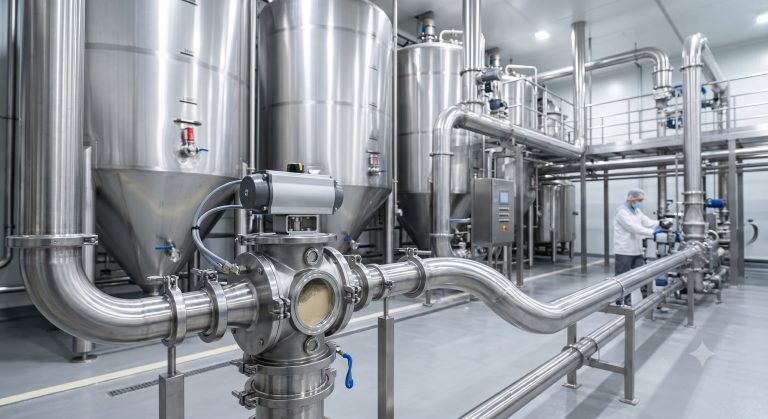
Introduction: Sanitary Challenges in Biscuit Production Lines
In high-volume biscuit manufacturing, the transition of bulk ingredients like flour, sugar, cocoa, and starches from silos to mixing requires an airlock feeder that prevents cross-contamination and allows rapid sanitation. Standard rotary valves often create dead zones, trapping fatty or hygroscopic powders, leading to bacterial risks and costly downtime. The Doebritz biscuits airlock feeder is engineered specifically to solve these pain points, combining a demountable (quick-release) structure with FDA-compliant surface finishes to ensure batch integrity and food safety.
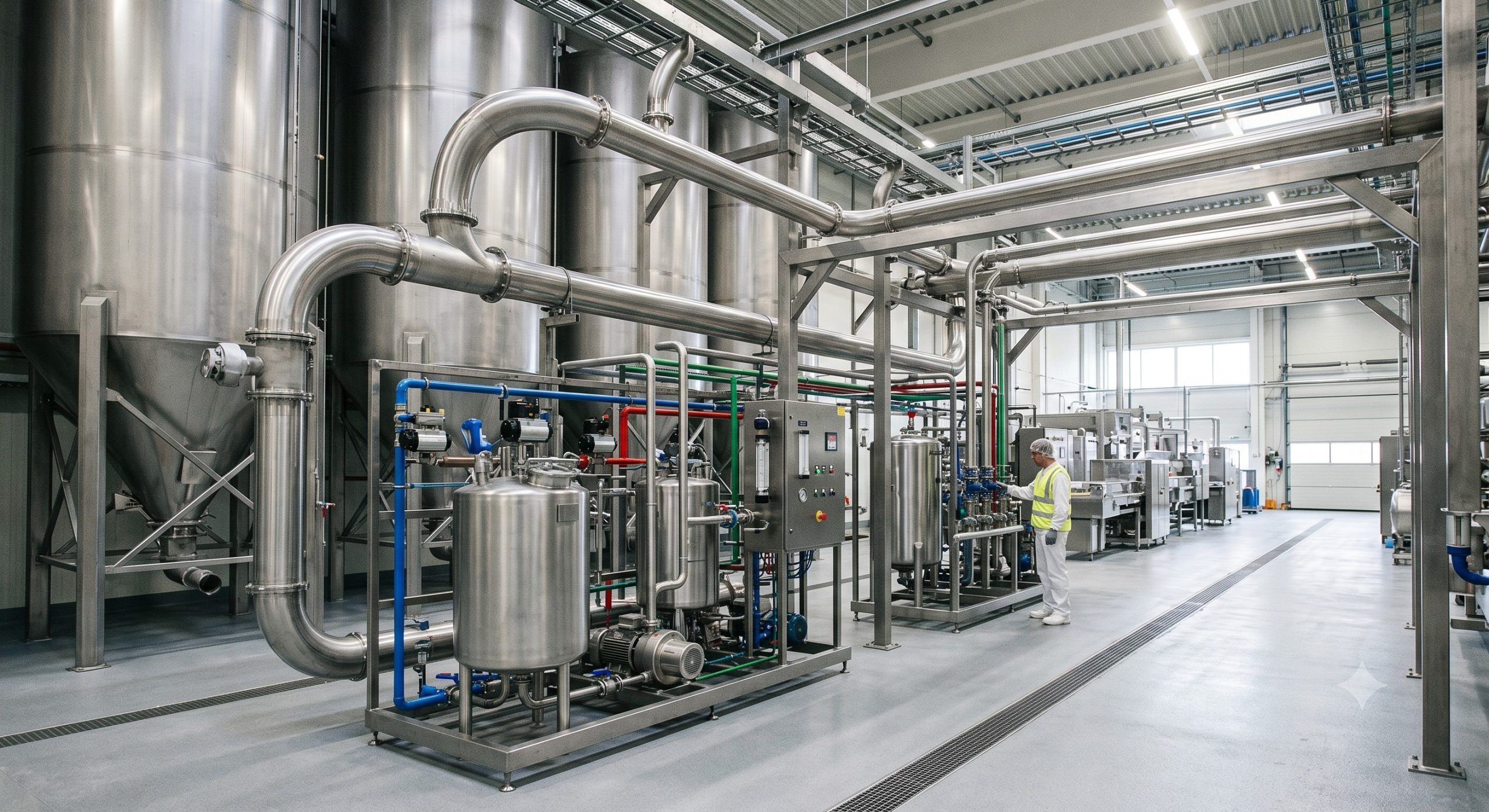
Demountable Structural Design: Zero Dead Zones for Hygiene
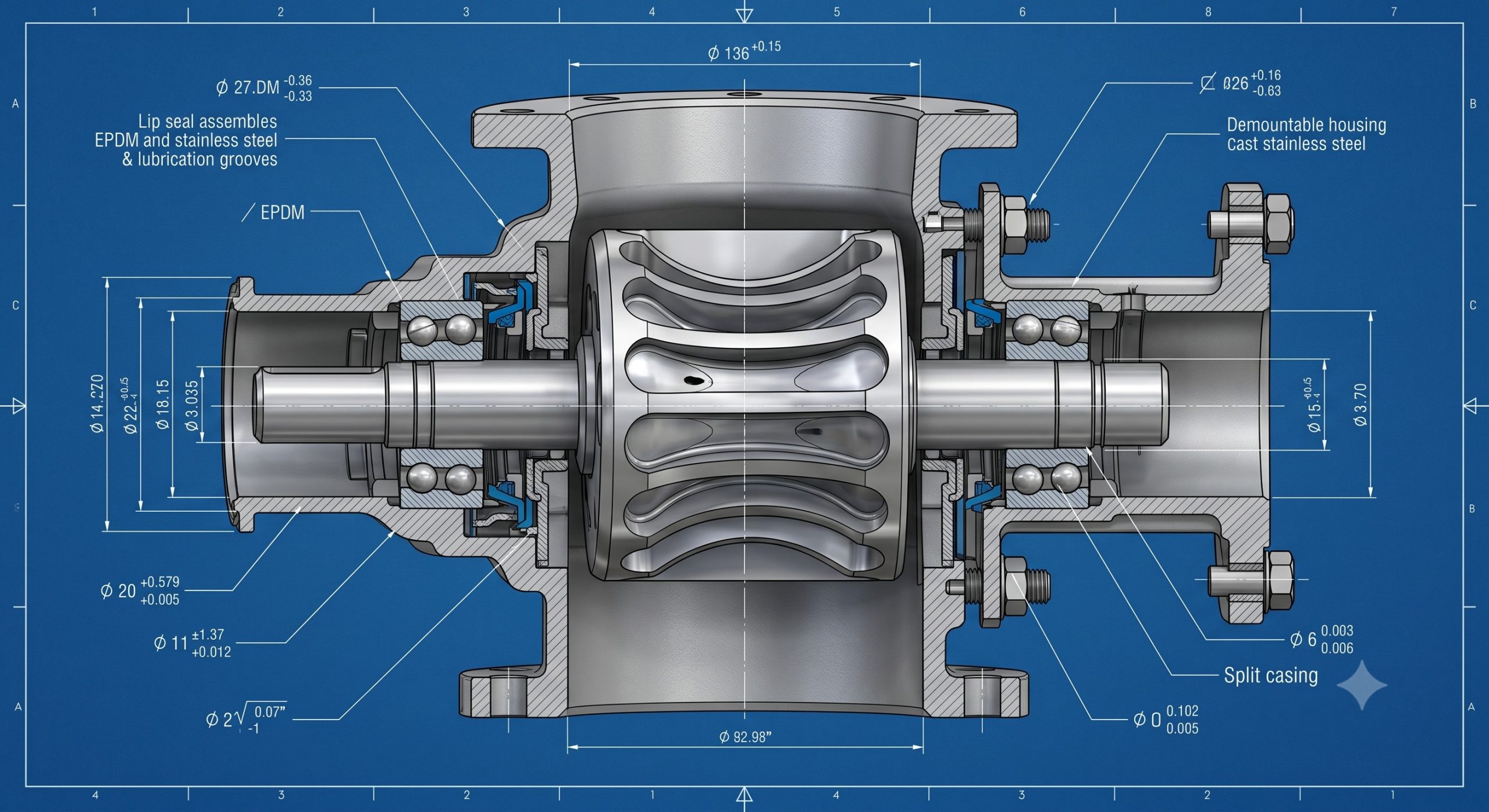
Unlike legacy cast iron valves, the Doebritz biscuits airlock feeder features a quick-release rotary valve architecture. The housing and end plates separate without special tools, exposing the rotor and internal chambers for manual inspection or CIP (Clean-in-Place) cycles. This design eliminates crevices where dough or powder residues accumulate. EHEDG-aligned geometry ensures all internal radii exceed 3mm, preventing bacterial biofilm formation—a critical requirement for FDA compliance in material handling.
316L Stainless Steel & Mirror Polishing
The entire product contact zone is manufactured from SUS316L, offering superior corrosion resistance against acidic dough conditioners or salted ingredients. Internal surfaces achieve Ra ≤ 0.4μm mirror finish, well below the FDA’s recommended ≤0.8μm for non-stick, easy-clean performance. This finish also reduces friction, lowering torque requirements and extending seal life.
| Key Parameter | Technical Specification (Doebritz Biscuits Airlock Feeder) |
|---|---|
| Materials (Wetted Parts) | SUS304, SUS316L (Standard); Mirror polish Ra ≤ 0.4μm (Hygienic) |
| Max Differential Pressure | 1.0 Bar (Positive or Negative) |
| Operating Temperature (Standard) | -15°C to +120°C (Ambient: -15°C to +60°C) |
| Rotor Clearance | 0.10 – 0.20 mm |
| Flow Rate per Revolution | Customizable by rotor diameter; up to 25 L/rev typical for DN150 |
| Shaft Sealing | Lip seal with optional air purge (0.2 – 0.5 bar) |
| Cleaning Methods | Quick-disassembly manual cleaning, Online CIP, Online WIP |
| Certifications | CE, TÜV, FDA-compliant materials, ATEX (Zone 20/21/22 optional) |
Precision Clearances & Volumetric Efficiency
Even with sanitary demands, the biscuits airlock feeder must maintain airlock integrity. Doebritz controls the rotor-to-housing radial clearance between 0.10 – 0.20 mm. This tight tolerance minimizes blow-by air leakage (typically <0.2 m³/h per 0.1 bar differential), preserving pneumatic conveying stability while preventing fine flour dust from escaping to the plant environment. The rotor features an open-end design, ideal for free-flowing powders like flour or starch, delivering a fill efficiency exceeding 80% at recommended speeds (15 – 35 rpm).
Sealing & Bearing Isolation for Food Safety
To prevent lubricant contamination, the Doebritz biscuits airlock feeder uses outboard bearings isolated from the product zone. Shaft seals consist of food-grade lip seals with an air purge option. A controlled, low-pressure air injection (0.2 – 0.5 bar) into the seal cavity prevents fine powder migration along the shaft, a common failure mode in conventional packings. All wetted elastomers comply with FDA 21 CFR §177.2600.
CIP & Quick-Clean Workflow Validation
Production uptime is critical. The demountable valve supports three cleaning protocols: (1) rapid manual cleaning after tool-less disassembly (typically under 10 minutes); (2) online CIP cleaning with spray balls installed in adjacent piping, where rinse water circulates through the valve; (3) WIP (Wash-in-Place) followed by manual verification for high-risk allergen changeovers. The mirror-finished internal surfaces pass ATP swab tests consistently, making the valve suitable for 30W, 10W, and Class C/D cleanrooms.
Application Scenarios in Biscuit Plants
- Gravity discharge under silos: Feeding wheat flour, corn flour, or cocoa powder to sifters or batch mixers at adjustable flow rates (via VFD control).
- Dilute phase pneumatic conveying: Transferring powdered sugar or starch from storage to day bins with positive pressure up to 0.4 bar.
- Small ingredient metering: Precise batch or recipe metering of baking powder, salt, or spices in PLC-automated blending systems.
- High-fat ingredient handling: Shortening or nut pastes using optional water-cooled jackets to prevent thermal buildup.
Conclusion: Maximizing ROI with Doebritz Sanitary Airlocks
For biscuit manufacturers, selecting the right biscuits airlock feeder directly impacts product safety, line efficiency, and regulatory compliance. The Doebritz quick-release rotary valve delivers measurable reductions in sanitation downtime (up to 60% compared to non-quick-release designs), eliminates cross-contamination risks, and provides a verifiable path to FDA, CE, and TÜV certifications. When upgrading your ingredient handling system, prioritize demountable stainless steel valves with precision clearances—your quality assurance team and production planners will both approve.