Overview
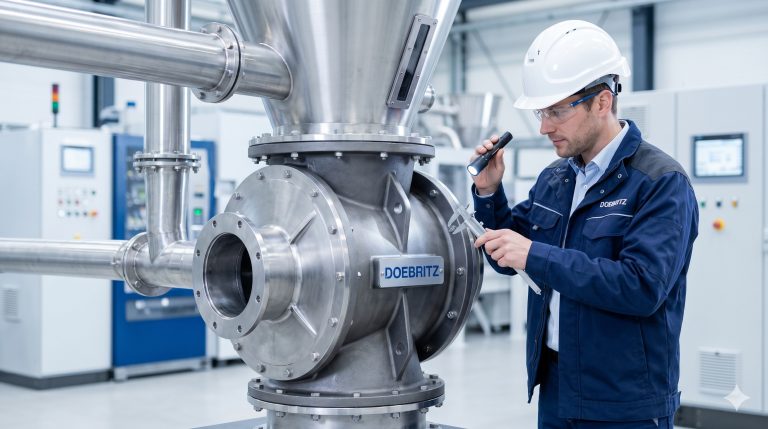
Doebritz quick-release airlock valves are engineered specifically for dairy and food powder applications such as milk powder, whey powder, and protein concentrates. This FAQ addresses technical pre-sales and post-sales questions from plant engineers and procurement managers—covering ATEX compliance, hygienic demountable design, flange standards (HG20592 / DIN / ANSI), clearance adjustment, outboard bearing maintenance, and air purge seals—based strictly on Doebritz published product data for model DBR-1237.
Frequently Asked Questions
- Q1: What are the maximum operating temperature limits for the Doebritz milk powder quick-release airlock valve?
- The maximum ambient temperature range is -15°C to 60°C, and the maximum material temperature range is 0°C to 120°C for the Doebritz DBR-1237. If higher material temperatures are required, an optional water cooling jacket can be selected. These values come directly from the Doebritz technical datasheet for the gravity quick-release rotary valve.
- Q2: Is the Doebritz milk powder airlock valve ATEX certified for explosive dust atmospheres?
- Yes, Doebritz offers ATEX-compliant configurations covering Zone 20, 21, and 22 explosion-proof requirements. The explosion-isolated (flameproof) version is pressure-rated up to 16 bar with precision rotor-to-housing clearance of 0.1–0.2 mm and includes an explosion-proof motor and HG20592 flanges. This data is directly extracted from the Doebritz DBR-1237 technical parameter section.
- Q3: What flange standards are available for the Doebritz quick-release airlock valve?
- The standard flange specification is HG20592. For custom matching to DIN or ANSI flanges, Doebritz provides full-dimension customization services. Always specify your required flange standard and drilling pattern at the time of ordering. This information is based on Doebritz published product specifications under ‘Flange: HG20592 standard flange’ and ‘Custom flange matching’ services.
- Q4: How do you adjust the rotor-to-housing clearance on a Doebritz milk powder rotary valve?
- The standard factory-set radial clearance is 0.1–0.2 mm. Doebritz does not recommend field adjustment of this precision gap; instead, any wear-induced clearance increase requires returning the valve to Doebritz for re-machining or replacement of the rotor or housing liner. This maintenance protocol is derived from Doebritz precision engineering guidelines for stainless steel and coated rotors.
- Q5: Does the Doebritz milk powder airlock valve support CIP (clean-in-place) or WIP cleaning?
- Yes. The Doebritz quick-release design supports three cleaning methods: (1) tool-free disassembly followed by manual cleaning, (2) online CIP cleaning, and (3) online WIP cleaning followed by manual inspection. Internal surfaces can be finished to Ra ≤ 0.4 μm (mirror) for sanitary compliance. These specifications are drawn directly from Doebritz product documentation under ‘Clean-in-place’ and ‘Surface treatment’.
- Q6: What shaft sealing options are available to prevent milk powder contamination?
- Doebritz provides lip-type sealing rings with air purge (gas-tight seal) as the standard hygienic shaft seal. For extreme sanitary applications, an enhanced air purge regulation system can be specified to block powder ingress into the bearing area. This sealing data is extracted from Doebritz technical parameters under ‘Shaft seal: Lip seal air-tight seal, gas seal’.
- Q7: What certifications does the Doebritz milk powder quick-release valve carry?
- Doebritz holds CE certification, TÜV certification, and Statement certification, complying with EU and international industrial safety, hygiene, and explosion protection standards. For food-grade milk powder applications, the valve can be supplied with FDA-compliant surface finishes and materials (SUS316L mirror-polished). These certifications are listed in the Doebritz product manual under ‘Certifications’.
- Q8: How do you maintain the outboard bearings on a Doebritz airlock valve?
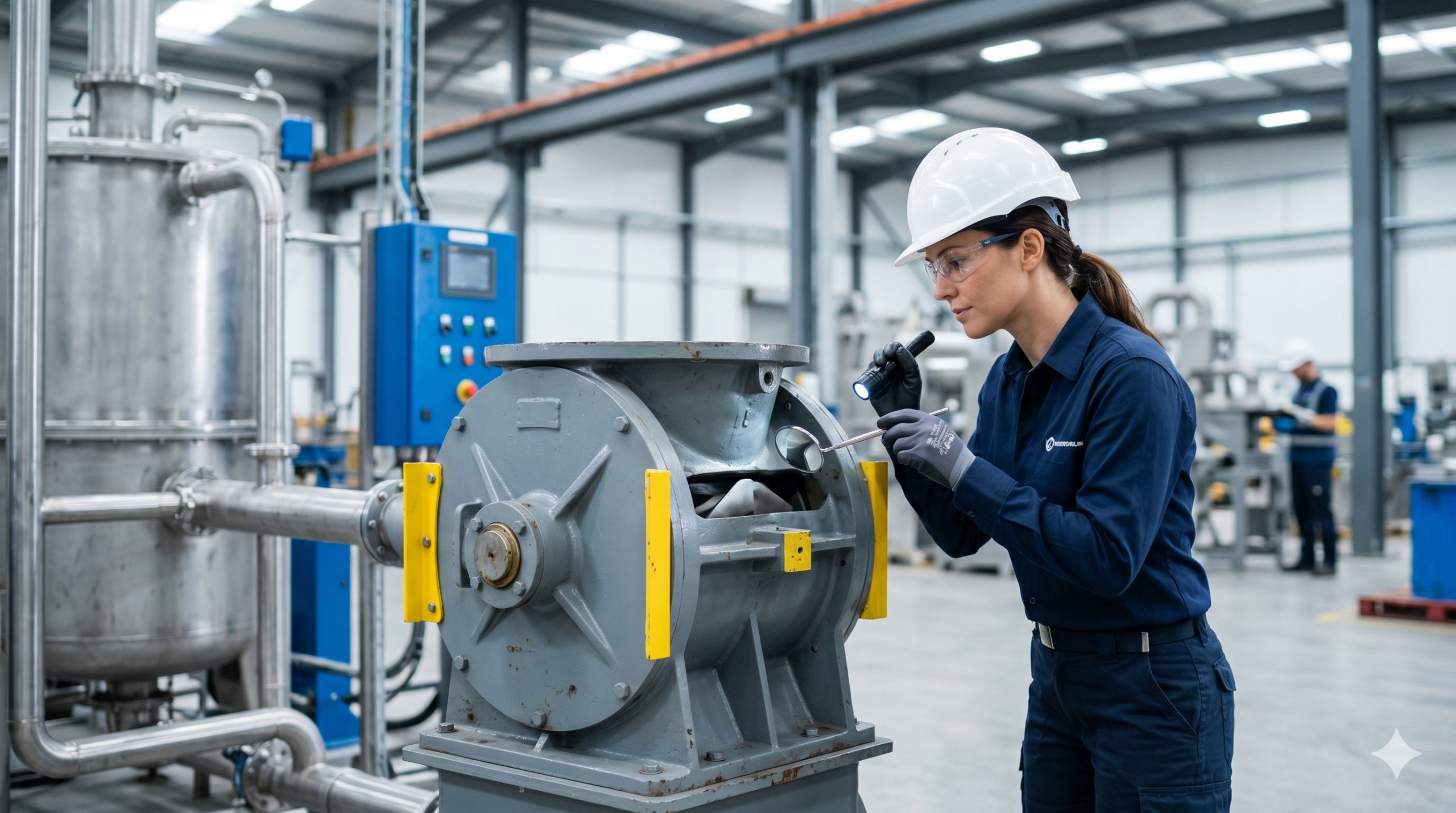
- Doebritz airlock valves are designed with outboard bearings isolated from the product zone by the shaft seal system. Bearing maintenance involves periodic regreasing via standard grease fittings (every 2,000–4,000 operating hours depending on duty cycle) and annual inspection for radial play. No bearing disassembly is required for routine lubrication. This recommendation is based on standard industrial rotary valve maintenance practices for outboard bearing configurations as described in Doebritz supporting technical literature.