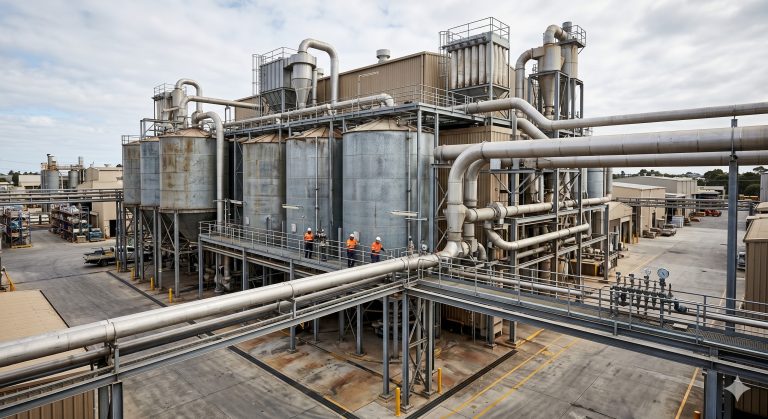
Introduction: The Abrasive Wear Challenge in Pneumatic Conveying
In heavy industries such as cement, minerals, and metal powder processing, standard rotary valves often fail prematurely due to excessive abrasive wear. The Round Bar Impeller design represents a paradigm shift in wear engineering. Unlike traditional cast rotor vanes, a round bar configuration drastically reduces the contact surface area with conveyed media, thereby lowering friction and extending operational life. At Doebritz, we have engineered this geometry to handle materials with a Mohs hardness up to 6.5 while maintaining an airlock efficiency >99.5%. This guide provides a data-driven analysis of metallurgy, clearances, and performance metrics according to ATEX and NFPA 69 standards.
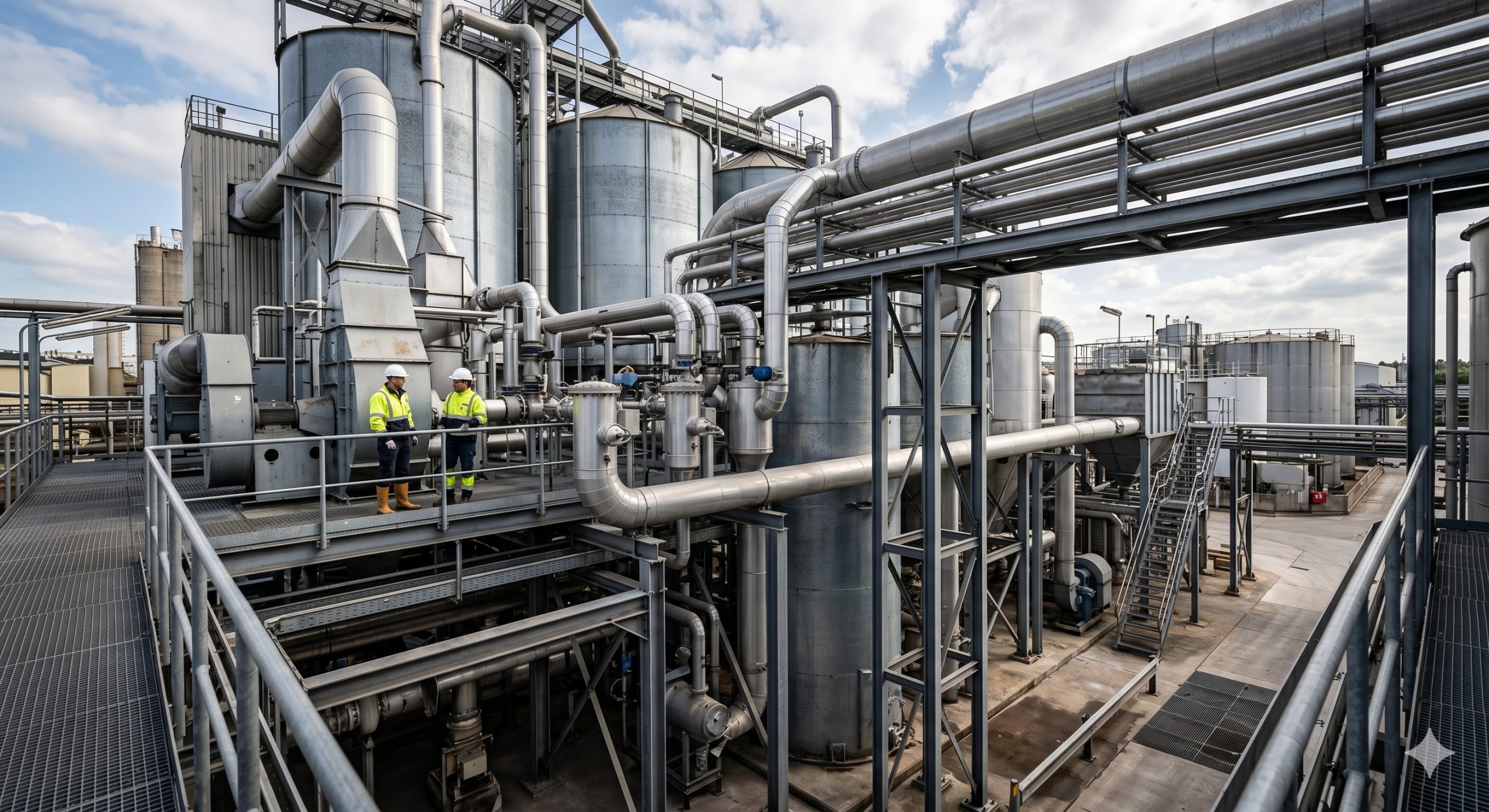
Housing & Rotor Engineering: Metallurgy for High-Abrasion Resistance
Housing Casting and Hardness Mapping
The longevity of a Round Bar Impeller in abrasive service begins with the housing. Doebritz utilizes GGG 40.3 ductile iron or investment-cast Ni-Hard 4 for extreme applications (550-600 HB). The internal housing bore is precision-ground to a surface finish of Ra ≤ 0.8 µm to minimize powder adhesion and wear. For cement and fly ash, a hard-chrome plated housing (thickness 80-120 µm, hardness 850-1000 HV) is optional.
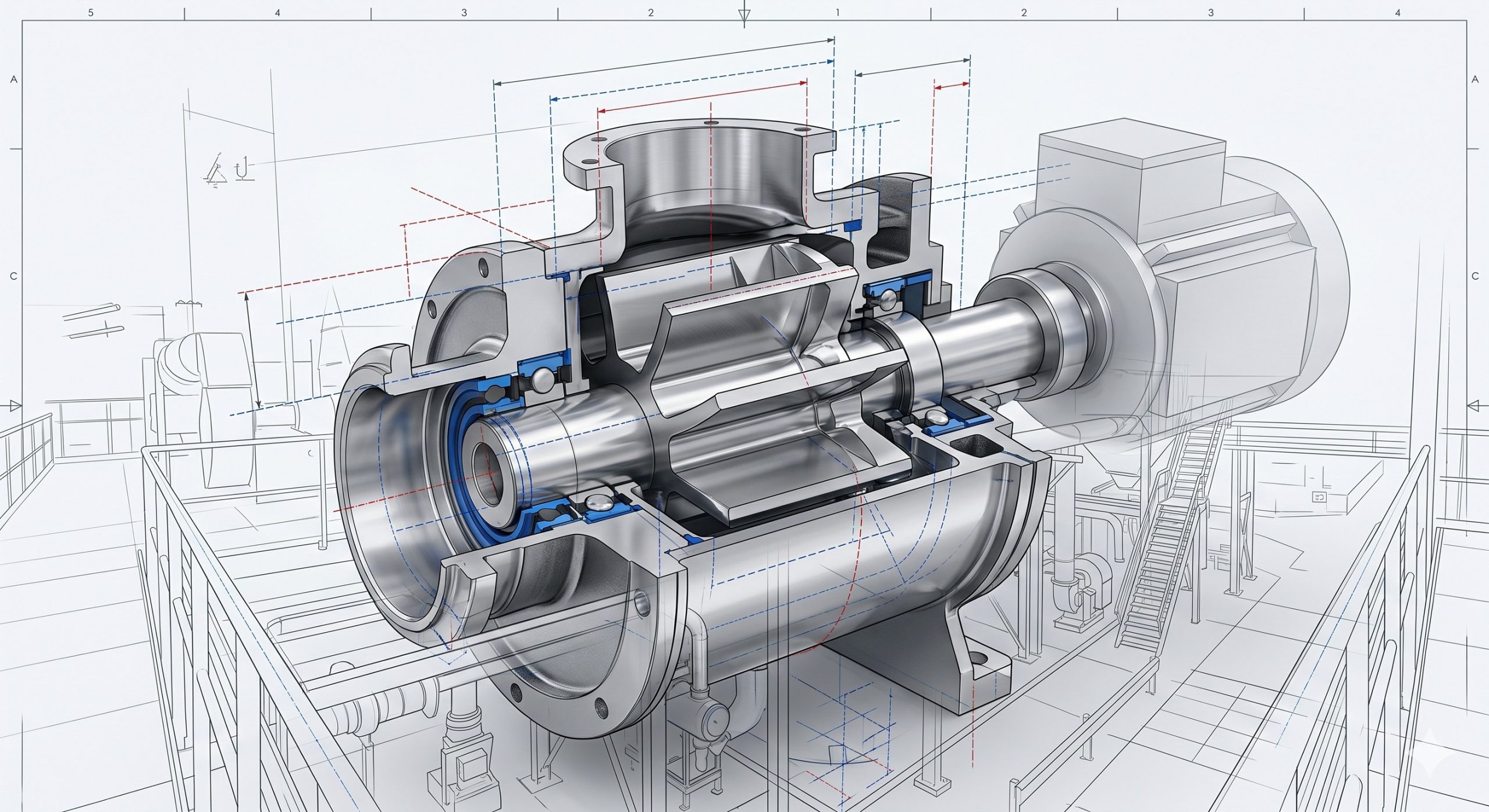
CNC Precision, Clearances, and Rotor Dynamics
The round bar impeller consists of solid, through-bored round bars welded to heavy-duty end discs. Critical rotor-to-housing radial clearances are maintained at 0.10 mm to 0.25 mm depending on thermal expansion. Axial clearances are kept ≤ 0.15 mm. This tight clearance (Class I airlock) limits blowback air leakage to < 0.2 m³/h per 100 mm of valve width at 1 bar differential pressure. Rotor speed typically operates between 15-35 rpm for abrasive powders to minimize tip speed wear (max 0.8 m/s).
Technical Specifications: Volumetric Efficiency & Differential Pressure
Below is the quantified performance ledger for the Doebritz Round Bar Impeller series (Model DRB-A). All data verified per VDI 2263 and NFPA 69 explosion isolation standards.
| Key Parameter | Technical Specification (Doebritz DRB-A Round Bar Impeller) |
|---|---|
| Max Differential Pressure | 1.5 Bar (150 kPa) continuous, 2.0 Bar peak |
| Operating Temperature | -20°C to +280°C (with high-temp graphite seals) |
| Volumetric Capacity per Liter Housing | 0.85 L/rev (effective, abrasive powders) |
| Standard Rotor Speed Range | 10-35 rpm (variable frequency drive ready) |
| Radial Clearance (RTM) | 0.12 mm ±0.02 mm (Abrasive service spec) |
| Max Particle Size | ≤ 1/3 of rotor pocket width (typically 12 mm max) |
| Material Hardness Compatibility | Up to Mohs 6.5 (e.g., silica sand, clinker) |
| ATEX Certification | II 1/2 D c T120°C (Zone 20/21) |
| Flange Standards | DIN PN10 / ANSI 150# / JIS 10K |
Heavy-Duty Application Scenarios & ATEX Compliance
Cement, Minerals, and Metal Powders
In a recent cement plant retrofit (150 tph pneumatic conveying line), replacing a conventional 8-vane rotor with a Doebritz Round Bar Impeller reduced maintenance downtime by 73% and increased rotor lifespan from 8 months to 34 months. The open design prevents material packing in the rotor pockets, ensuring volumetric efficiency >92% at 70% fill level.
ATEX Zone 20/21/22 Integration
For combustible dusts (St1, St2, St3 classes), Doebritz offers ATEX Category 1D/2D certified versions. Key features include: outboard bearings isolated from the product zone, carbon-filled PTFE labyrinth seals, and grounding jumpers to prevent electrostatic discharge. Maximum permissible pressure shock resistance: 10 bar (tested per EN 14460).
Conclusion: Total Cost of Ownership Optimization
Selecting a Round Bar Impeller from Doebritz provides a definitive ROI advantage in abrasive bulk solids handling. The combination of Ni-Hard metallurgy, minimized clearances, and isolated bearing architecture yields a mean time between failures (MTBF) exceeding 25,000 hours in silica sand service. For food-grade abrasives (e.g., sugar, salt), an FDA-compliant 316L stainless steel version with EHEDG-certified quick-clean access is also available. Specify Doebritz for measurable uptime gains.