Overview
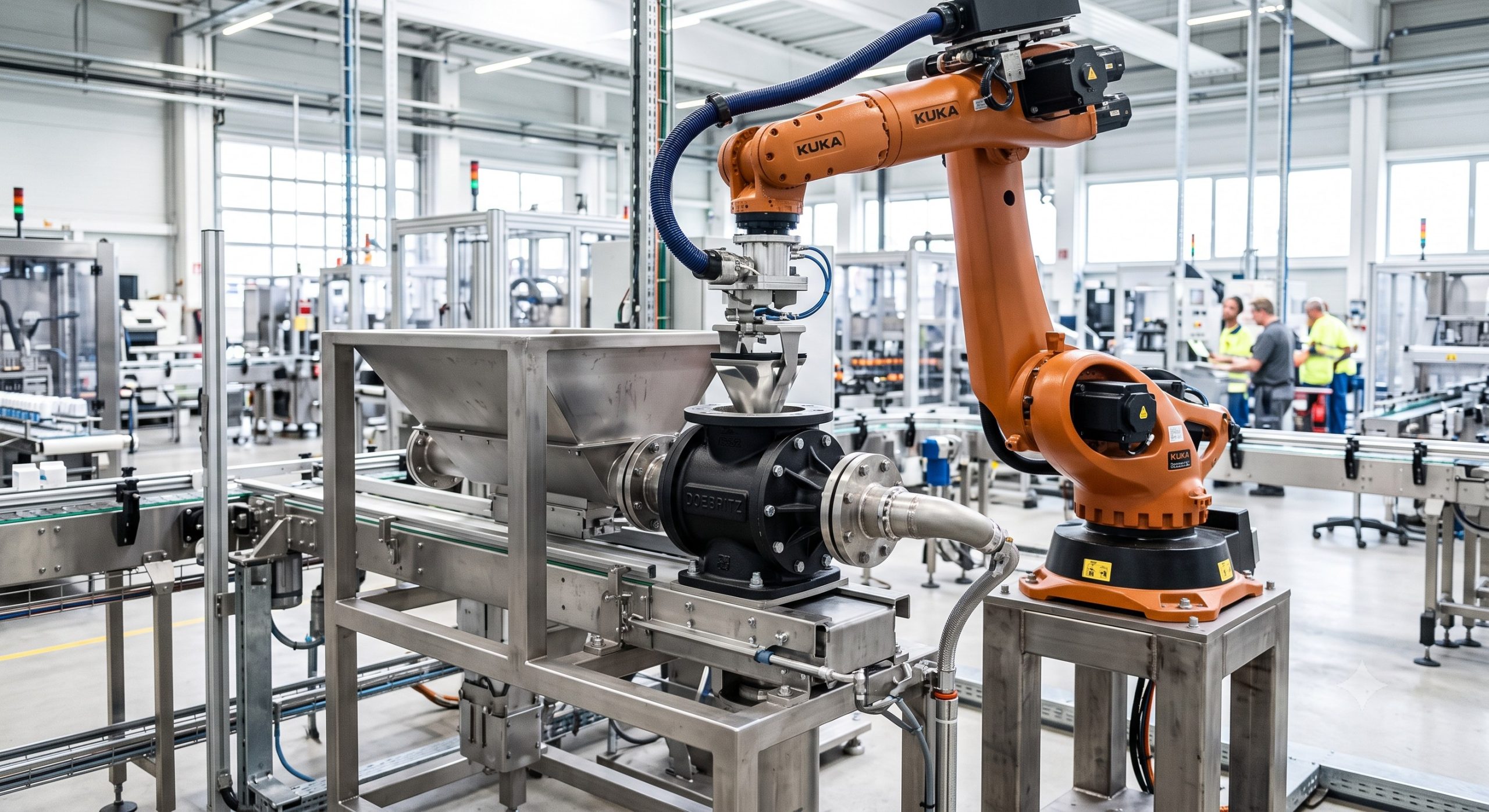
In modern automated plants, integrating robotic arms with bulk solids handling equipment is a key upgrade for efficiency and consistency. For the Doebritz DBR-1237 Quick-Release Rotary Valve, this involves not just mechanical interfacing, but ensuring seamless communication with the plant’s PLC and robotic controller. This FAQ answers the most critical technical and procurement questions from plant engineers and maintenance managers about automating a feeding station with a Doebritz rotary valve.
Frequently Asked Questions
- Q1: Can the Doebritz DBR-1237 rotary valve be directly integrated with a robotic arm and PLC control system?
- Yes, the Doebritz DBR-1237 is designed for full integration with robotic feeding stations and central PLC control systems. Its variable frequency drive (VFD) can be directly interfaced with a robotic controller to adjust the rotor speed precisely, ensuring the valve dispenses the exact amount of material the robotic arm needs for packaging, mixing, or loading.
- Q2: What specific safety certifications must a rotary valve have to be used in a robotic feeding cell located in a potentially explosive atmosphere (ATEX)?
- Doebritz rotary valves for robotic applications in explosive atmospheres must carry ATEX certification for Zones 20, 21, or 22. This includes an anti-static design, a certified explosion-proof motor, and a design capable of withstanding an internal explosion (flameproof enclosure, rated up to 16 bar). The Doebritz DBR-1237 can be supplied with full ATEX documentation for seamless integration into a certified robotic safety zone.
- Q3: How does the Doebritz quick-release design affect maintenance and cleaning when integrated with a robotic feeding station?
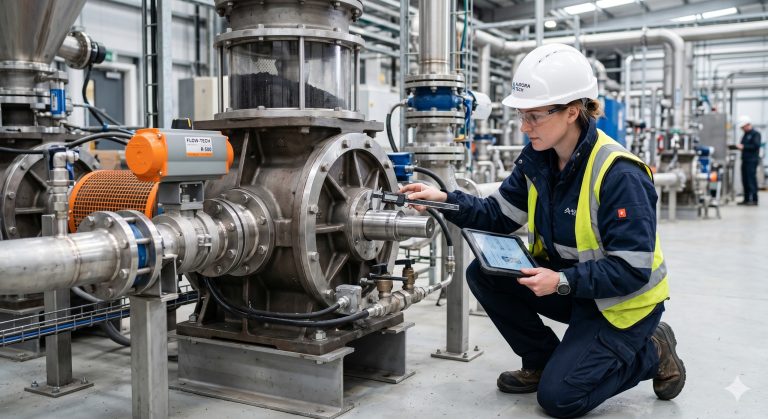
- The tool-less quick-release mechanism of the Doebritz valve is a major advantage, as it allows for rapid, safe disassembly without specialized tools. This is critical in robotic cells where uptime is paramount, reducing maintenance downtime by up to 70%. It also supports CIP/SIP cleaning protocols, ensuring the feeding station remains sterile without requiring the robotic arm to perform complex disassembly steps.
- Q4: What flange standards are available to ensure the Doebritz valve matches my existing robotic feeding station’s piping and hopper?
- Doebritz offers the DBR-1237 with a variety of flange standards to match global equipment. The standard is HG20592, but we can provide custom drilling and facing to meet DIN, EN, or ANSI/ASME B16.5 flanges. This ensures a leak-proof, stress-free connection to the upstream hopper and downstream pneumatic conveying line integrated with your robotic cell.
- Q5: How does the valve handle abrasive or corrosive materials that a robotic arm might be dispensing?
- For abrasive materials like lithium battery powders or titanium dioxide, the Doebritz DBR-1237 can be fitted with a tungsten carbide or ceramic coating on the internal housing and rotor. This significantly extends the component life. For corrosive applications, we use SUS316L and specialty polymers (PTFE/PA) to ensure that wear debris doesn’t contaminate the product being handled by the robot.
- Q6: My robotic station requires precise batch metering. How accurate is the Doebritz valve’s volumetric discharge?
- The Doebritz valve provides highly accurate volumetric metering due to its precision-ground rotor with a rotor-to-housing clearance of just 0.1 to 0.2 mm, minimizing blowback air and ensuring a consistent fill factor. When combined with a VFD and integrated with your robotic controller, it allows for very precise batch or continuous feeding, essential for recipe-based automation.
- Q7: What bearing and seal configurations are recommended for a high-use robotic feeding station to prevent shaft leakage?
- For robotic applications, the Doebritz DBR-1237 uses robust outboard bearings that are isolated from the product zone, extending bearing life. The shaft seal is a lip seal air-tight configuration. For the most demanding 24/7 operations, we recommend the purge air option, which injects clean air to prevent dust ingress and lubricates the seal, further enhancing reliability and reducing leakage.
- Q8: What support does Doebritz offer for the initial setup and calibration of the valve with the robotic controller?
- Doebritz provides full engineering advisory support. Our technical team can assist in mapping the VFD frequency to specific flow rates for your material, provide the electrical schematics for integration with your robotic PLC (e.g., Profibus, Modbus), and offer on-site or remote commissioning support to ensure a smooth and successful start-up of your automated feeding station.