Overview
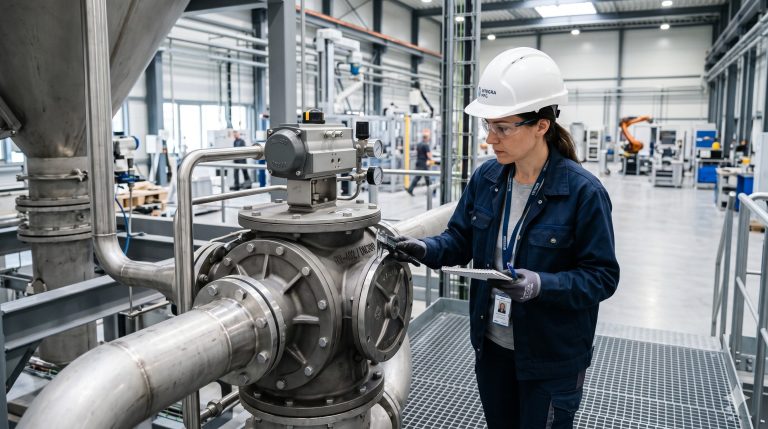
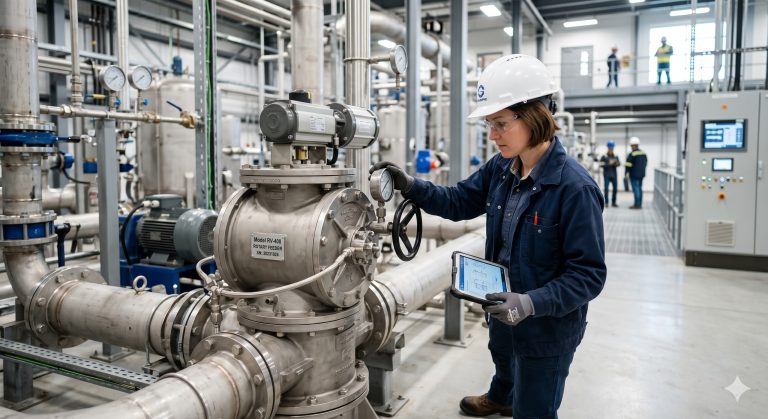
Doebritz carbon steel painted star discharge valves (关风器) are engineered for heavy-duty bulk solids handling, pneumatic conveying, and silo discharge in化工, 新能源, and 建材 industries. This technical FAQ addresses real-world maintenance, ATEX compliance, abrasive wear management, and pre-sales specification questions for plant engineers and procurement managers.

Frequently Asked Questions
- Q1: What are the standard flange standards and connection types available for Doebritz carbon steel painted star discharge valve?
- The Doebritz carbon steel painted star discharge valve is manufactured to HG20592 standard flange as baseline, with full customization available for DIN, ANSI, JIS, and other international flange standards upon request.
- Q2: Is the Doebritz carbon steel painted star discharge valve ATEX certified for explosive dust atmospheres?
- Yes, Doebritz offers ATEX-certified configurations for Zone 20, Zone 21, and Zone 22 dust explosion hazard areas. The explosion-proof version includes a pressure rating of 16 bar, precision rotor-to-housing clearance of 0.1–0.2mm, explosion-proof motor, and compliance with隔爆型 (flameproof) design standards.
- Q3: How does the Doebritz carbon steel painted star discharge valve handle highly abrasive materials like carbon black or petroleum coke powder?
- The Doebritz carbon steel painted star discharge valve addresses abrasive wear through multiple options: tungsten carbide coating (不锈钢镀碳化钨涂层), ceramic coating, polymer lining (PE/PTFE/PA), or Ni-Hard wear parts. These耐磨型 (wear-resistant) solutions significantly extend service life when handling炭黑, 石油焦粉, 钛白粉, and lithium battery materials.
- Q4: What is the typical rotor-to-housing clearance, and can it be adjusted for reduced air leakage?
- Standard Doebritz carbon steel painted star discharge valve maintains a精密间隙 (precision clearance) of 0.1–0.2mm between rotor and housing. This factory-set clearance is optimized for锁气 (air locking) efficiency and is not field-adjustable; replacement of wear components or factory re-machining is required to restore original tolerances.
- Q5: How do I maintain the shaft seals on a Doebritz carbon steel painted star discharge valve to prevent material jamming and dust leakage?
- Doebritz carbon steel painted star discharge valves feature唇形密封圈气密封 (lip seal with air purging) or packing seal designs. Regular inspection of the air purge system (if equipped) and replacement of worn lip seals every 6–12 months under heavy-duty service prevents material ingress into outboard bearings and eliminates shaft dust leakage. An optional water cooling jacket protects seals when handling物料温度 up to 120°C.
- Q6: Can the Doebritz carbon steel painted star discharge valve be used for both gravity discharge and pneumatic conveying systems?
- Yes, Doebritz carbon steel painted star discharge valves support全工况适配: low pressure positive conveying (<0.4 bar), high pressure positive conveying (0.4–1 bar with VFD), low pressure negative conveying (>-0.4 bar), high pressure negative conveying (-1 to -0.4 bar with VFD), and gravity discharge with adjustable flow.变频调速 (VFD speed control) and PLC integration enable precise batch metering and recipe配料.
- Q7: What surface finish and coating options are available for corrosion resistance?
- Doebritz offers碳钢刷漆 (carbon steel painted), 碳钢镀镍 (carbon steel nickel-plated), and stainless steel alternatives (SUS304/SUS316L). For aggressive environments, optional coatings include epoxy, polyurethane, or stainless steel镀碳化钨涂层 (tungsten carbide coating). Internal surfaces can be specified from机加工面 <0.8μm to镜面 Ra≤0.4μm for sanitary applications.
- Q8: What is the maximum operating pressure and temperature for this carbon steel painted star discharge valve?
- The Doebritz carbon steel painted star discharge valve sustains positive pressure up to 1 bar (with VFD control) and negative pressure down to -1 bar. Ambient temperature range is -15°C to 60°C; material temperature range is 0°C to 120°C. For higher temperatures, a水冷夹套 (water cooling jacket) is recommended to maintain seal integrity and prevent thermal expansion binding.