Introduction: The Hygiene Imperative in Biscuit Production
In high-volume biscuit manufacturing, the transfer of powdered ingredients such as flour, sugar, cocoa, and leavening agents presents a critical challenge: preventing cross-contamination while maintaining throughput. Traditional rotary valves often harbor residue in crevices, leading to microbiological risks and costly downtime for cleaning. The Doebritz Biscuits Quick-release airlock valve, specifically the DBR-1237 series, is engineered to resolve these conflicts. By combining a demountable (quick-release) structure with precision clearances (0.1–0.2 mm) and FDA-compliant surface finishes (Ra≤0.4μm), this valve delivers sanitary airlock isolation without compromising volumetric efficiency. This technical guide provides an evidence-based analysis of its metallurgy, cleanability, and performance metrics for biscuit powder handling lines.
Engineering the Sanitary Barrier: Housing & Rotor Dynamics
The core hygiene challenge in biscuit production lies in the rotor-to-housing interface. Flour dust and sugar fines can pack into traditional bolt-on endplates and unpolished chambers, promoting biofilm formation. The Doebritz DBR-1237 addresses this through a three-pronged engineering strategy.
1. Quick-Release, Demountable Structure
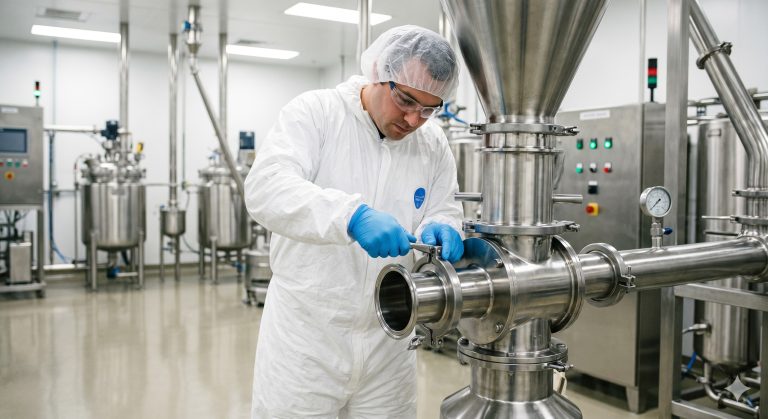
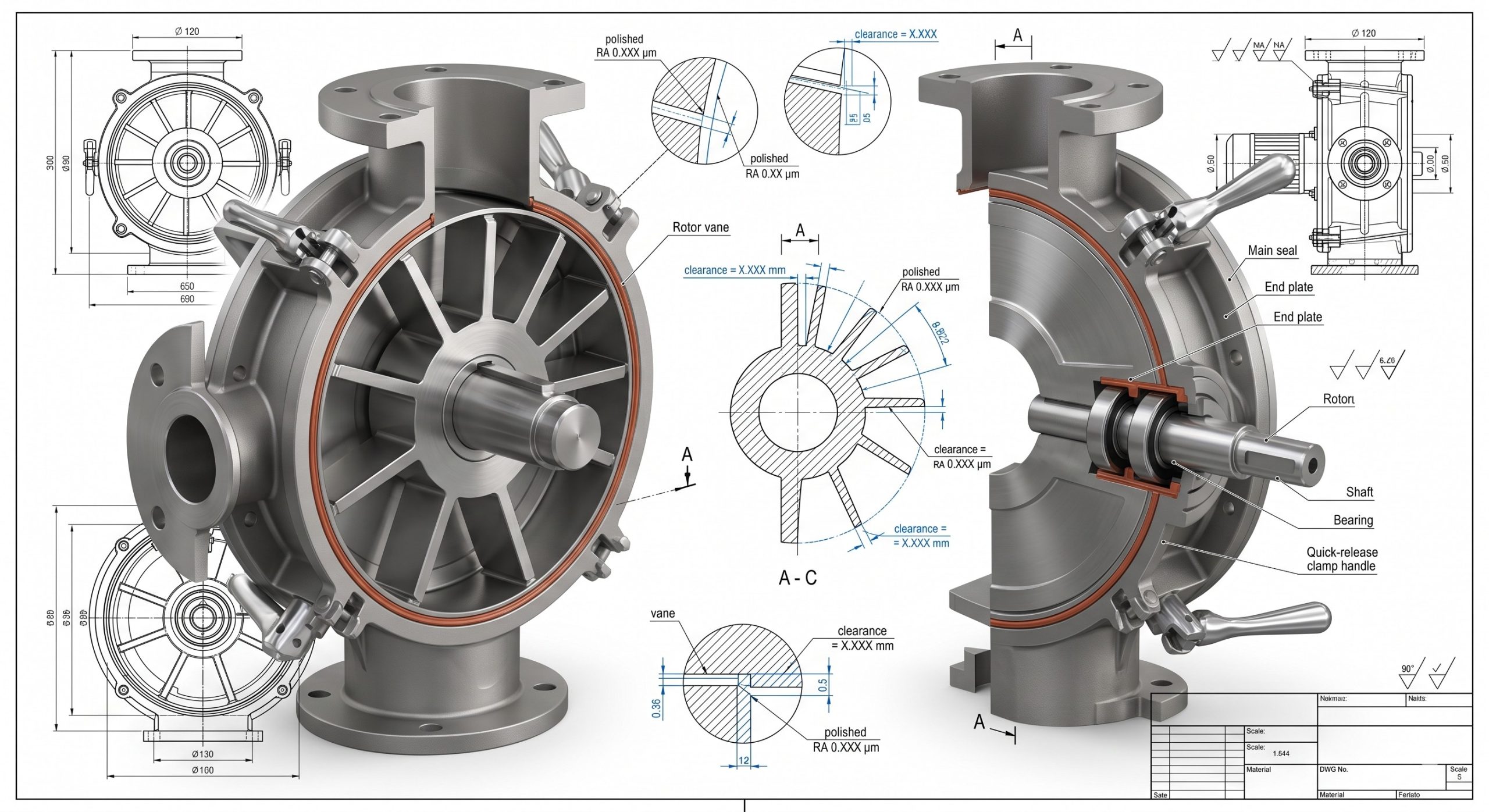
Unlike legacy valves requiring full disassembly with specialized tools, the Doebritz design utilizes a quick-release clamp mechanism. This allows the entire rotor assembly to be extracted and manually cleaned or subjected to online WIP (Wash-in-Place) or CIP (Clean-in-Place) cycles in under 15 minutes. For biscuit lines switching between gluten-free and standard recipes, this feature drastically reduces changeover time and eliminates allergen residue.
2. Precision Clearances and Surface Finish
The valve maintains a rotor-to-housing radial clearance of 0.1–0.2 mm. This tight tolerance is critical for two reasons: it minimizes air leakage (blowback) that can fluidize light powders like starch, and it prevents material entrapment. The contact surfaces are manufactured from SUS316L stainless steel (or optional SUS304) with internal finishes ranging from mirror polish to Ra ≤ 0.4μm. Such finishes exceed FDA and EHEDG guidelines for easy-drainage and non-stick surfaces.
3. Shaft Sealing and Isolation
To prevent contamination migrating along the drive shaft, the DBR-1237 employs lip seal air-tight seals with an optional air purge connection. When connected to a clean, dry air supply, the purge creates a positive pressure barrier that actively repels flour dust, ensuring the bearing housing remains isolated. This design also prevents lubricant migration into the product zone—a mandatory feature for food safety audits.
Technical Specifications: Quantified Performance for Biscuit Powders
The DBR-1237 is configurable to meet specific biscuit line demands. The following table outlines the core engineering parameters as derived from the manufacturer’s data sheets, focusing on measurable outputs for plant engineers.
| Key Parameter | Technical Specification (Doebritz DBR-1237) |
|---|---|
| Max Differential Pressure | Up to 1.0 bar (dense phase positive) / -1.0 bar (vacuum) |
| Operating Temperature (Material) | 0°C to 120°C (optional water cooling jacket for >120°C) |
| Rotor-to-Housing Clearance | 0.1–0.2 mm (standard precision gap) |
| Volumetric Capacity per Revolution | Configurable from 1.5 to 50+ liters/rev based on DN size (DN50 to DN350) |
| Rotor Speed Range | Variable frequency drive (VFD) controlled, typical 5–40 rpm for metering |
| Construction Materials | SUS304, SUS316L, Carbon steel with Ni/PTFE/ceramic/tungsten carbide coatings |
| Surface Finish (Internal) | Mirror polish, Ra ≤ 0.4μm / 0.8μm / 1.6μm (FDA/EHEDG compliant) |
| Shaft Sealing | Lip seal with air purge option (lantern ring packing also available) |
| Explosion Protection | ATEX Zone 20/21/22, housing pressure tested to 16 bar, flameproof gap design |
| Cleaning Compatibility | Quick-release for manual cleaning, CIP (spray), WIP + manual inspection |
| Industry Certifications | CE, TÜV, Statement, FDA-compliant materials on request |
Sanitary Workflow Integration: From Silo to Mixer
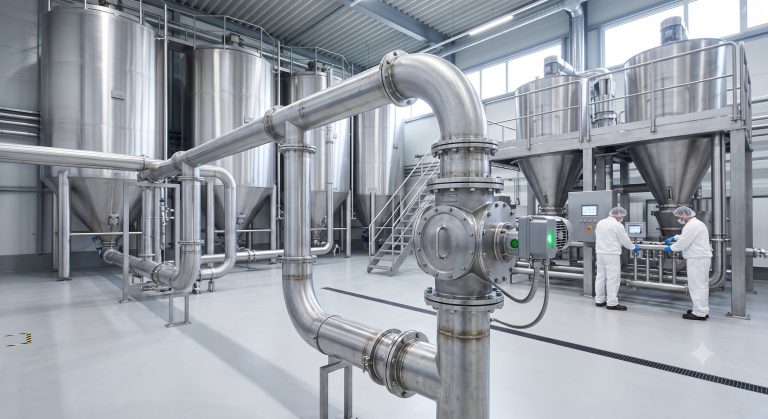
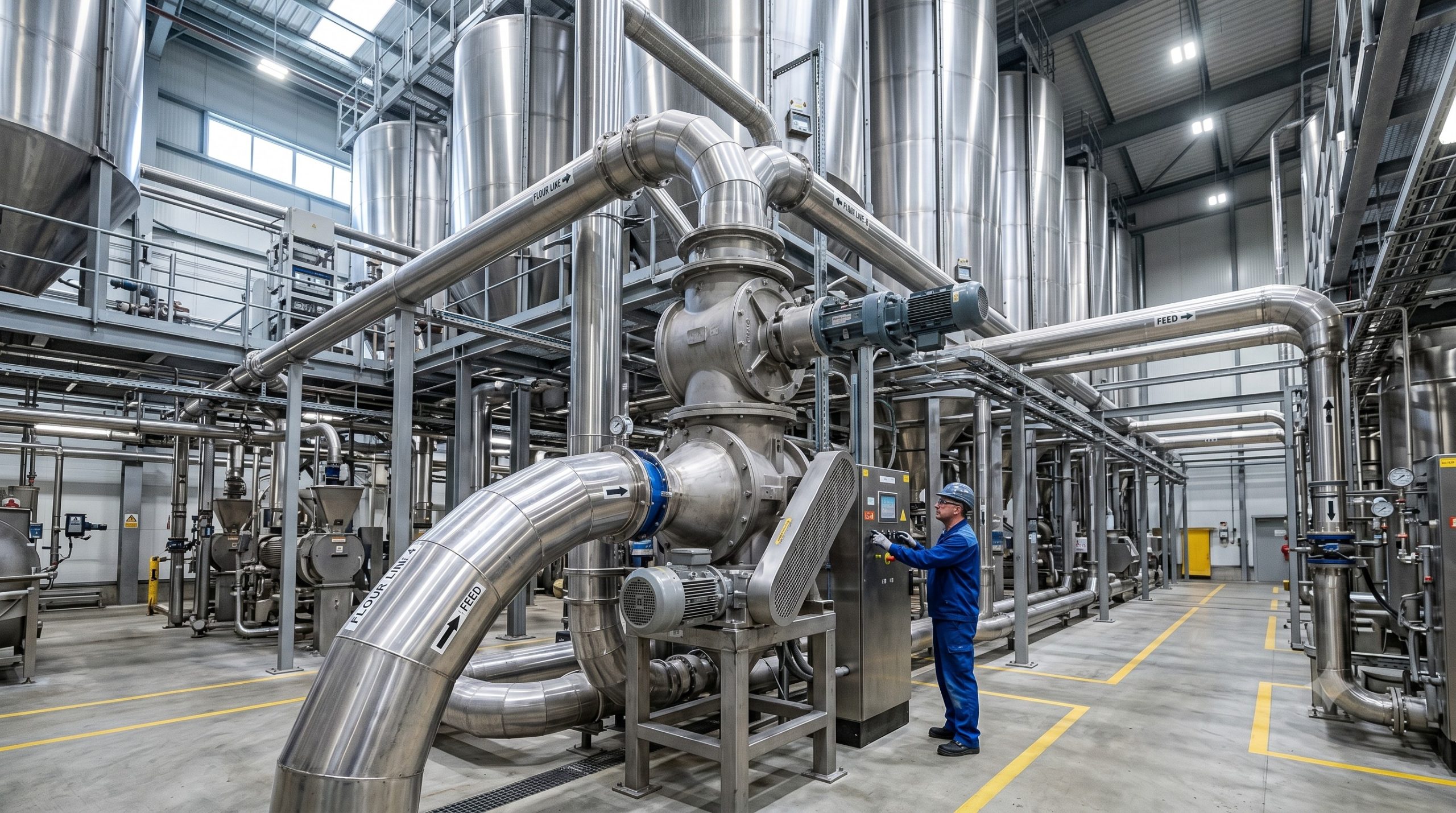
In a typical biscuit production line, the Doebritz Biscuits Quick-release airlock valve is positioned at the discharge of flour silos or sugar bins, feeding into a pneumatic conveying system or gravity-fed mixer. Its ability to handle both gravity discharge (adjustable flow via VFD) and low-pressure positive/negative conveying (up to 1 bar differential) makes it a versatile metering device. The quick-release feature is particularly valuable in CIP-ready systems; after the valve body is opened, automated spray balls can sanitize the internal surfaces without removal, followed by a manual inspection step to verify 10W-class cleanroom standards.
Compliance and Safety: ATEX, FDA, and CE
Biscuit powders—especially flour and cocoa—are combustible. The Doebritz DBR-1237 is available with ATEX certification for Zones 20, 21, and 22. The explosion-proof configuration includes a pressure-resistant housing rated to 16 bar (tested for deflagration containment), an ATEX-certified motor, and the precision 0.1–0.2 mm gap which acts as a flame path arrestor. Additionally, the valve carries CE, TÜV, and Statement certifications, ensuring full compliance with EU machinery and food contact regulations. All elastomers and coatings (e.g., optional PTFE or UHMW-PE for sticky dough additives) are FDA 21 CFR compliant.
Conclusion: The Data-Driven Verdict for Hygienic Airlock Performance
For biscuit and food processing plants seeking to eliminate cross-contamination while preserving pneumatic conveying efficiency, the Doebritz Biscuits Quick-release airlock valve (DBR-1237) offers a quantifiable advantage. Its 0.1–0.2 mm clearances, Ra≤0.4μm sanitary finishes, ATEX 16bar pressure containment, and sub-15-minute quick-release cleanability directly translate to lower total cost of ownership (TCO) through reduced downtime and audit risk. By integrating precision CNC machining with hygienic design principles, Doebritz delivers a solution that is as safe as it is productive—a critical enabler for modern, high-speed biscuit manufacturing lines.