Overview
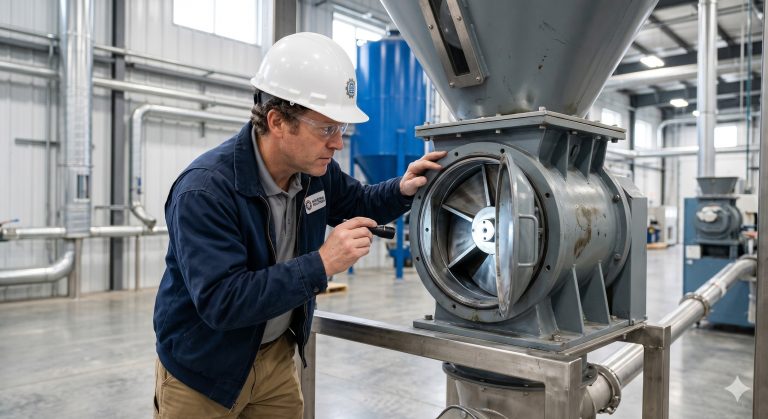
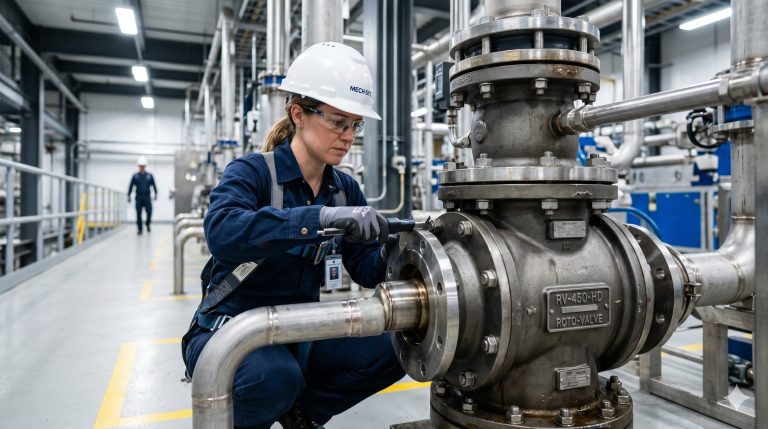
Welcome to the technical FAQ for the Doebritz DBR-1237 gravity quick-release rotary valve. As a leading solution for hygienic, abrasive, and ATEX-certified powder handling, the DBR-1237 is engineered for efficient silo discharge, pneumatic conveying, and precision metering. This guide addresses the most critical pre-sales and post-sales questions from plant engineers and procurement managers regarding this heavy-duty valve. For specific project requirements, our engineering team provides full support.

Frequently Asked Questions
- Q1: How does the Doebritz DBR-1237 handle highly abrasive materials like lithium battery powders or carbon black?
- The Doebritz DBR-1237 handles abrasive materials using advanced wear-resistant coatings. We offer stainless steel with tungsten carbide coating (HVOF), ceramic coatings, or specialized polymer liners (PE/PTFE) for the rotor and housing. For extreme abrasion, we recommend the carbide-coated option to ensure a long service life.
- Q2: What flange standards (DIN/ANSI) and sizes are available for the DBR-1237?
- The Doebritz DBR-1237 is available with HG20592 standard flanges (compatible with DIN), and we can customize to ANSI/ASME B16.5 standards upon request. Standard interface sizes range from DN50 to DN350. We offer custom flange drilling, facing, and non-standard heights to ensure seamless integration with your existing piping.
- Q3: What is the process for adjusting the rotor-to-housing clearance to maintain airlock efficiency?
- Doebritz engineers set the rotor-to-housing clearance to 0.1–0.2 mm at the factory. In the field, this clearance is adjusted via the outboard bearing housing shims. Our support team provides detailed shim adjustment charts to ensure precise gap maintenance without specialized tools, preserving the valve’s low leakage (0.1–0.2mm tolerance).
- Q4: How does the air purge seal system on the DBR-1237 protect the bearings?
- The Doebritz DBR-1237 features a positive air purge seal (lip seal with air-tight sealing). This system uses regulated instrument air (typically 0.2–0.3 bar above conveying pressure) to continuously flush the shaft seal area, preventing fine dust ingress into the outboard bearings. This critical feature extends bearing life and reduces maintenance intervals.
- Q5: Is the Doebritz DBR-1237 compatible with ATEX Zone 20/21/22 and what safety features does it include?
- Yes, the Doebritz DBR-1237 is fully certified for ATEX Zone 20/21/22. It includes explosion-proof motors, a pressure rating of 16 bar (flame-proof housing), and precise internal clearances to prevent ignition. For installations requiring isolation, we configure the valve with appropriate flanges and drive systems to meet European and international safety standards.
- Q6: What is the standard procedure for maintaining the outboard bearings and shaft seals?
- Doebritz engineers recommend a scheduled inspection of the outboard bearings and lip seals every 3–6 months depending on duty cycle. The quick-release design allows easy access to the bearing housing. Our spares kit includes pre-assembled shaft seal and bearing sets to minimize downtime, ensuring the valve’s MTBF (Mean Time Between Failures) is maximized.
- Q7: Can the DBR-1237 be used in sanitary applications and CIP/SIP environments?
- Absolutely. The Doebritz DBR-1237 is available in a hygienic design (SUS316L with mirror finish). It supports CIP (Clean-in-Place) and WIP (Wash-in-Place) cleaning protocols. The quick-release clamps and rotors are designed without crevices to prevent bacteria growth, making it ideal for food and pharmaceutical applications.
- Q8: What are the volumetric efficiency and leakage limits of the DBR-1237 under differential pressure?
- The Doebritz DBR-1237 maintains a volumetric efficiency of >95% for most powders. Leakage is minimized due to the 0.1–0.2mm clearance. For high differential pressure (up to 1 bar), the valve uses a 5-blade rotor design with precision-honed tips to significantly reduce blowback air, ensuring stable pneumatic conveying and silo discharge.