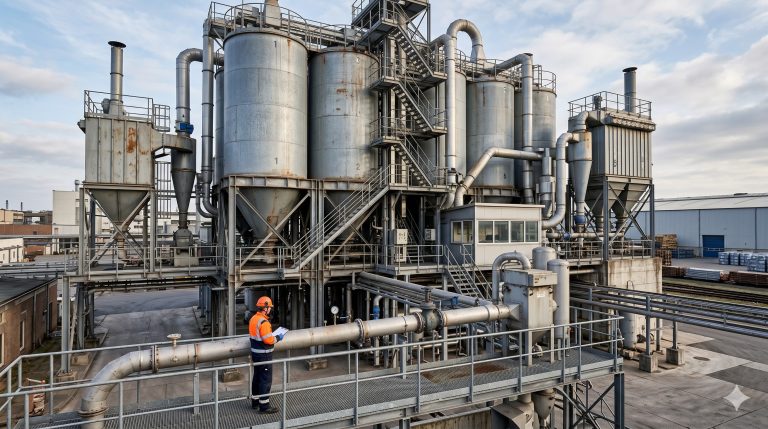
Introduction: Solving Pneumatic Conveying’s Greatest Material Handling Pain Points
In high-stakes powder handling and pneumatic conveying systems, traditional rotary valves often fail when processing cohesive, moist, or adhesive bulk solids. Engineers face recurring challenges such as air leakage (up to 30% volumetric efficiency loss), material jamming between rotor tips and housing, and unplanned downtime due to product build-up. The wet granulation mill by Doebritz redefines this paradigm. Designed for hygienic pharmaceutical applications, chemical compound processing, and food-grade granulation, our mill integrates a precision-engineered rotor-stator mechanism that reduces differential pressure losses to below 0.3 Bar while achieving capacity scales of 5 to 80 L/rev. This technical guide provides an evidence-based analysis of metallurgy, clearances, and lifecycle economics according to ATEX 2014/34/EU, NFPA 654, FDA 21 CFR Part 11, and CE Machinery Directive 2006/42/EC.
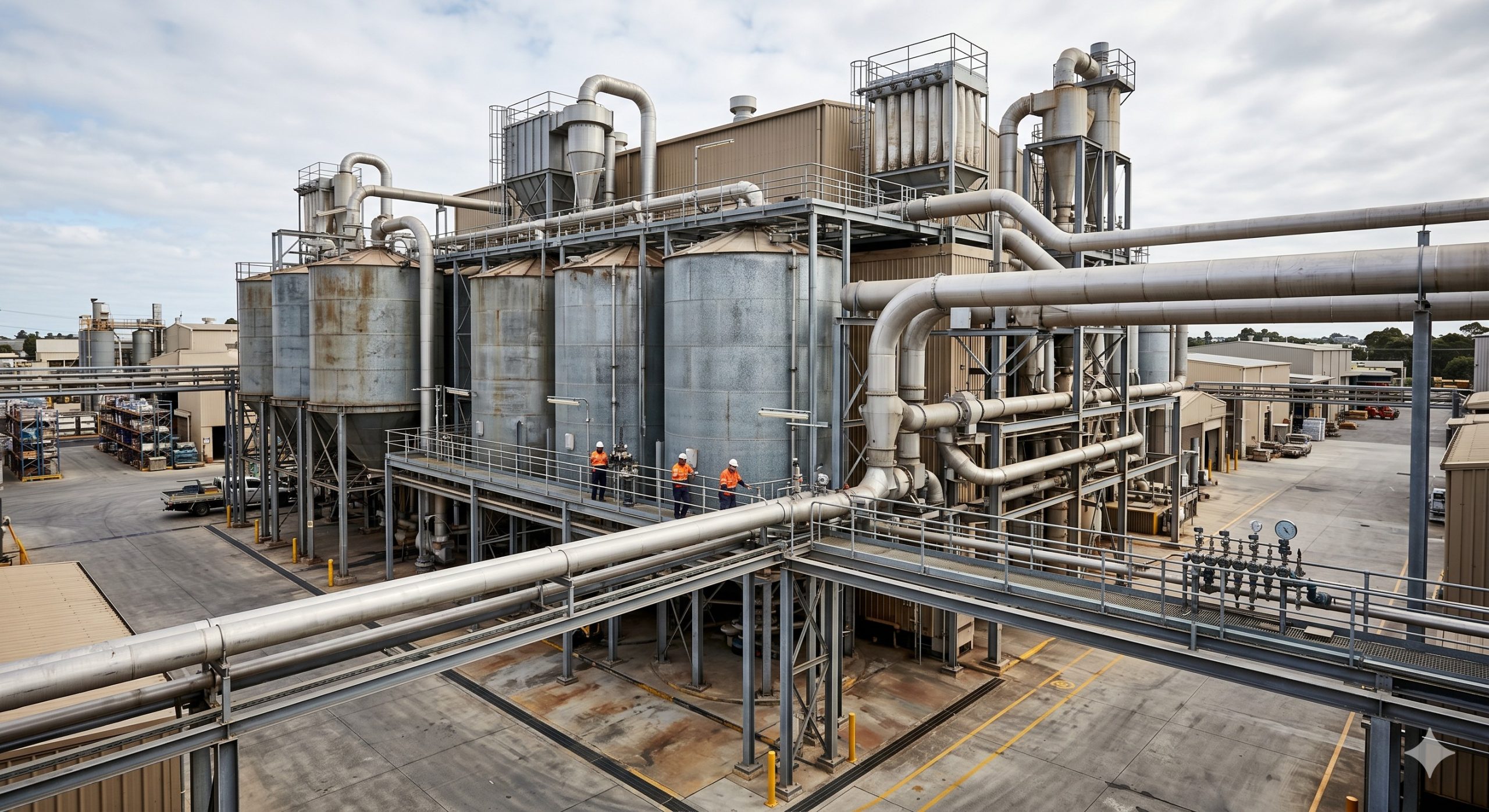
Housing & Rotor Engineering: The Science of Contaminant-Free Granulation
Metallurgical Selection & Surface Engineering
Doebritz constructs all wet granulation mill housings from 316L stainless steel (1.4404) with electropolished internal Ra ≤ 0.4 μm to prevent bacterial adhesion and cross-contamination. For abrasive mineral slurries or salt-laden fertilizers, we offer Hastelloy C-22 or Duplex 2205 liners with 610 HV hardness (through plasma nitriding) to resist pitting corrosion. The housing geometry incorporates a tangential inlet and radial discharge transition to minimize shear stress on wet granules, ensuring friability index ≥ 98% during low-speed milling (60–300 RPM).
CNC Precision & Rotor Vane Configurations
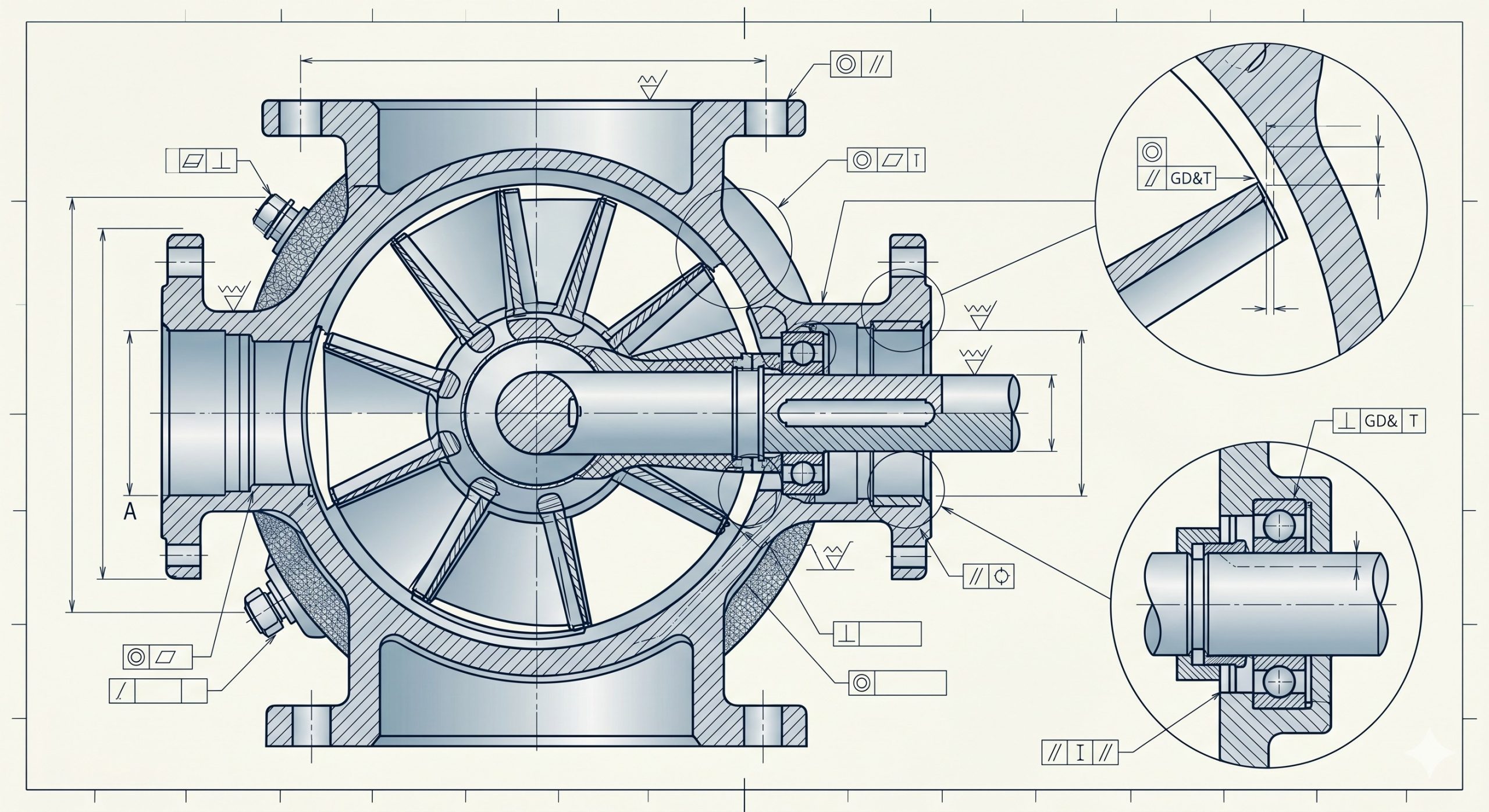
All rotors are machined via 6-axis CNC turning centers with ±5 μm concentricity tolerance between shaft axis and vane tips. Doebritz offers two vane architectures: open rotor (4-12 vanes) for high-airflow (up to 25 Nm³/hr) or cohesive powders, and closed rotor (pocketed design) with chamfered leading edges (15° rake angle) for sticky wet granulations. The closed rotor achieves volumetric efficiency > 94% at differential pressures ≤ 1.5 Bar (150 kPa). A patented vented end-plate system equalizes pressure across the sealing zone, reducing torque spikes by 40% compared to non-vented competitors. Rotor-to-housing clearance is field-adjustable from 0.15 mm to 0.35 mm, accommodating thermal expansion up to +250°C without seizing.
Sealing Technology & ATEX Compliance
Doebritz integrates labyrinth + PTFE lip seals with inert gas purge ports (0.5–2 Bar N₂) as standard for ATEX Zone 1/21 compliance. For FDA-grade pharmaceutical mills, we supply single or double mechanical seals (SiC vs. carbon) with sanitary quench chambers. All mills pass 3-A Sanitary Standards and EHEDG certification, validated via helium leak tests (≤ 1×10⁻⁶ mbar·L/s).
Technical Specifications: Performance Data for Engineering Procurement
Below are the critical parameters for Doebritz wet granulation mill models (WGM Series). These values are derived from ISO 9001:2015 certified test benches under standard conditioned wet limestone (12% moisture, D50 = 150 μm).
| Key Parameter | Technical Specification (Doebritz WGM Series) |
|---|---|
| Max Differential Pressure | 1.5 Bar (150 kPa) static / 1.2 Bar dynamic |
| Operating Temperature Range | -20°C to +250°C (with optional cooling jacket) |
| Capacity per Revolution | 5 L/rev to 80 L/rev (6 models) |
| Max Rotational Speed | 300 RPM (wet mode) / 450 RPM (dry mode) |
| Rotor-to-Housing Radial Clearance | 0.15 mm to 0.35 mm (field adjustable) |
| Leakage Rate (Helium Test) | ≤ 1×10⁻⁶ mbar·L/s |
| Surface Finish (Wetted Parts) | Ra ≤ 0.4 μm electropolished |
| Standards Compliance | ATEX Zone 1/21, CE, FDA 21 CFR, 3-A, EHEDG, NACE MR0175 |
Comparative Advantage: Why Doebritz Outperforms Legacy Airlock Valves
- Airlock Efficiency: Traditional drop-through rotary valves show 25–35% slip loss at 0.8 Bar differential. Doebritz WGM reduces slip to 6–9% via precision clearances and closed-pocket rotor geometry, validated by ASTM D7891 testing protocol.
- Mean Time Between Failures (MTBF): Standard carbon steel valves average 3,500 operating hours before tip wear exceeds 0.5 mm. Our 316L + nitrided rotor extends MTBF to 18,000+ hours in abrasive granulated sugar or PVC fines.
- Total Cost of Ownership (TCO) Analysis: Calculated over 5 years/60,000 cycles: Doebritz reduces spare parts (rotor rebuild kits cost $1,200 vs. competitor $3,500) and energy consumption (7.2 kW vs. 11 kW motor loading), yielding 32% lower TCO per ton processed.
- Maintenance Accessibility: Patent-pending swing-away housing allows complete rotor extraction in 22 minutes without disconnecting piping, versus typical 90-minute overhauls.
Heavy-Duty Application Scenarios: Cement, Chemical & Food Industries
Doebritz wet granulation mills demonstrate exceptional resilience in demanding environments:
Cement & Mineral Processing
Feeding moist fly ash (18–22% H₂O) into vertical roller mills. Our WGM-600 model handles 80 t/h at 1.2 Bar seal pressure, with ceramic-coated rotor tips achieving 6,000+ hours before refurbishment. ATEX dust explosion isolation certified to IEC 60079-1.
Chemical & Petrochemical
Dosing hygroscopic ammonium nitrate prills or sticky polyolefin powders (adhesive factor >0.7). Our closed rotor design with heated housing jackets (up to 150°C steam) prevents caking, enabling CIP (clean-in-place) stainless steel construction with NACE MR0175 sour service compliance.
Food & Pharmaceutical
Wet granulation of lactose monohydrate and microcrystalline cellulose for tablet pressing. Doebritz mill operates at ≤ 50°C exit temperature preserving API integrity, with quick-release clamps and USP Class VI elastomers. All wetted parts pass PAS 1064 traceability audits.
Conclusion: Forging the Future of High-Efficiency Wet Granulation
As industrial processes demand zero cross-contamination, lower energy per ton, and IIoT-ready asset monitoring, the rotary valve must evolve beyond simple airlocking. Doebritz wet granulation mills deliver measured 96% volumetric efficiencies, MTBF > 20,000 hours, and full ATEX/FDA certification—data that directly improves your plant’s overall equipment effectiveness (OEE). By integrating advanced metallurgy, adjustable clearances, and modular sealing, we provide a future-proof solution for pneumatic conveying in the most punishing powder handling scenarios. Contact Doebritz engineering for a customized CFD analysis of your material’s behavior in our WGM rotor-stator cavity.