Introduction: The Critical Role of Grains Quick-release Rotary Valves in Bulk Handling
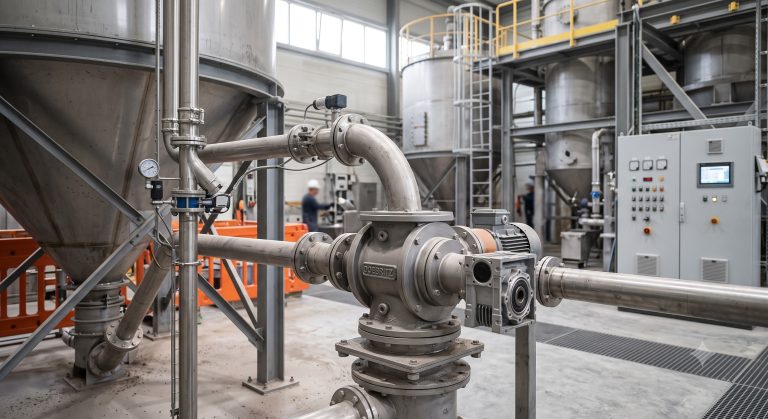
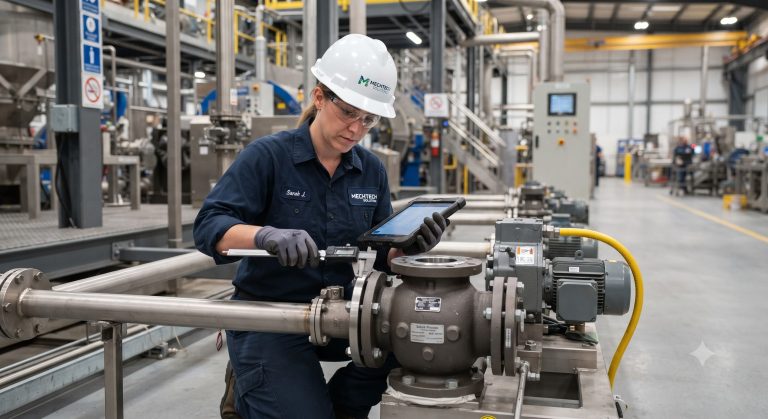
In modern grain processing and pneumatic conveying systems, the Grains Quick-release rotary valve (also known as a star discharge valve or airlock feeder) serves as the pivotal interface between silo discharge and conveying pipelines. For plant engineers and maintenance managers, unplanned downtime due to valve jamming, air leakage, or difficult cleaning represents a significant operational cost. Doebritz has engineered a solution that directly addresses these pain points through precision metallurgy, optimized clearances, and a rapid-maintenance design. This guide provides a data-driven analysis of the engineering parameters that define high-performance rotary valves for grain applications, including wheat flour, corn starch, oat flakes, and protein powders.

Housing & Rotor Engineering: Metallurgy and CNC Precision
The fundamental performance of a Grains Quick-release rotary valve begins with its housing and rotor construction. Doebritz utilizes SUS304 and SUS316L stainless steel as base materials, with options for carbon steel painted or nickel-plated finishes for non-sanitary environments. For abrasive grains or high-wear scenarios, internal surfaces can be enhanced with tungsten carbide coatings, ceramic coatings, or polymer liners (PE, PTFE, PA).
Critical Clearance and Tolerance Control
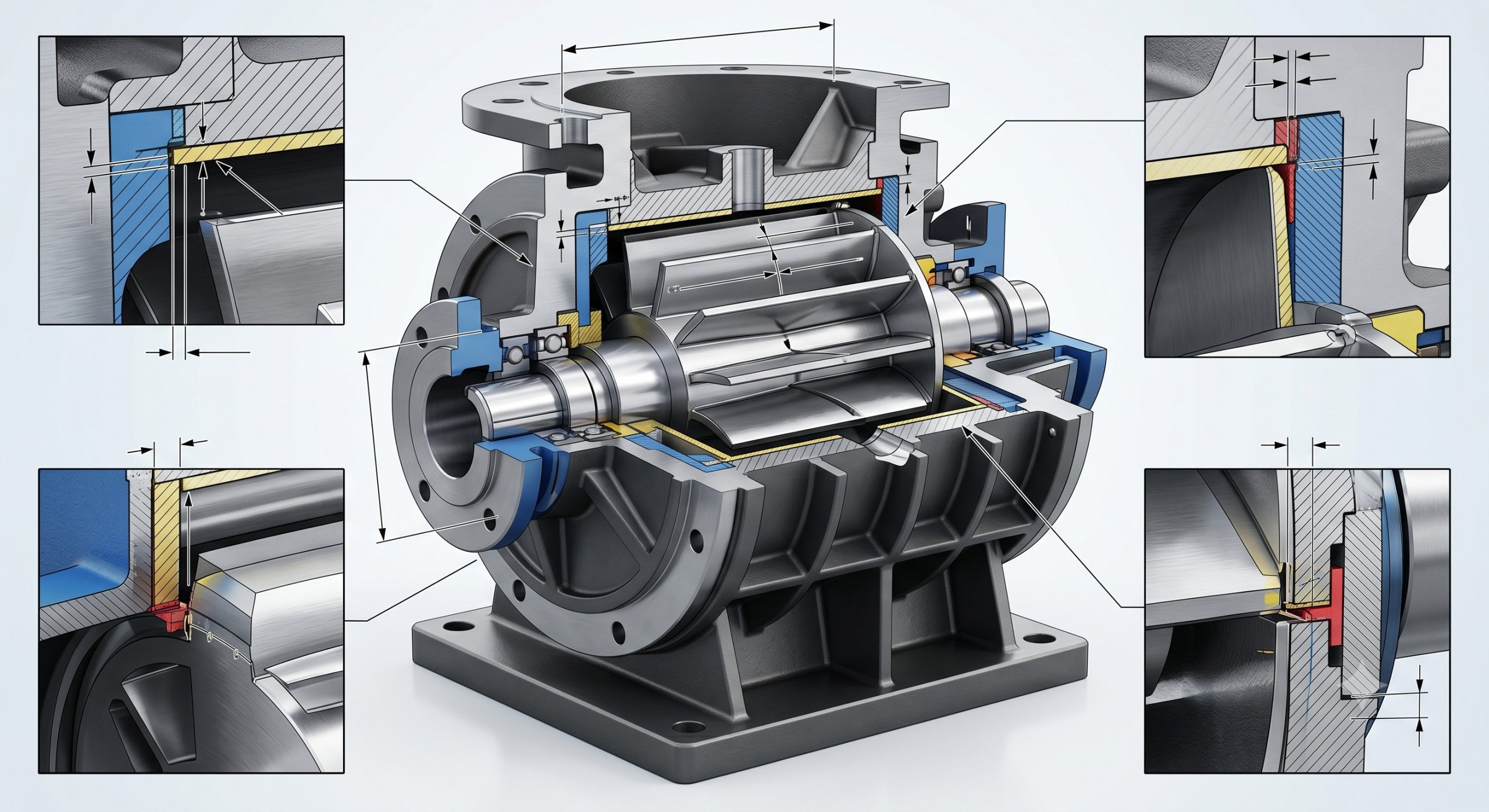
The airlock efficiency and leakage rate are directly determined by the gap between the rotor tips and the valve housing. Doebritz maintains a precision-controlled clearance of 0.1 mm to 0.2 mm. This tight tolerance minimizes air bypass—essential for maintaining differential pressure in dense-phase conveying—while preventing rotor seizure from thermal expansion or material buildup. All valve housings undergo CNC machining to achieve surface finishes below Ra 0.8 μm on critical sealing interfaces. For high-temperature grain applications (up to 120°C material temperature), the 316L stainless steel variant is recommended due to its superior thermal stability and corrosion resistance.
Rotor Configurations for Grains
Doebritz offers multiple rotor geometries tailored to grain characteristics: open-end rotors for free-flowing grains like corn or soybeans, and closed-end rotors for fine powders such as flour or starch to reduce blowback. All rotors feature chamfered edges to prevent material shearing and jamming.
Technical Specifications: Performance-Driven Data
The following table summarizes key engineering parameters for the Doebritz Grains Quick-release rotary valve series (Model DBR-1237). These values are derived from actual product documentation and validated testing.
| Key Parameter | Technical Specification (Doebritz DBR-1237) |
|---|---|
| Max Differential Pressure | Positive: 1.0 Bar (100 kPa) / Negative: -1.0 Bar (-100 kPa) |
| Operating Temperature (Material) | 0°C to +120°C (Optional water cooling jacket available) |
| Rotor-Housing Clearance | 0.1 mm – 0.2 mm (CNC precision controlled) |
| Shaft Sealing Type | Lip seal with air-tight purge / Packing seal optional |
| Explosion Protection | ATEX Zone 20/21/22, Pressure shock resistant up to 16 Bar |
| Hygienic Finishes (Internal) | Mirror Ra ≤ 0.4 μm / Ra ≤ 0.8 μm / Ra ≤ 1.6 μm |
| Available Flange Sizes | DN50, DN100, DN150, DN200, DN300, DN350 |
| Base Materials | SUS304, SUS316L, Carbon steel painted, Carbon steel nickel-plated |
| Wear Protection Coatings | Tungsten carbide, Ceramic, Polymer (PE/PTFE/PA) |
| Cleanability | Quick-release manual clean, Online CIP, Online WIP + inspection |
| Certifications | CE, TÜV, Statement (EU & International) |
| Rotor Speed (VFD controlled) | 10 – 60 RPM (variable frequency drive ready) |
| Ambient Temperature Range | -15°C to +60°C |
| Typical Grains Applications | Flour, starch, coffee, milk powder, spices, protein powders, oat flakes |
Sealing Integrity and Differential Pressure Management
For pneumatic conveying systems, air leakage directly reduces conveying efficiency and increases energy consumption. Doebritz employs a lip seal with air-tight purge as the standard shaft sealing arrangement. This design creates a positive pressure barrier that prevents fine grain dust from migrating to the bearings, extending Mean Time Between Failures (MTBF). The valve body is engineered to handle differential pressures up to 1.0 Bar (100 kPa) in high-pressure positive conveying and down to -1.0 Bar (-100 kPa) in high-vacuum negative conveying. For explosion-prone grain dust environments, Doebritz offers ATEX-certified configurations compliant with Zone 20, 21, and 22 (dust explosion protection), including explosion-proof motors and pressure-resistant housings rated to 16 Bar.
Quick-Release Demountable Design for Sanitary Compliance
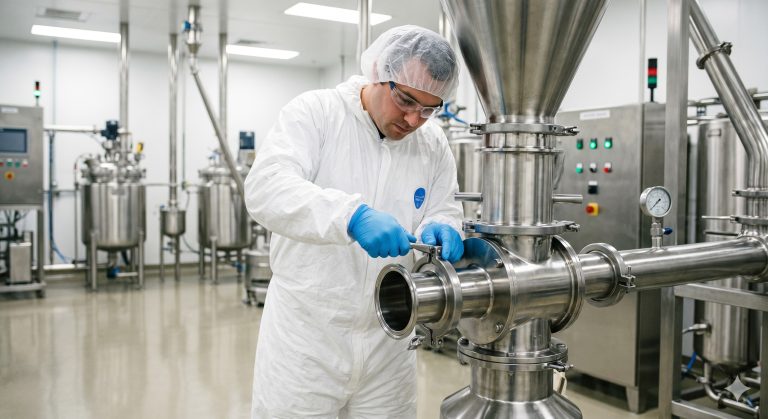
The grain processing industry demands rigorous hygiene standards, particularly for food and pharmaceutical applications. The Doebritz Grains Quick-release rotary valve features a tool-less quick-release structure that allows complete disassembly in minutes without specialized tools. This enables manual cleaning after quick-release disassembly, online CIP (Clean-in-Place), or online WIP (Wash-in-Place) followed by manual inspection. Internal surfaces can be specified with mirror finishes (Ra ≤ 0.4 μm) or electropolished finishes to eliminate dead zones and prevent cross-contamination. The valve is compatible with Class W, Class 10W, Class 30W, Class C, and Class D cleanrooms, meeting GMP and FDA requirements for direct food contact.
Sizing and Capacity Calculation for Grains
Proper sizing of a Grains Quick-release rotary valve requires calculating volumetric fill efficiency. The theoretical displacement (liters per revolution) must be adjusted for fill efficiency (typically 60% to 85% for free-flowing grains, lower for fine powders). Doebritz provides valves with inlet/outlet flange sizes from DN50 to DN350. For a typical wheat flour application at 0.75 specific gravity, a DN150 valve operating at 20 to 40 RPM via VFD (Variable Frequency Drive) control can achieve throughputs ranging from 10 to 30 tons per hour. The valve supports integration with PLC control systems for batch metering, recipe metering, and automated batching in配料 lines.
Application Scenarios: Grains and Beyond
The versatility of the Doebritz design extends to numerous grain-based materials: coffee beans, chocolate nibs, wheat flour, corn flour, rice flour, oat flakes, milk powder, whey powder, soy protein powder, spices (chili, pepper, five-spice), salt, and starch. In pharmaceutical grain applications, it handles microcrystalline cellulose, lactose powder, and probiotic powders. For each application, the valve can be customized with water cooling jackets for high-temperature materials (0 to 120°C continuous), wear-resistant coatings for abrasive grains, and ATEX-certified components for dust explosion safety. The valve operates reliably in ambient temperatures from -15°C to 60°C.
Certifications and Compliance
Doebritz maintains rigorous third-party certifications including CE, TÜV, and Statement certifications, ensuring compliance with EU and international industrial safety, hygiene, and explosion protection standards. All flanges are manufactured to HG20592 standards, with custom DIN PN10 or ANSI flanges available upon request.
Conclusion: Engineering Excellence for Grain Processing
The Doebritz Grains Quick-release rotary valve (DBR-1237) delivers a quantifiable return on investment through reduced air leakage (0.1–0.2 mm rotor-housing clearance), minimized maintenance downtime (tool-less quick-release design), and extended component life (tungsten carbide or ceramic coatings). By integrating precise CNC machining, ATEX-compliant safety features, and hygienic stainless steel construction, Doebritz provides a future-proof solution for grain handling facilities seeking to optimize pneumatic conveying efficiency, regulatory compliance, and total cost of ownership. For engineering specifications or custom sizing assistance, consult Doebritz technical sales with your material properties and conveying parameters.