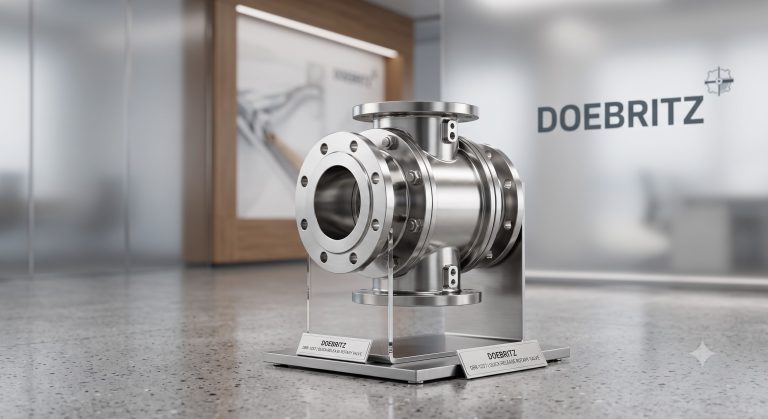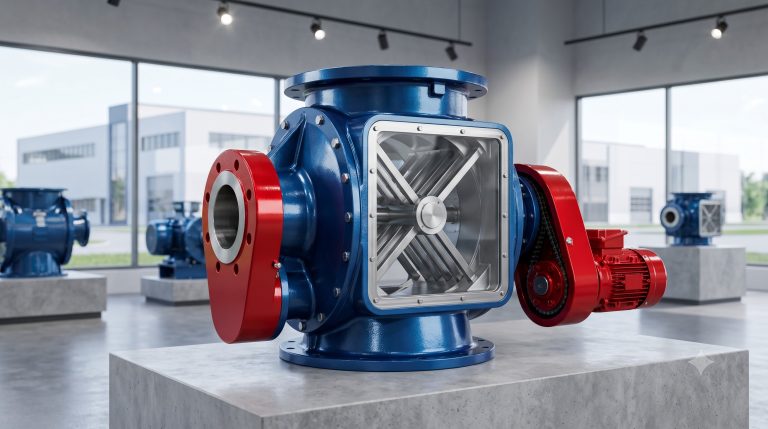
ATEX & NFPA TECHNICAL COMPLIANCE REGISTER: DOEBRITZ DBR-1237 GRAVITY QUICK-RELEASE ROTARY VALVE
EXECUTIVE SUMMARY
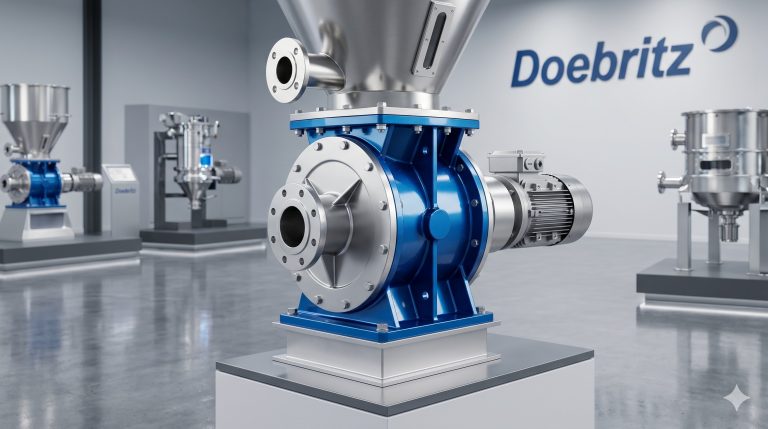
This document serves as the official technical compliance register and engineering datasheet for the Doebritz DBR-1237 Gravity Quick-Release Rotary Valve, specifically addressing its application in potentially explosive atmospheres involving combustible dusts. As a critical component in pneumatic conveying and gravity discharge systems, the DBR-1237 is engineered to mitigate deflagration risks through precision engineering, robust construction, and adherence to international safety standards. This register outlines the valve’s design philosophy, key safety features, certified performance parameters, and its role in ensuring operational safety within Zone 20, 21, and 22 classified areas.
HOUSING & ROTOR METALLURGY FOR EXPLOSIVE ENVIRONMENTS
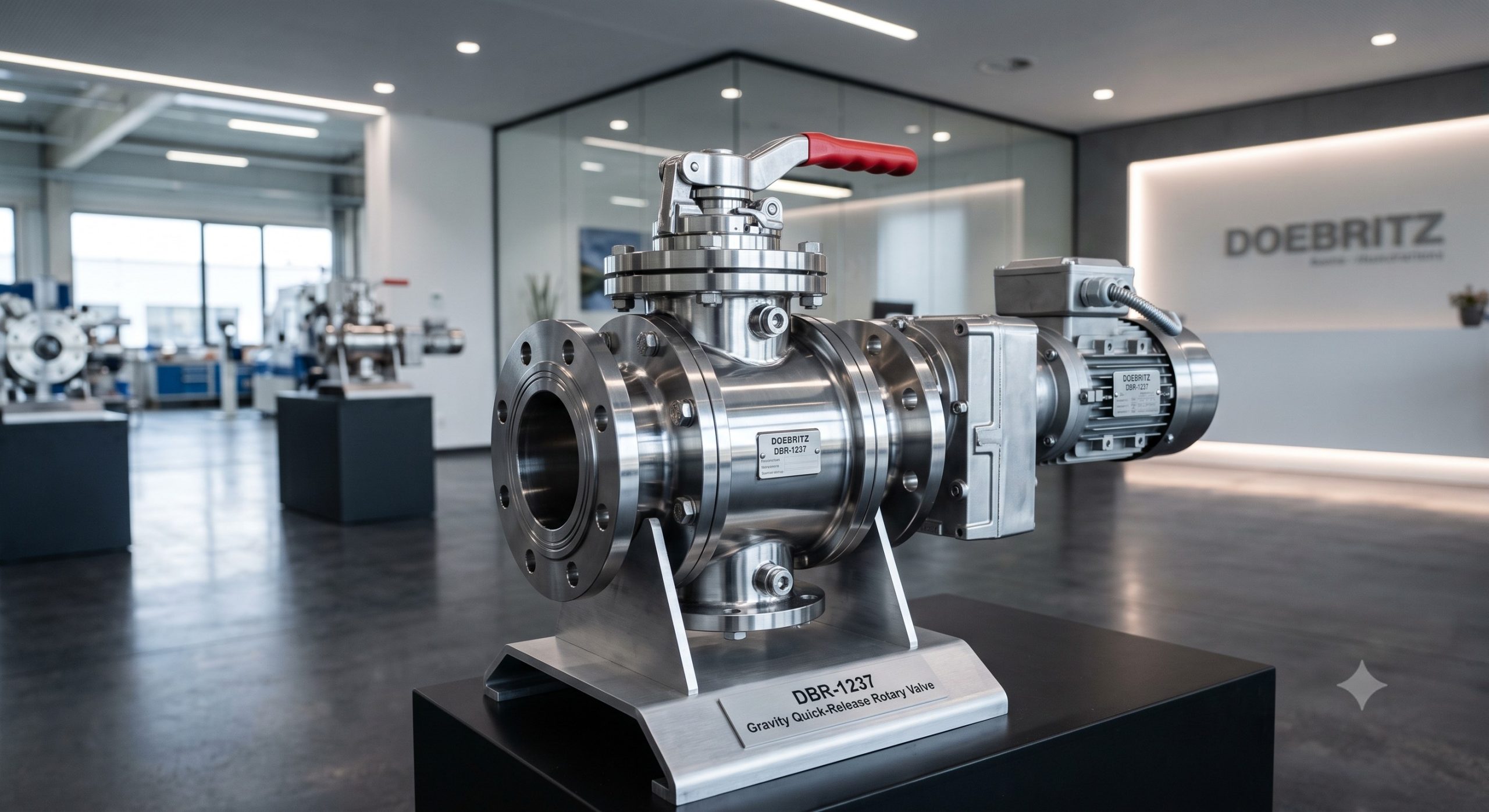
The DBR-1237 is constructed from high-grade materials chosen for their durability, corrosion resistance, and ability to prevent ignition sources. The primary housing and rotor are precision-machined from either SUS304 or SUS316L stainless steel, with options for carbon steel with protective coatings. For highly abrasive or corrosive dusts, internal surfaces can be enhanced with tungsten carbide, ceramic, or polymer coatings. This robust material selection ensures structural integrity under pressure and resistance to wear, which is critical for maintaining the precise clearances necessary for effective flame arrestment. The valve is designed to withstand a pressure shock of up to 16 bar in its flameproof configuration, containing a potential internal explosion without propagating to the external environment.
KEY FEATURES FOR COMBUSTIBLE DUST SAFETY
– Explosion Isolation & Containment: The valve acts as a mechanical barrier, effectively isolating upstream and downstream sections of a conveying system. In the event of a deflagration, the DBR-1237 is designed to contain the pressure wave and prevent flame propagation, safeguarding personnel and plant infrastructure.
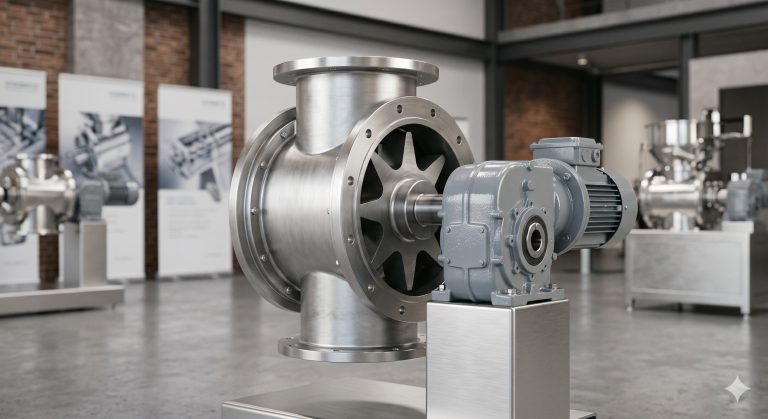
– Precision Rotor-to-Housing Clearance: The rotor is machined to maintain a critical clearance of 0.1–0.2 mm with the valve housing. This tight tolerance limits the passage of flame and hot gases, acting as a primary flame arrestment mechanism. This narrow gap quickly extinguishes any flame front attempting to pass through the valve.
– ATEX-Certified Components: The DBR-1237 can be equipped with ATEX-certified motors and accessories. The overall design, including the drive train and electrical components, conforms to the requirements of the ATEX Directive (2014/34/EU) for equipment used in potentially explosive atmospheres.
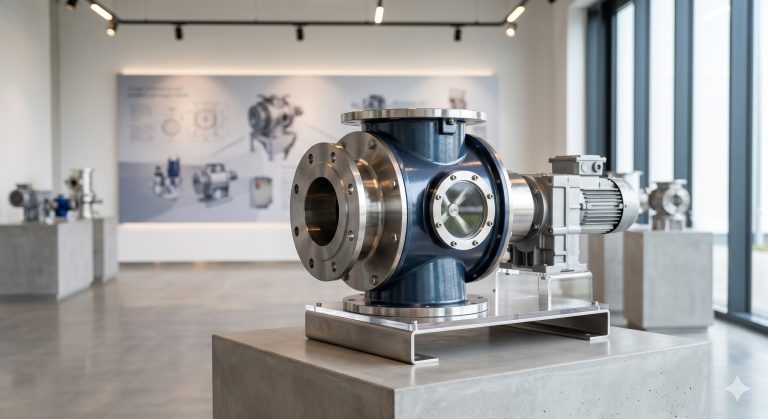
– Flameproof (Ex d) Casing: In its flameproof configuration, the valve housing is robust enough to withstand an internal explosion at a maximum pressure of 16 bar without rupturing. All joints and flanges are designed with flameproof paths to cool escaping gases, preventing ignition of the surrounding atmosphere.
– Robust Bearing and Seal Protection: Outboard bearings are isolated from the product zone via air-purged labyrinth seals and lantern rings. This prevents dust ingress, which could lead to bearing failure and overheating—a potential ignition source. The positive air purge also helps to prevent the migration of explosive dust clouds into the bearing housing.
– Anti-Static Design: The valve is designed with features to prevent the accumulation of static electricity, which can be a significant ignition source. This includes ensuring electrical continuity between all metallic components and providing grounding points to safely dissipate any generated charge.
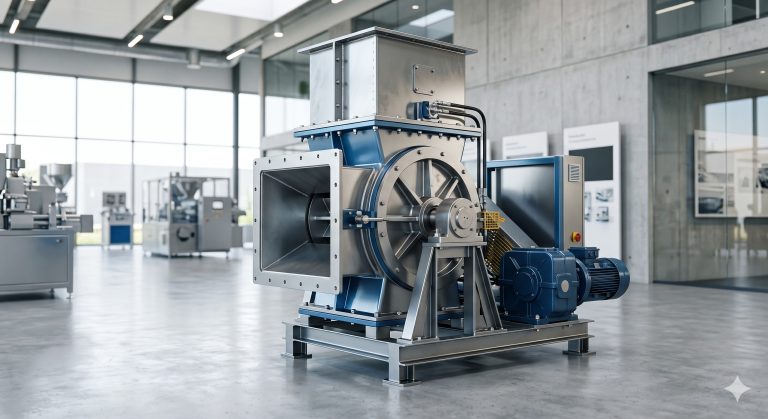
– Explosion Relief & Isolation: The valve can be integrated with systems featuring explosion venting panels. In high-risk applications, the DBR-1237 can be paired with an upstream isolation valve, such as a flameless venting system, to ensure complete containment and protection.
COMPLIANCE & SAFETY STANDARDS
The Doebritz DBR-1237 Gravity Quick-Release Rotary Valve is rigorously tested and certified to meet the most stringent international safety standards for operation in combustible dust environments.
– ATEX Directive 2014/34/EU: Certified for use in potentially explosive atmospheres, covering both gas and dust (Zones 20, 21, 22).
– NFPA 69 (Standard on Explosion Prevention Systems): The valve’s design principles align with the requirements for isolation and prevention of deflagrations in dust handling systems.
– IECEx Scheme: Many models are certified under the IECEx scheme, providing international acceptance for use in hazardous areas.
– TÜV Certification: Independent testing and certification by TÜV Rheinland or TÜV SÜD validate the valve’s safety performance and adherence to strict quality standards.
– CE Marking: The DBR-1237 bears the CE mark, confirming it meets all applicable European health, safety, and environmental protection requirements.
TECHNICAL SPECIFICATIONS
The following table provides a comprehensive overview of the technical parameters for the Doebritz DBR-1237 Gravity Quick-Release Rotary Valve, with specific reference to its safety-critical features for combustible dust applications.
| Parameter | Specification |
|---|---|
| Explosion Protection | ATEX / IECEx Certified (Zones 20, 21, 22); Flameproof (Ex d) design |
| Maximum Explosion Containment | Up to 16 bar pressure shock resistance |
| Explosion Isolation Mechanism | Precision rotor-to-housing clearance (0.1–0.2 mm) |
| Construction Material | SUS304, SUS316L (optional: Carbon Steel with coatings) |
| Internal Wear Coating (Optional) | Tungsten Carbide, Ceramic, Polymer (PE, PTFE, PA) |
| Rotor Design | Quick-release, anti-jamming, with precision-machined vanes |
| Shaft Seal Type | Lip seal with air purge connection (Lantern ring design) |
| Bearing Type | Outboard, heavy-duty, isolated from product zone |
| Drive Configuration | Direct drive or chain drive; VFD compatible |
| Inlet/Outlet Flange | HG20592, DN50 to DN350 (others available upon request) |
| Operating Pressure (Pneumatic) | Positive: -0.4 bar to +1.0 bar; Negative: -1.0 bar to -0.4 bar |
| Operating Temperature | Ambient: -15°C to 60°C; Material: 0°C to 120°C |
| Surface Finish (Internal) | Mirror finish; Ra ≤ 0.4 / 0.8 / 1.6 μm |
| Cleanability | Quick-release for manual cleaning; CIP / WIP compatible |
| Certifications | CE, TÜV, Statement of Conformity to ATEX/IECEx |
INDUSTRIAL DEPLOYMENT & BEST PRACTICES
The Doebritz DBR-1237 is a versatile safety solution deployed across a wide range of industries that handle combustible dusts. Its primary applications include:
– Food Processing: Handling combustible dusts like flour, sugar, starch, and spices where even small accumulations can pose a deflagration hazard.
– Pharmaceutical Manufacturing: Processing active pharmaceutical ingredients (APIs), excipients, and other organic powders that are often combustible.
– Chemical & Petrochemical: Managing materials like carbon black, polymers, resins, and organic pigments.
– Energy & Battery Production: Processing materials such as lithium-ion battery cathode and anode powders (e.g., lithium cobalt oxide, graphite), silicon powder, and other fine, combustible metals or alloys.
– Woodworking & Biomass: Handling wood dust, sawdust, and other biomass materials, which are highly combustible.
Best Practices for Deployment:
1. Proper Zoning & Selection: Accurately classify the hazardous area (Zone 20, 21, or 22) and select the appropriate valve configuration with the correct motor and accessories to match the zone and dust characteristics.
2. System Integration: Integrate the valve with the process control system to ensure proper interlocking with other safety devices like explosion vents, isolation dampers, and fire suppression systems.
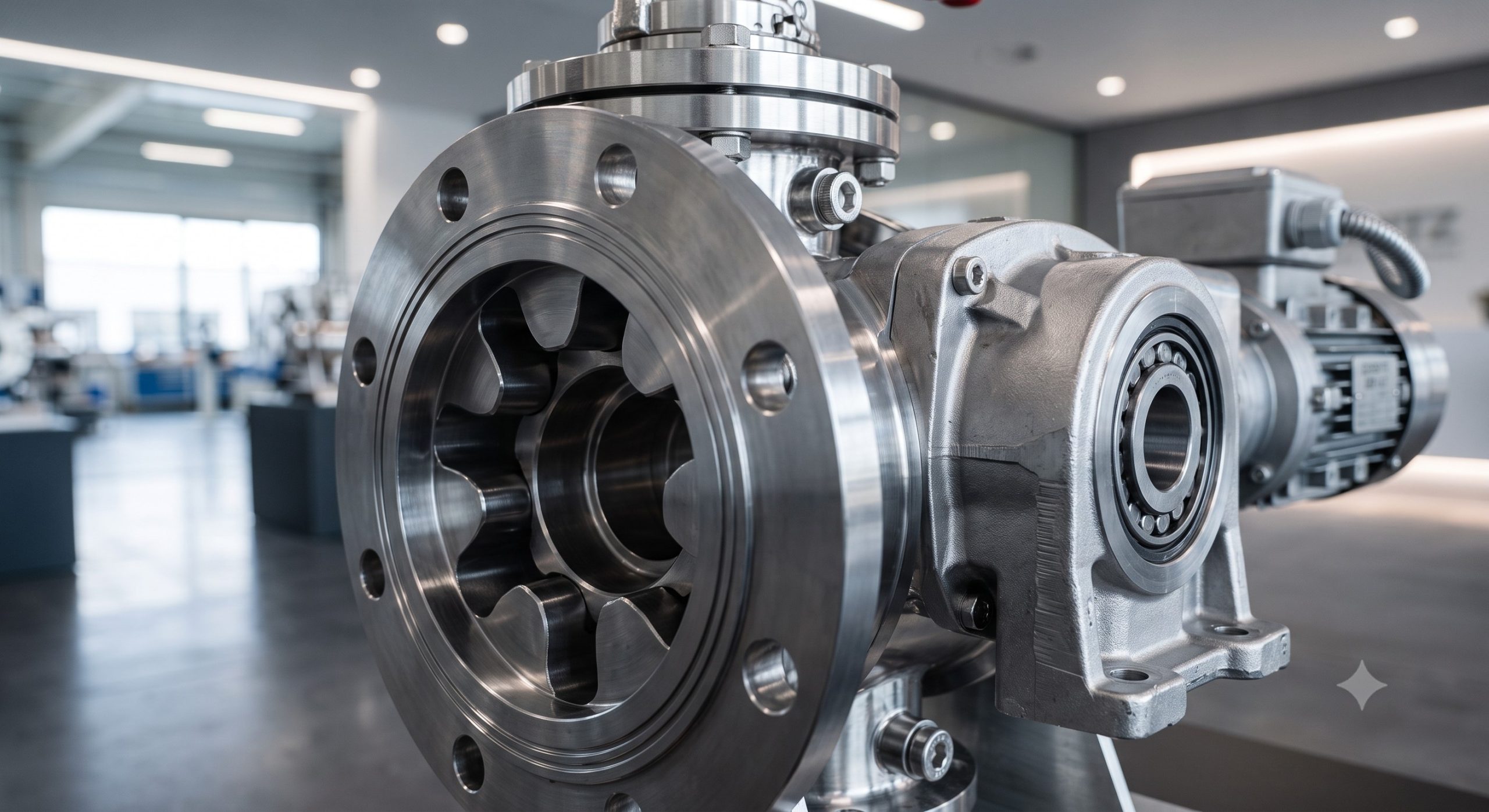
3. Regular Maintenance: Adhere to a scheduled maintenance program to inspect and clean the valve. This includes checking the rotor clearance, seal integrity, and the function of the air purge system. The quick-release design of the DBR-1237 significantly reduces downtime during these critical inspections.
4. Grounding & Bonding: Ensure the valve and all connected piping are adequately grounded to prevent static electricity buildup. This is a crucial step in preventing ignition.
5. Operational Monitoring: Implement monitoring systems to track critical operational parameters, such as rotor speed, motor temperature, and pressure differential, to detect any anomalies that could indicate a risk.
By deploying the Doebritz DBR-1237 and adhering to these best practices, plant operators can significantly enhance the safety of their combustible dust handling processes, protecting their workforce and assets while ensuring regulatory compliance.
📥 Download Technical Specification
Click the button below to view or download the full official PDF datasheet.